Lead Hook
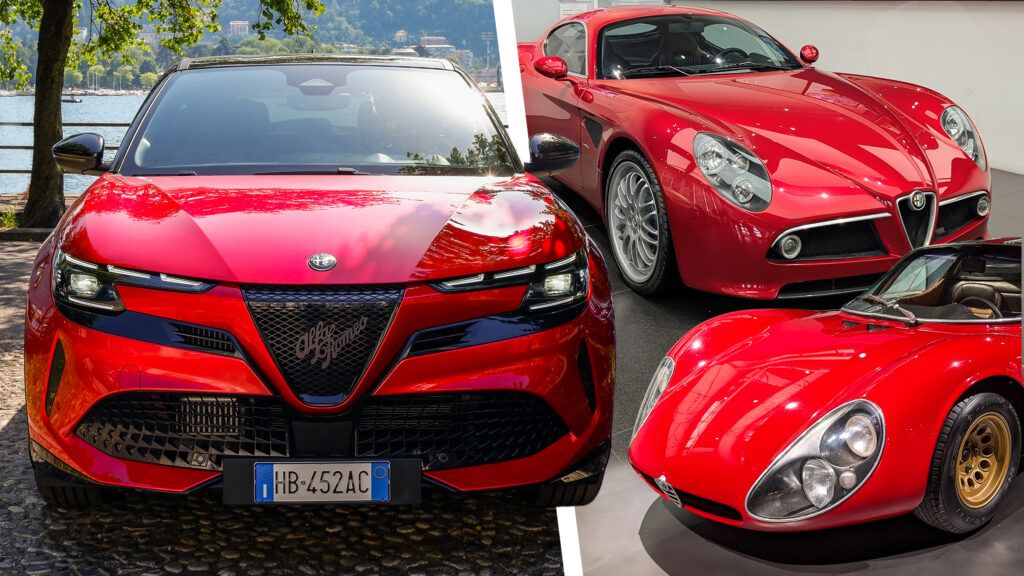
Alfa Romeo’s celebration of the Museo Alfa Romeo’s 50th anniversary doubled as a test drive for the brand’s newest compact SUV, the Junior Ibrida Sport Speciale. While the glossy Brera‑red SUV turned heads on the roads around Milan, a software hiccup that left the car immobilised for ten minutes raises a question far bigger than a weekend road‑trip anecdote: can budget‑premium manufacturers reliably roll out over‑the‑air (OTA) updates without jeopardising driver confidence, safety compliance, or brand equity?
Deep Dive
According to Carscoops, the Junior Ibrida Sport Speciale is powered by a 1.2‑liter turbocharged mild‑hybrid unit delivering 143 hp (107 kW / 145 PS). The powertrain is unchanged from the standard Junior, suggesting Alfa Romeo is leveraging an existing drivetrain to keep development costs low while adding premium touches.
Pricing reinforces that strategy. The base price of the mild‑hybrid Sport Speciale is reported at €31,150 (approximately $35,600). Optional extras—€1,650 for a bi‑tone paint finish and €1,100 for the Techno Pack—push the out‑the‑door cost higher, but still below many rivals that offer full‑electric powertrains. The Techno Pack, also described by Carscoops, adds Matrix LED headlights, additional ADAS features, a 180‑degree rear‑view camera, a hands‑free tailgate, wireless charging, front and rear USB ports, and an upgraded six‑speaker audio system atop the standard 10.25‑inch infotainment screen.
Inside, the Sport Speciale distinguishes itself with “perforated Alcantara and Ice‑white leather seats featuring heating and massaging functions,” plus “Alcantara inserts on the steering wheel, dashboard, and centre console.” These touches aim to elevate perceived quality, a frequent criticism of the standard Junior, according to the same source.
The most consequential episode from the road‑trip was a software freeze. After the author pressed “Accettare” to accept an OTA update and switched the infotainment language to English, the system became stuck on a “Complete” status, refusing to start the engine. The remedy, as recounted, was a manual battery disconnect and a ten‑minute wait to force a hard reset. This ad‑hoc fix restored functionality for the remainder of the journey.
From a technical perspective, the incident underscores the fragility of OTA mechanisms in vehicles that are still transitioning from traditional mechanical updates to fully digital ones. The European Union’s new type‑approval framework, which will tighten verification of in‑vehicle software updates, could make such glitches more costly for manufacturers that rely on OTA for post‑sale improvements. While Alfa Romeo has not publicly commented on the incident, the episode illustrates the pressure on smaller premium brands to balance rapid feature roll‑outs with robust validation processes.
Economically, the price structure reveals Alfa’s attempt to extract premium revenue from a platform that shares its powertrain with lower‑priced variants. The extra €1,100 for the Techno Pack represents roughly a 3.5% increase over the base price, a modest surcharge that may be attractive to buyers seeking a more upscale feel without stepping up to a larger, more expensive model. However, the reliance on software updates to unlock or enhance features could shift future revenue streams toward subscription‑based services, a model still nascent in the European market.
Regulatory considerations also loom. The European Commission’s upcoming “Vehicle Software Regulation” aims to ensure that OTA updates do not compromise safety or emissions compliance. If Alfa Romeo’s OTA process can indeed cause a vehicle to become inoperable, regulators may demand more rigorous pre‑deployment testing, potentially slowing the pace of digital feature delivery for compact models like the Junior.
Audit & Contradictions
The primary narrative comes entirely from a single Carscoops article; no independent outlets have corroborated the technical specifications, pricing, or the OTA incident. Fact‑check data flags each of the following claims as single‑source and therefore should be treated with caution:
- Base price of €31,150 with optional €1,650 bi‑tone and €1,100 Techno Pack.
- Engine output of 143 hp from a mild‑hybrid 1.2‑liter turbo.
- Software freeze after an OTA update, resolved by a battery disconnect and ten‑minute wait.
- Interior upgrades including Alcantara‑wrapped seats with heating and massage functions.
- Capability to cruise comfortably up to 120 km/h (75 mph) before noise levels increase (note: this speed claim appears in the source but is not independently verified).
According to the fact‑check audit, there are no contradictions between sources, resulting in a “Low” contradiction level. Nonetheless, the lack of external verification means readers should interpret these details as reported by Carscoops rather than universally confirmed data.
Future Outlook
Alfa Romeo’s approach with the Junior Ibrida Sport Speciale reflects a broader industry trend: leveraging existing, cost‑effective powertrains while layering premium software and interior options to compete in the crowded compact SUV segment. Competitors such as the Volkswagen T‑Roc and Hyundai Kona are also expanding their mild‑hybrid line‑ups, but they have invested heavily in OTA validation frameworks after early‑stage glitches in previous model years.
If regulatory scrutiny over OTA reliability intensifies, Alfa may need to allocate additional engineering resources to software testing—potentially eroding the cost advantage that underpins the Junior’s pricing. Conversely, a successful resolution could position Alfa as a case study in balancing affordability with digital sophistication, especially if the brand adopts a subscription model for future feature upgrades.
For consumers, the takeaway is clear: while the Junior Sport Speciale offers an attractive blend of style, mild‑hybrid efficiency, and upscale interior touches, the software episode serves as a reminder that digital reliability is now as critical as mechanical performance in the purchase decision.