Lead Hook
Floating solar has long been confined to placid reservoirs and artificial lakes, limiting its contribution to the global renewable mix. If panels can stay afloat in 3.5‑meter (HS) waves, developers could tap a vastly larger pool of water bodies – from coastal lagoons to inland seas – and, crucially, present investors with a technology that appears less risky. The promise of such resilience is the headline of a recent CleanTechnica story about Fred. Olsen 1848’s “BRIZO” system, a claim that could reshape financing models for offshore solar projects.
Deep Dive
According to CleanTechnica, Fred. Olsen 1848, a Norwegian engineering firm, secured a technical verification from DNV (documented as DNV‑RP‑0584). The verification is described as confirming the system’s technical robustness and marking a milestone toward commercial deployment. The independent review examined design methodologies, hydrodynamic load assessment based on physical‑model testing, structural behaviour, and testing procedures, providing what the article calls an “important technical foundation for the continued maturation of the technology.”
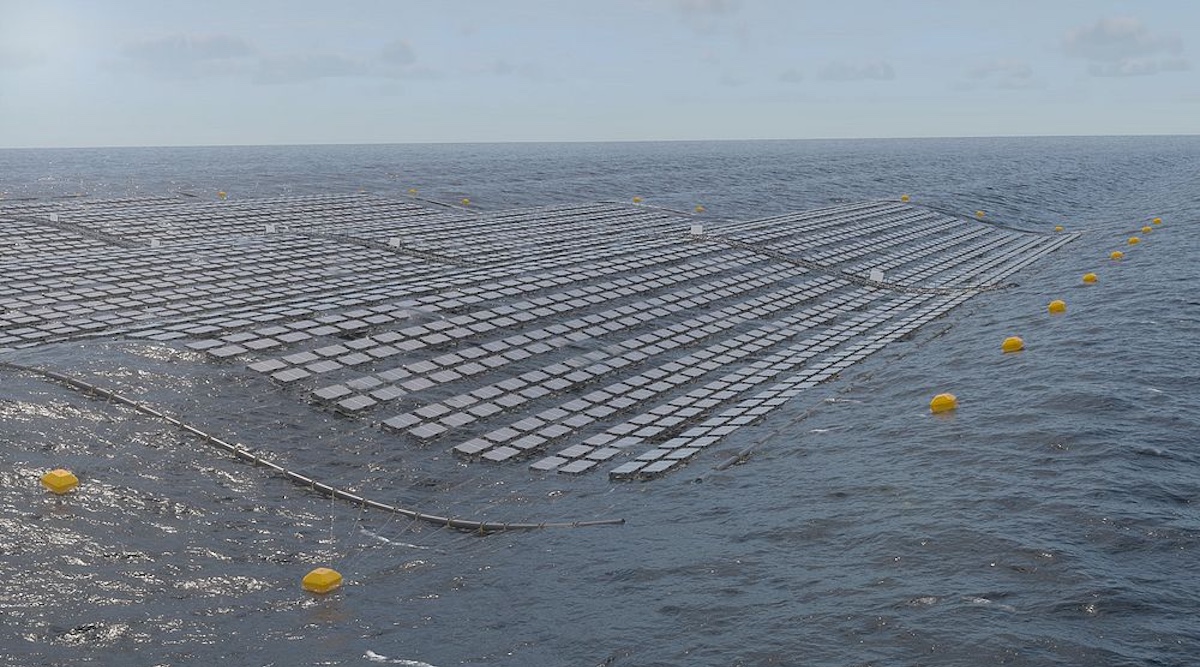
The centerpiece of the BRIZO design is a flexible rope‑mesh and tensioning system that, per the source, enables the platform to manage waves up to 3.5 m significant height (HS). This capability is positioned as a differentiator from conventional floating‑solar arrays that typically require calm, sheltered waters. By extending the envelope of operable sites, the technology could address two persistent constraints in the floating‑solar market: land scarcity and the need to locate generation close to demand centers near coastlines.
BRIZO has been specifically designed to operate in more exposed conditions than conventional floating solar systems. By utilising a flexible rope‑mesh and tensioning system, the technology is engineered to manage waves up to 3,5 m HS, making it suitable for wave‑prone inland and nearshore environments,
— Fred. Olsen 1848 (as quoted by CleanTechnica).
From a financing perspective, the article highlights three interlinked effects of the DNV verification. First, it “supports the BRIZO bankability and commercial deployment at scale,” suggesting that lenders and investors may view the technology as less speculative. Second, the independent third‑party validation is framed as a risk‑reduction tool, potentially lowering the cost of capital for projects that would otherwise be penalised for exposure to harsh marine conditions. Third, the validation could accelerate the transition from pilot demonstrations to larger‑scale commercial contracts, a step that historically has been bottlenecked by the perceived uncertainty of floating‑solar performance in dynamic water bodies.
These assertions sit against a broader industry narrative. A DNV senior vice‑president, Prajeev Rasiah, is quoted in the same source as saying that floating solar must move beyond sheltered waters to unlock “meaningful scale.” The article therefore positions the BRIZO system as a proof point that could catalyse a shift in how financiers evaluate offshore renewable projects, aligning them more closely with the risk‑assessment frameworks already applied to offshore wind.
Audit & Contradictions
The CleanTechnica piece is the sole source for every concrete claim about BRIZO’s verification, wave‑handling capability, and the purported boost to bankability. The fact‑check audit notes that these statements are “single‑source” and lack corroboration from independent outlets. No other publication has independently reported the DNV verification or the 3.5‑meter wave claim. The audit also reports a “Low” contradiction level, meaning no conflicting information has been found, but the lack of external confirmation remains a limitation for readers seeking a fully vetted picture.
Because the verification and performance metrics are reported only by the company and the CleanTechnica article, the narrative must be hedged. For example, the claim that the system can withstand 3.5 m waves is presented as the company’s statement rather than an established fact: “According to the CleanTechnica report, Fred. Olsen 1848 says the BRIZO platform is engineered for waves up to 3.5 m HS.” Similarly, the suggested impact on financing is framed as the company’s and DNV’s perspective, not a universally accepted industry conclusion.
Future Outlook
If the BRIZO verification holds up under further scrutiny, several downstream effects could materialise. Competing floating‑solar developers may accelerate R&D on marine‑grade mooring and tensioning systems, potentially sparking a wave of patents and standards focused on high‑energy‑density offshore environments. Regulators in coastal nations could be prompted to revise permitting frameworks that currently differentiate between “sheltered” and “exposed” water bodies, creating a more unified pathway for approvals.
From a capital‑allocation standpoint, banks and project‑finance houses that have already built expertise around offshore wind may begin to bundle floating‑solar assets into existing marine renewable portfolios, leveraging the same risk‑models and insurance products. This could lower the cost of equity for developers, making projects that were previously marginally viable more attractive.
Finally, the technology could open markets in regions where land is at a premium but wave‑prone lakes or coastal lagoons exist – for example, parts of Southeast Asia, the Caribbean, and the Mediterranean. By expanding the addressable market, BRIZO may help meet renewable‑energy targets without competing for scarce terrestrial sites, a benefit that aligns with broader climate‑policy goals.
Until independent performance data from pilot installations become publicly available, the industry will watch closely for the first real‑world deployments of the BRIZO system. Those early projects will likely serve as the de‑facto benchmarks that either validate the wave‑proof claim or reveal the engineering limits that still need to be addressed.