Lead Hook
Electric‑vehicle drivers in three U.S. states may soon find a charger attached to a streetlight instead of a garage wall, a development that could dramatically cut the cost of expanding public charging. But the promise of cheap, curbside power rests on a fragile technical premise – the existing pole wiring was never designed for sustained EV loads – and on a partnership that other outlets describe differently. As municipalities grapple with grid upgrades, the rollout could expose hidden infrastructure costs and raise regulatory eyebrows.
Deep Dive
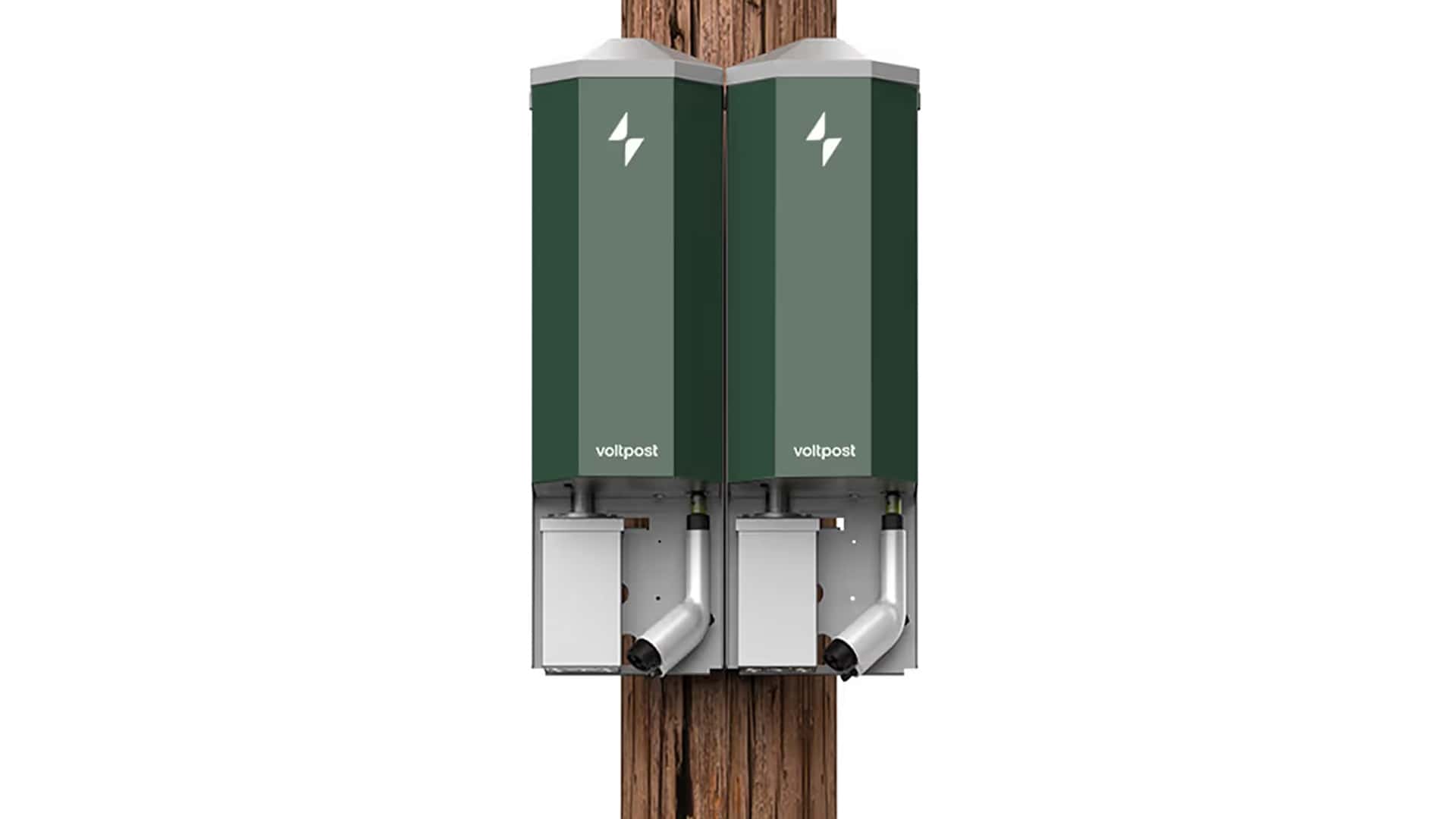
According to InsideEVs, Voltpost’s business model hinges on repurposing the electricity already feeding public lighting poles. By attaching a Level 2 charger to a pole, the company sidesteps the need for new trenching or dedicated conduit, a saving that the startup touts as a path to “affordable, convenient EV charging.” The approach also leverages an AT&T cellular connection, keeping each unit online for real‑time monitoring via InCharge Energy’s InControl software.
Two hardware variants are described. The flagship “Voltpost” model wraps around a pole and offers one or two connectors on a 25‑foot retractable cable. The smaller “Air” unit can deliver up to 9.6 kW per vehicle, mounts roughly 10 feet above ground to deter vandalism, and also provides two dispensers per pole. Both models are designed for curbside parking scenarios where drivers are expected to stay for several hours – for example, at malls or office complexes.Because the existing pole circuits were not sized for the higher currents typical of fast chargers, the units operate at slower Level 2 rates. The source notes that “the electrical connection wasn’t sized for huge loads, the chargers provide slower Level 2 charging speeds suitable for multi‑hour parking.” This limitation means the chargers are best suited for top‑off sessions rather than rapid turnaround, a trade‑off that could affect utilization in high‑traffic urban spots.
The rollout is slated to begin in New York, Connecticut, and California, according to the same source. Voltpost says the partnership with InCharge Energy supplies the “maintenance operational foundation” needed to scale the network nationwide. The company’s CEO, Jeffrey Prosserman, is quoted:
"Partnering with InCharge Energy provides the maintenance operational foundation to scale our mission of bringing affordable, convenient EV charging to communities of all sizes across the country,"
InCharge’s role includes installation, service, and the software platform that tracks uptime and dispatches repairs. By outsourcing these functions, Voltpost hopes to accelerate deployment without building its own field service teams.
From an engineering perspective, the concept exploits a largely untapped asset – the ubiquitous streetlight grid – but it also raises questions about cumulative load on municipal distribution feeders. If dozens of chargers are added to a single pole corridor, the aggregate demand could exceed transformer capacities, prompting utilities to upgrade equipment or impose new demand charges. Those costs, while not mentioned in the announcement, could shift the financial burden onto local governments or ratepayers.
Regulators may also scrutinize the use of public right‑of‑way for private charging infrastructure. While the poles are already owned by municipalities, adding commercial equipment could trigger permitting, safety inspections, and liability considerations that differ from traditional streetlight maintenance. The reliance on a single partner for both installation and service amplifies this risk – any disruption in InCharge’s operations could stall the expansion or leave chargers offline, eroding the promised reliability.
Audit & Contradictions
The core claim – that Voltpost is deploying lamppost‑mounted Level 2 chargers in the United States – is corroborated by multiple outlets, including Electrek and Charged EVs. However, several details appear only in the primary InsideEVs article and must be treated as single‑source statements. These include:
- The partnership with InCharge Energy (single‑source; other reports cite EVSE as the partner).
- The initial deployment states of New York, Connecticut, and California (single‑source).
- Specific charger specifications – 25‑foot retractable cable for the Voltpost model and up to 9.6 kW per port for the Air model (single‑source).
- The use of an AT&T cellular link and InCharge’s InControl software for remote monitoring (single‑source).
- The acknowledgement that the existing pole wiring limits charging speed to slower Level 2 rates (single‑source).
Fact‑check data flags a medium‑level contradiction: independent coverage describes a partnership with EVSE, not InCharge Energy. This discrepancy suggests either a recent change in partners or a misstatement in the press release. Until clarified, readers should treat the partner name as unverified beyond the primary source.
Beyond the partnership, the announcement omits discussion of grid impact, permitting hurdles, and potential cost shifts to municipalities – all critical factors for a rollout that leans on public infrastructure.
Future Outlook
If Voltpost can navigate utility constraints and secure consistent maintenance contracts, the lamppost model could inspire similar low‑cost deployments from rivals. Companies focused on fast‑charging networks may view the slower Level 2 approach as complementary, filling gaps where high‑power stations are uneconomical. However, the need for grid upgrades could slow adoption in dense urban cores, pushing the first wave toward suburban parking lots where existing feeder capacity is higher.
Regulators and city planners are likely to demand transparent load‑impact studies before granting right‑of‑way approvals. Municipalities might negotiate revenue‑sharing or cost‑recovery mechanisms to offset transformer upgrades, setting precedents for future infrastructure‑as‑a‑service models.
In the longer term, the success of Voltpost’s model hinges on whether the economics of retrofitting poles outweigh the hidden costs of grid reinforcement and regulatory compliance. If the partnership with InCharge (or EVSE) proves robust and scaling can be achieved without major utility pushback, lamppost chargers could become a ubiquitous, low‑cost layer of the public charging ecosystem, expanding EV accessibility beyond home garages.