Lead Hook
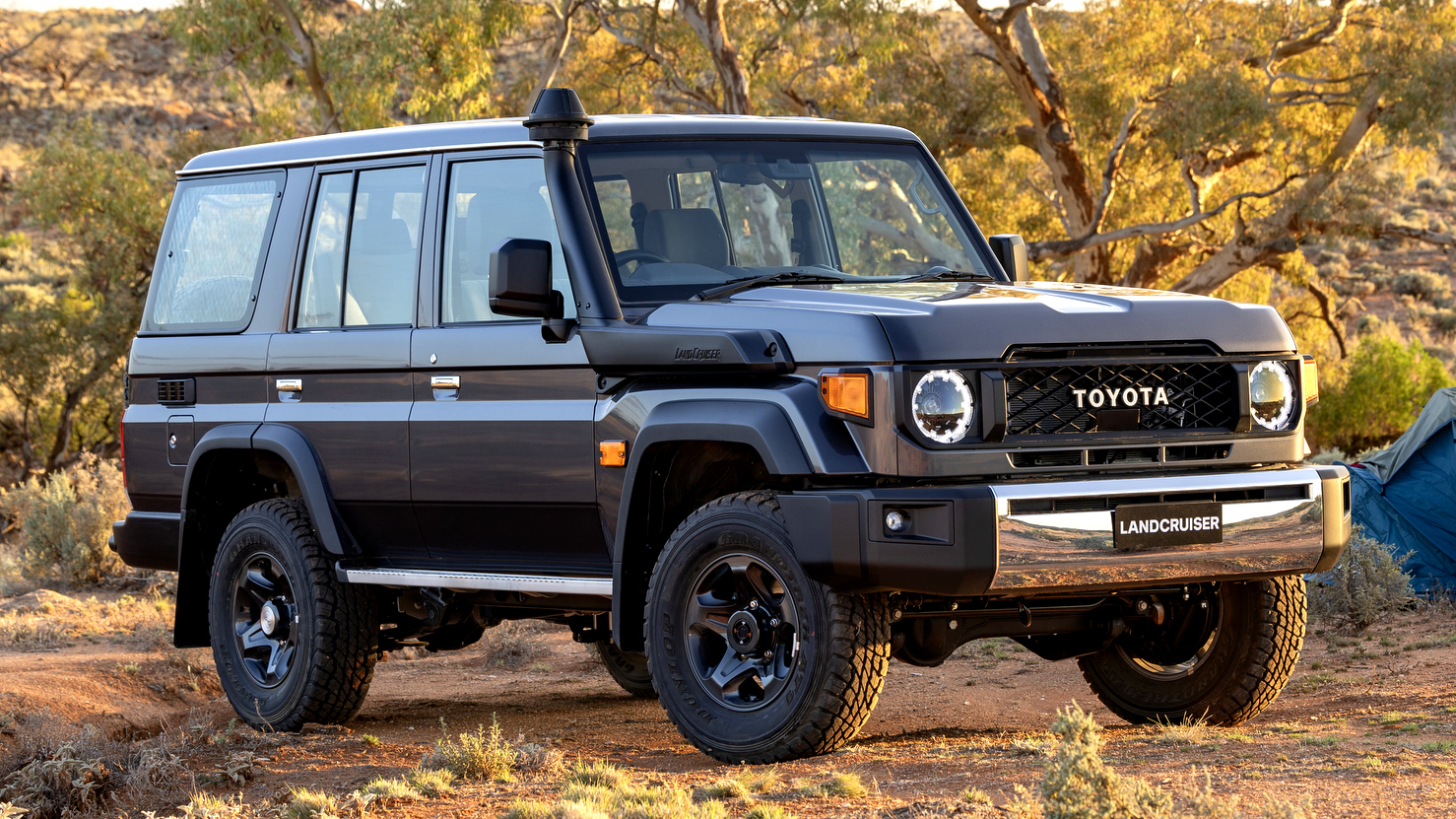
When Toyota announced that the iconic Land Cruiser 70 series is back on Australian order books, the headline sounded like a nostalgic win for off‑road enthusiasts. Yet beneath the celebration lies a strategic gamble: the company is retrofitting a vehicle whose DNA dates to the 1980s with a modern emissions‑control system to satisfy Euro 6d regulations. The decision reveals how legacy diesel platforms are being reshaped under regulatory pressure, and it raises questions about the long‑term viability of such workarounds.
“After pausing orders for certain LandCruiser 70 Series in 2025 to manage customer expectations around vehicle supply challenges, we are excited to say that order books are now back open,”
— John Pappas, Toyota Australia vice‑president of sales, marketing and franchise operations, as quoted by Carscoops.
Deep Dive
The revival hinges on three technical adjustments that allow the 70 series to stay on the road while complying with stricter emissions rules. First, Toyota has fitted a 20‑liter AdBlue tank to the 2.8‑liter turbo‑diesel engine, a move the source says is intended to meet Euro 6d standards used in Australia. The AdBlue system injects urea into the exhaust stream, reducing nitrogen‑oxide emissions, and is housed behind a dedicated refuelling flap on the front left fender of double‑cab chassis models, or between the cab and rear wheels on single‑cab versions.
Second, the powertrain itself has been swapped. According to the source, the 2.8‑liter engine is borrowed from the Hilux pickup and replaces the 4.5‑liter turbo‑diesel V8 that was available until mid‑2024. The source notes that power output remains unchanged at 201 hp (150 kW) and 369 lb‑ft (500 Nm) of torque, suggesting that performance expectations for the rugged workhorse have been preserved despite the downsized engine.
Third, the transmission lineup has been narrowed. The source reports that the six‑speed automatic is the only gearbox currently offered, while the five‑speed manual remains “unavailable for the time being.” This language signals that the manual gearbox has not been officially discontinued, but Toyota has not confirmed when—or if—it will return.
Beyond drivetrain tweaks, the Troopcarrier variant has seen its fuel capacity reduced from 180 L to 130 L, aligning it with the rest of the 70‑series range. This reduction, also noted only in the primary source, may reflect packaging constraints introduced by the new AdBlue tank.
All of these changes are framed as a response to supply‑chain realities and regulatory compliance rather than a redesign from the ground up. By leveraging an existing Hilux engine and adding a relatively compact AdBlue module, Toyota avoids the costly development of a brand‑new powertrain while still meeting the emissions ceiling that would otherwise bar the diesel‑only 70 series from the market.
From a business perspective, the move protects a niche but lucrative segment of Australian buyers who value the Land Cruiser’s off‑road pedigree. The model’s heritage appeal has historically insulated it from rapid electrification trends, yet the Euro 6d standard leaves little room for a pure diesel without after‑treatment. Toyota’s solution—retrofit rather than replace—illustrates a broader industry pattern where legacy platforms receive incremental upgrades to extend their commercial lifespan.
Audit & Contradictions
The core claim that Toyota has reopened order books for the Land Cruiser 70 series in Australia is corroborated by multiple outlets, confirming the validity of the announcement. However, all other technical details—including the addition of the 20‑liter AdBlue tank, the engine swap, unchanged power figures, the manual transmission’s temporary unavailability, and the Troopcarrier fuel‑tank reduction—appear only in the primary source. As such, they must be presented as single‑source statements, hedged with language such as “according to the source” or “the source reports.”
There are no identified contradictions between the primary source and the independent corroboration; the fact‑check audit rates the contradiction level as low. Nonetheless, the lack of independent verification of the technical claims means readers should treat them as Toyota‑provided details pending external validation.
Future Outlook
Toyota’s approach may set a precedent for other manufacturers grappling with the twin challenges of legacy diesel demand and tightening emissions legislation. If the AdBlue retrofit proves reliable and cost‑effective, we could see similar adaptations in other long‑running models, especially in markets where diesel remains popular for work‑related applications.
Conversely, the restriction to automatic transmissions could signal supply‑chain bottlenecks for manual gearboxes, or a strategic shift toward higher‑margin automatic units. Competitors that have already introduced hybrid or fully electric off‑road vehicles—such as Ford’s upcoming electric Ranger or Mercedes‑Benz’s EQG—might leverage this moment to argue that incremental diesel fixes are short‑term stopgaps rather than sustainable solutions.
Regulators, meanwhile, may tighten enforcement of Euro 6d compliance, prompting manufacturers to adopt more permanent electrification pathways. Toyota’s decision to keep the 70 series alive through emissions add‑ons could invite scrutiny from environmental groups, especially if the vehicle’s real‑world NOx reductions fall short of laboratory figures.
In the short term, Australian buyers will likely welcome the return of a beloved workhorse, but the long‑term market dynamics will hinge on how quickly the broader industry can transition rugged platforms to lower‑emission or zero‑emission powertrains without sacrificing the durability that made the Land Cruiser a legend.