Lead Hook
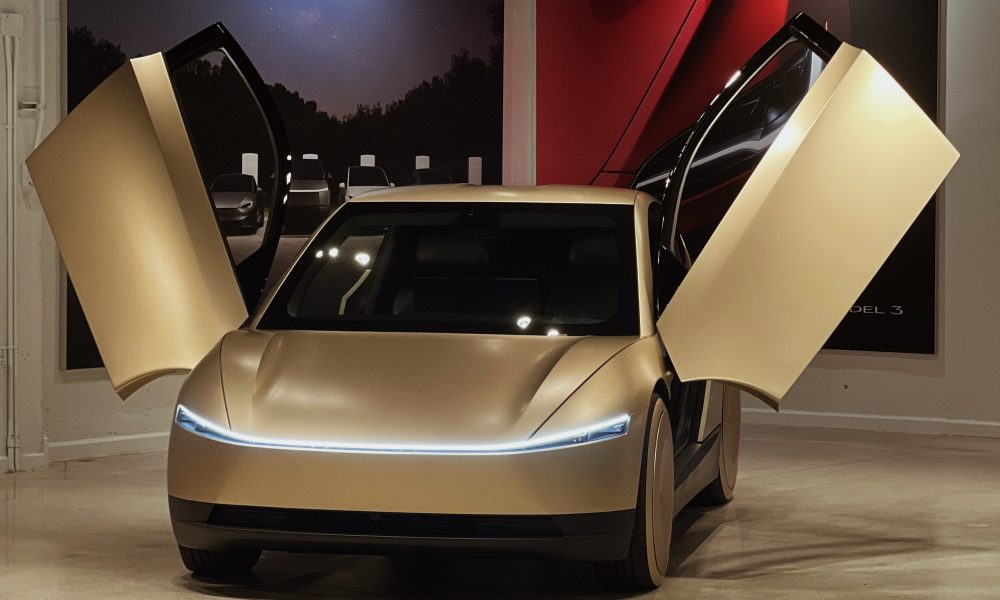
Tesla’s latest reveal about the gold‑finished Cybercab does more than add a flashy hue to its fleet. The company says it has replaced the traditional paint shop – one of the most capital‑intensive, time‑consuming, and polluting steps in auto manufacturing – with a reaction injection molding (RIM) process that embeds color directly into the body panels. If the claimed 35% cut in emissions and total elimination of volatile organic compounds (VOCs) holds up, the shift could dramatically lower factory overhead, accelerate vehicle rollout, and give Tesla a decisive edge as it scales its robotaxi ambitions.
Deep Dive
According to Teslarati, the RIM technique mixes pigment into the polymer feedstock before injection, so each panel emerges from the mold already colored. The company frames the change as a way to shrink "paint cycles from hours to minutes." The process, which dates back to the 1960s, has traditionally been used for interior components, but Tesla is applying it to exterior panels that normally require a separate, multi‑stage paint line.
Our new reaction injection molding (RIM) process shrinks Cybercab paint cycles from hours to minutes. This cuts those parts’ manufacturing and supply chain emissions by 35% and eliminating 100% of paint volatile organic compounds (VOCs) emitted in traditional paint methods.
Beyond the environmental narrative, the financial implications are stark. Tesla’s earlier Cybertruck strategy – opting for an unpainted stainless‑steel skin – was justified by the avoidance of a $200 million paint facility at Gigafactory Texas. The RIM approach promises a similar capex saving while also sidestepping the labor and logistics of a dedicated paint shop, which has historically occupied a large footprint in vehicle plants.
The company also rolled out a software update (version 4.58.5) to its mobile app that displays a bright‑blue “Self‑Driving” label whenever Full Self‑Driving (FSD) is active. The feature, first spotted by X user Jordan Camina, works across hardware generations, but the vehicle side requires software version 2026.20.6.1. Teslarati notes that this version has reached roughly 40% of the fleet, according to telemetry from NotaTeslaApp.
Why does a visual cue matter? In a robotaxi model, vehicle owners – whether individuals or fleet operators – have a direct financial stake in confirming that a car is operating autonomously. Real‑time visibility of FSD engagement could become a trust‑building tool, enabling owners to monitor safety and revenue generation without physically inspecting the car.
External confirmation of the gold‑finished Cybercabs is coming from other outlets, which report that the vehicles are being produced in volume but are not yet serving passengers. This aligns with Tesla’s broader rollout plan: the Cybercab is positioned as the first mass‑produced robotaxi, and the gold finish serves both as a branding exercise and a testbed for the new RIM process.
Audit & Contradictions
The core fact that gold‑painted Cybercabs exist is corroborated by multiple sources, including WKMG and Sherwood News, which report that the vehicles are piling up but have not started passenger service. However, several key claims appear only in the Teslarati piece and therefore require cautious framing.
- The 35% emissions reduction and 100% VOC elimination are presented as Tesla’s own calculations. No independent verification is offered.
- The app’s live “Self‑Driving” indicator, the required vehicle software version (2026.20.6.1), and the 40% fleet penetration figure are all sourced solely from the Teslarati article.
- The description of California’s new $135 million EV incentive program – which caps eligible vehicle prices at $50,000 for new EVs and $25,000 for used – is also single‑source. No other outlet is cited confirming the policy details.
Fact‑check notes indicate a “Low” contradiction level, meaning the article does not contain conflicting statements, but the reliance on a single source for the above technical and policy details means readers should treat those points as Tesla‑reported claims rather than independently verified facts.
Future Outlook
If Tesla’s RIM process delivers on its promised cost and emissions benefits, the company could set a new benchmark for paint‑free vehicle production. Rivian and Lucid, which are currently favored by California’s incentive caps, may feel pressure to adopt similar manufacturing shortcuts to stay competitive on price and sustainability metrics.
Regulators could also take note. A demonstrable reduction in VOC emissions might influence future environmental standards for auto factories, potentially reshaping permitting requirements and incentive eligibility. Conversely, if the claimed 35% emissions cut proves optimistic, Tesla could face scrutiny over green‑washing, especially as the robotaxi market draws heightened safety and transparency expectations.
From a market perspective, the live FSD indicator could become a differentiator for fleet operators weighing the risk‑return profile of autonomous rides. Transparent telemetry may lower insurance premiums and accelerate adoption of robotaxi services, a sector where Tesla currently leads in projected vehicle miles.
Ultimately, the RIM rollout will be a litmus test for how far Tesla can push manufacturing innovation without sacrificing scalability. The next wave of Cybercabs – once they hit the streets – will reveal whether a paint‑free factory can sustain high‑volume production and meet the performance expectations of a burgeoning autonomous‑mobility ecosystem.