Lead Hook
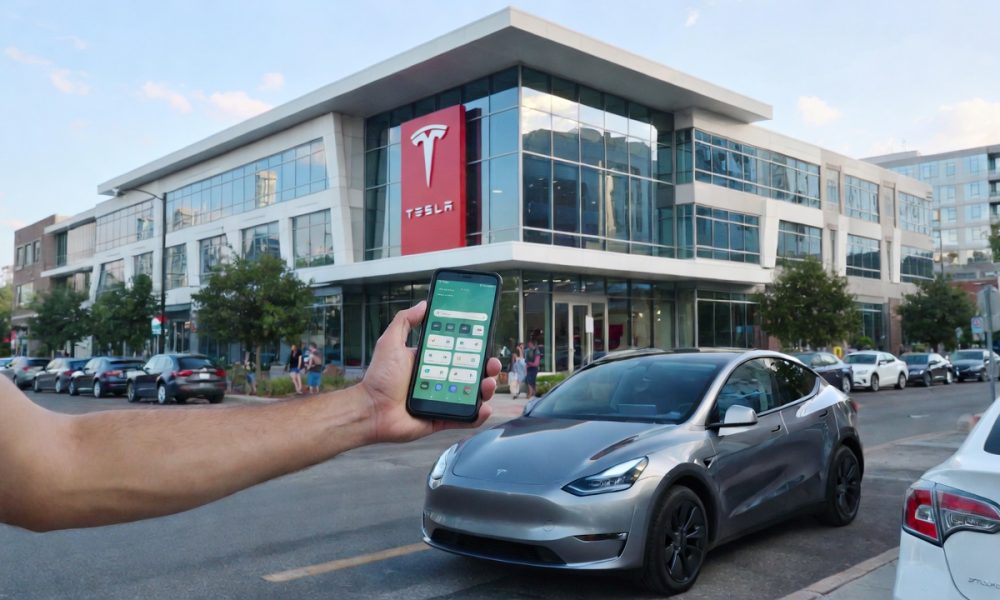
When a Tesla owner opens the mobile app and sees a bright blue "Self‑Driving" label beneath the speed read‑out, it looks like a cosmetic tweak. In reality, the update—rolled out in version 4.58.5—gives owners and fleet operators a real‑time window into whether a vehicle is operating under Full Self‑Driving (FSD) or a human driver. That visibility matters far beyond bragging rights; it creates the data backbone for a new insurance model, a regulatory safety net, and a shift that could turn millions of privately‑owned cars into de‑facto robotaxi assets.
Deep Dive
According to Teslarati, the update adds a live “Self‑Driving” indicator in bright blue text directly under the vehicle’s speed display whenever FSD is actively engaged. The same animation that appears on the car’s touchscreen—glowing blue navigation lines—now mirrors in the app, confirming that the vehicle is in autonomous mode.
The feature was first captured by X user Jordan Camina, who posted video of a Hardware 3 Model S showing the new animation while the car was on the road. Tesla says the indicator works across hardware generations, meaning both HW3 and the newer HW4 platforms can display the status, and the company plans to support all vehicles once the necessary software updates are applied. This cross‑hardware claim is currently sourced only from the Teslarati piece.
On the vehicle side, the indicator requires software version 2026.20.6.1. Teslarati notes that this version has already reached “nearly 40% of the fleet,” as tracked by the independent monitor NotaTeslaApp. While the figure is not corroborated elsewhere, it suggests a sizable portion of Teslas could already be reporting live FSD status.
The timing of the update dovetails with Tesla’s expansion of unsupervised robotaxi rides in Miami, which the same article confirms launched this summer. In a robotaxi scenario, owners who opt their cars into the revenue‑generating network need a reliable way to verify that the vehicle is truly autonomous at any moment. The app now provides that confirmation, effectively turning the owner’s phone into a fleet‑management dashboard.
Beyond operational transparency, the live indicator has direct implications for insurance. Tesla’s own insurance product already adjusts premiums based on a driver’s FSD engagement rates. Real‑time data on whether a car is in autonomous mode could tighten that feedback loop, allowing premiums to be recalibrated on a per‑trip basis. This could lower costs for owners who keep the vehicle in autonomous mode for most of its operating hours, while raising rates for those who frequently intervene.
Another subtle hint in the same software release is Tesla’s plan to use the cabin camera to verify driver identity before FSD activation. The article describes this as “a hint buried in the same app version.” If implemented, the camera could confirm that the registered owner—or a designated driver—remains in the seat before the system hands over control, adding a biometric layer to safety compliance. This claim, too, appears only in the primary source and has not been confirmed by other outlets.
From a regulatory perspective, the ability to prove when a vehicle is under autonomous control could become a key piece of evidence in accident investigations. Current statutes in many U.S. states still grapple with defining liability when a driverless car is involved. By logging FSD engagement in the cloud, Tesla could provide regulators with timestamps and sensor data that clarify who—or what—was in command at the moment of a crash.
Economically, the update lowers the friction cost of turning private Teslas into revenue‑generating assets. Fleet operators typically require telematics that report location, speed, and driver behavior. Tesla’s native app now offers a subset of that data without the need for third‑party hardware, potentially reducing capital outlay for owners who wish to participate in the robotaxi program.
Audit & Contradictions
The core claims—addition of a live self‑driving indicator and the launch of unsupervised robotaxi rides in Miami—are corroborated by multiple outlets, including BASENOR’s coverage of the Miami rollout. However, several statements in the Teslarati article remain single‑source and should be treated with caution:
- Cross‑hardware support for HW3 and HW4, and the promise of eventual universal compatibility, is reported only by Teslarati.
- The “nearly 40%” fleet adoption figure for software version 2026.20.6.1 comes solely from the same source and the independent monitor NotaTeslaApp; no other publication has verified this rate.
- The plan to use the cabin camera for driver‑identity verification before FSD activation is hinted at only in the primary article and has not been confirmed elsewhere.
The fact‑check audit notes a “Low” contradiction level, meaning no direct conflicts were found, but the single‑source nature of the above points warrants hedging language such as “according to the source” or “the article suggests.”
Future Outlook
If Tesla follows through on universal hardware support and expands the cabin‑camera verification, the company could solidify a data‑driven insurance product that dynamically prices risk based on real‑time autonomy usage. Competitors like Waymo and Cruise, which rely on dedicated fleets, may find themselves at a cost disadvantage compared with a model that leverages existing private vehicles.
Regulators could also lean on Tesla’s telemetry as a benchmark for future autonomous‑vehicle reporting requirements. States that are still drafting legislation on driverless cars might mandate that manufacturers provide continuous FSD status logs, echoing the transparency Tesla is now offering.
From an investor’s perspective, the app update could accelerate the monetization of the robotaxi network by lowering the barrier for private owners to join. More participants mean higher ride volume, which in turn feeds back into insurance pricing models and potentially improves the profitability of Tesla’s autonomous services.
However, the success of this strategy hinges on broader software rollout. If the 40% figure proves optimistic, or if cross‑hardware compatibility stalls, the promised fleet‑wide visibility could remain limited, slowing adoption and inviting scrutiny from regulators concerned about inconsistent safety standards.
In the coming months, we should watch for official statements from Tesla confirming the cabin‑camera plan, updates on software version penetration, and any regulatory responses to the new telemetry capabilities. The app’s modest blue label may be the first visible sign of a deeper shift toward a data‑rich, owner‑driven robotaxi ecosystem.