Lead Hook
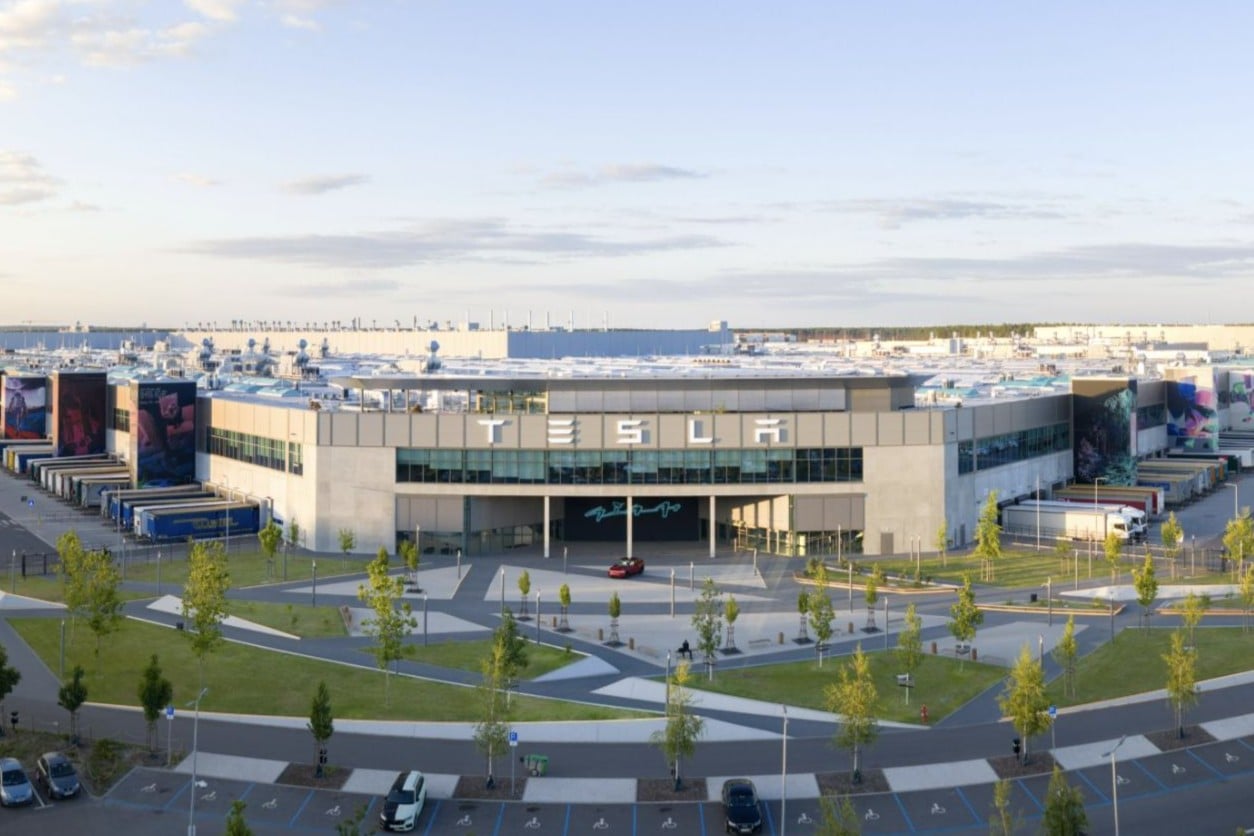
When Tesla opened its Berlin‑Brandenburg Gigafactory to external innovators, it wasn’t just a publicity stunt. The “Cell Giga Challenge” could become a fast‑track for European battery startups, giving Tesla a foothold in a continent that’s scrambling to build a home‑grown supply chain and reduce dependence on Asian cell makers. If the programme delivers on its promises, the Berlin site could move from a vehicle assembly hub to a crucible for the next generation of battery technology, with knock‑on effects for EU policy, local suppliers and rival automakers.
Deep Dive
According to electrive, the Cell Giga Challenge is framed as a five‑phase innovation pipeline. After an online application, selected teams will face technical expert discussions and a pitch session with Tesla representatives. The most promising projects will then receive a paid pilot slot on the actual production line at the Grünheide plant, with the pilot slated to begin in August and applications closing on 24 July. This structure is designed to move concepts from lab bench to factory floor in a matter of months, a timeline that traditional automotive suppliers would find hard to match.
The programme is being run in partnership with the Berlin‑based startup platform JUNI, which is operated by UNITE gGmbH and receives support from the EXIST programme of the Federal Ministry for Economic Affairs and Climate Action. By leveraging an existing incubator ecosystem, Tesla sidesteps the need to build its own scouting and acceleration infrastructure, while also tapping into Germany’s well‑funded research landscape.
From a capital‑efficiency perspective, the announcement comes on the heels of Tesla’s May statement that it will expand the planned annual capacity of its future cell production from eight to 18 GWh, adding $250 million USD to the project and bringing total cell‑production investment to roughly $350 million USD. The company projects that an 18 GWh line could supply battery cells for between 250,000 and 350,000 electric vehicles per year, with production expected to start in the first half of 2027. By opening the line to startups, Tesla can potentially crowd‑source improvements in materials, equipment, manufacturing processes, automation and artificial intelligence—areas that traditionally require multi‑year R&D cycles and substantial capital outlays.
At the same time, Tesla is signaling an aggressive ramp‑up of its vehicle output at Grünheide. The manufacturer plans to increase Model Y production at the site to 7,500 vehicles per week by October, a figure that would place the plant among the highest‑volume EV factories in the world. Global deliveries in the second quarter of 2026 rose 25 percent year‑on‑year to 480,126 vehicles, underscoring the demand pressure driving Tesla’s expansion.
What the announcement does not spell out is how the startup‑driven approach fits into Europe’s broader battery‑policy agenda. The EU has been pushing for a “strategic autonomy” in battery manufacturing through the European Battery Alliance and new sustainability standards. By embedding external innovators directly into its German production line, Tesla may be positioning itself to meet forthcoming EU regulations on carbon‑intensity and recycling while simultaneously securing a pipeline of locally sourced technology. This could give Tesla a regulatory edge over rivals that rely on imported cells from China or South Korea.
Audit & Contradictions
The core fact—that Tesla has launched the Cell Giga Challenge startup programme for battery cell production at its Berlin‑Brandenburg Gigafactory—is corroborated by multiple independent outlets. All other details—such as the five‑phase structure, the partnership with JUNI/UNITE/EXIST, the investment figures, the projected 18 GWh capacity, the Model Y production target, and the Q2 2026 delivery numbers—appear only in the primary source. As a result, these points must be presented with appropriate hedging language (e.g., “According to the announcement,” “Tesla says”). No contradictions have been identified in the source material, so the overall fact‑check rating is low‑risk.
Future Outlook
If the Cell Giga Challenge yields viable production‑scale technologies, the ripple effect could be significant. Competitors such as Volkswagen, BMW and emerging Chinese EV players are also investing heavily in European cell capacity; a successful startup pipeline at Grünheide would pressure them to accelerate their own open‑innovation programs or risk falling behind on cost and performance improvements.
For the European battery ecosystem, the programme could serve as a catalyst for a more integrated supply chain. Startups that prove their solutions in a real‑world factory environment will gain credibility and likely attract further funding, potentially strengthening the EU’s ambition to double its battery‑cell output by 2030. Regulators may view Tesla’s model as a template for how large manufacturers can collaborate with smaller innovators to meet sustainability targets without sacrificing scale.
However, the reliance on a single plant’s capacity also introduces risk. Any production delays—whether from supply bottlenecks, labor disputes, or technical setbacks—could stall the rollout of startup‑derived technologies. Moreover, the financial commitment of $350 million USD for cell‑production infrastructure is sizable; if the pilot projects do not translate into measurable efficiency gains, Tesla could face pressure from investors to justify the spend.
In short, the Cell Giga Challenge is more than a headline‑grabbing initiative. It is a strategic experiment in marrying startup agility with automotive scale, aimed at reshaping Europe’s battery landscape and reinforcing Tesla’s position in a market that is rapidly becoming a geopolitical battleground.