Lead Hook
When Western Sydney International (Nancy‑Bird Walton) Airport announced that it will run on 100% renewable electricity from day one, the headline sounded like a win for climate‑friendly travel. What the press release does not spell out is the massive engineering and financial gamble behind that promise – a $50 million‑plus investment in rooftop solar, a 120 MWh battery, and an embedded network that must keep a busy airport humming around the clock. If the plan holds, it could become a template for other critical‑infrastructure projects; if it falters, it may expose the limits of current renewable‑energy‑as‑a‑service models.
Deep Dive
According to CleanTechnica, CleanPeak Energy will supply all of the airport’s electricity needs through a combination of on‑site generation, battery storage, and power from a growing fleet of solar farms across New South Wales. The existing 4.5 MWp rooftop solar array will be leased, operated and maintained by CleanPeak, while an additional 9 MWp of solar capacity – split between a 4.95 MWp system on the current cargo terminal roof and a 4 MWp system on a second cargo terminal roof – will be added to the site.1
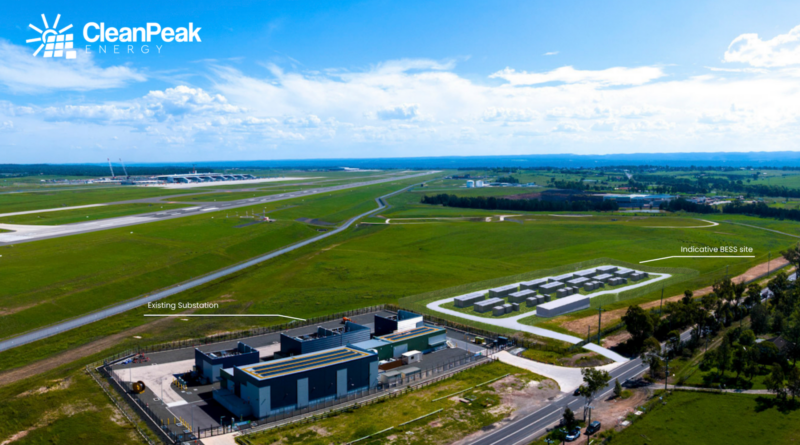
The plan also calls for a 30 MW / 120 MWh Battery Energy Storage System (BESS) slated for delivery in 2027, intended to smooth out the intermittency of solar generation and provide “stability, resilience and peak demand management.”1 CleanPeak will manage an embedded network that distributes electricity to both the airport’s core operations and its tenant businesses, a structure that traditionally belongs to utility‑scale providers.
Financially, the company says it will invest “over $50 million” to develop the new rooftop solar and BESS assets.1 The same source claims that CleanPeak began supplying renewable electricity on 1 May 2026, marking the first day the airport could draw 100% of its power from clean sources.1 The partnership also projects an annual avoidance of roughly 64,000 tonnes of CO₂‑e, an impact the source likens to removing about 22,500 passenger vehicles from Australian roads or powering more than 16,800 average homes for a year.1
From a demand perspective, the airport’s electricity consumption is expected to rise sharply – from around 40 GWh today to about 120 GWh within the next four to five years, with ultimate demand projected to exceed 100 GWh per annum once fully operational.1 To meet that growth, CleanPeak plans to continue adding new solar farms to its portfolio, ensuring sufficient generation capacity as the airport expands.
Crucially, the arrangement hinges on the embedded network’s ability to guarantee uninterrupted power for an operation that cannot afford outages. Airports require 24/7 electricity for runway lighting, air‑traffic control, baggage handling, and an increasingly electric ground‑support‑equipment fleet. The source emphasizes that the integrated solution is “designed from the ground up as a greenfield development… to deliver reliable, clean and green electricity for a major piece of national infrastructure where continuous power supply is essential.”1
The quoted language from CleanPeak’s CEO, Philip Graham, captures the tension between ambition and reliability:
the project demonstrates how critical infrastructure can transition to renewable energy without compromising reliability or performance.This framing suggests that the company believes its hybrid model – on‑site generation plus a broader solar‑farm portfolio and storage – can sidestep the classic challenge of renewable intermittency for a high‑stakes user.
Audit & Contradictions
The partnership’s core claim – that CleanPeak will deliver 100% renewable electricity to Western Sydney Airport – is corroborated by multiple outlets, including PV Tech and IndexBox. However, several quantitative details appear only in the CleanTechnica announcement and have not been independently verified. These single‑source claims include:
- The “over $50 million” investment figure for the 9 MWp solar and 120 MWh BESS.
- The start‑date of renewable supply on 1 May 2026.
- The projected annual CO₂‑e avoidance of 64,000 tonnes and its equivalence to vehicle and household numbers.
Because no other source has confirmed these numbers, they should be treated as company‑provided estimates rather than independently proven facts. The fact‑check audit notes a “Low” level of contradiction, meaning no direct conflicts were identified, but the lack of external verification warrants caution.
What the announcement also leaves out are the contractual terms that would bind CleanPeak to meet the airport’s demand spikes, especially during peak travel periods. There is no discussion of price‑risk mechanisms, penalties for supply shortfalls, or how the embedded network will be regulated under Australian energy market rules. Moreover, the long‑term financing structure – whether the $50 million is equity, debt, or a mix – is not disclosed, leaving open questions about the project’s capital efficiency and potential impact on CleanPeak’s balance sheet.
Future Outlook
If the hybrid model proves reliable, it could accelerate similar renewable‑energy‑as‑a‑service deals for other critical infrastructure such as seaports, data centres, and large manufacturing campuses. The embedded‑network approach sidesteps the need for full‑scale utility upgrades, but it also raises regulatory questions about market access and grid‑code compliance. Australian regulators may need to clarify how third‑party operators like CleanPeak fit into the National Electricity Market’s planning and dispatch processes.
Competitors in the renewable‑energy‑services space will be watching the performance metrics closely. A successful delivery of 100% renewable power with zero reliability incidents could give CleanPeak a strong market differentiator, attracting further contracts from governments eager to meet net‑zero targets. Conversely, any outage or shortfall could reinforce scepticism about relying solely on solar‑plus‑storage for 24/7 operations, potentially prompting a re‑evaluation of the mix of renewable and conventional backup sources.
Finally, the scale of the investment – $50 million for just 9 MWp of rooftop solar – highlights the high capital cost of retrofitting large, non‑industrial sites with renewable assets. As more airports and other transport hubs pursue similar ambitions, economies of scale and standardized embedded‑network designs will be essential to keep costs manageable.
In sum, the CleanPeak‑WSI partnership is a bold experiment in marrying renewable generation, battery storage, and network engineering to meet the relentless power demands of a modern airport. Its outcome will likely shape policy discussions, investment strategies, and the broader narrative around how critical infrastructure can truly decarbonise without compromising the reliability that underpins safety and operations.