Lead Hook
When Pagani rolled out the Huayra 70 Derecho at Goodwood, the headline‑grabbing specs – 852 horsepower, a seven‑speed gated manual and a 217.5 mph electronic limiter – looked like another hypercar fireworks display. Yet the real story lies deeper: an Italian boutique is deliberately doubling down on a manual‑shift V12 platform at a moment when the global supercar segment is sprinting toward electrification and autonomous‑driving aids. In an era where even Ferrari’s recent models rely on dual‑clutch units, Pagani’s choice signals a calculated bet on scarcity, craftsmanship and the affluent buyer who still values the tactile connection of a stick‑shift.
Deep Dive
The Huayra 70 Derecho is the second of three one‑off cars built to celebrate Horacio Pagani’s 70th birthday, following the Trionfo, according to the primary report from Motor1. While other outlets have confirmed the anniversary context, the technical details appear only in that source.
Power comes from a twin‑turbo AMG‑sourced 6.0‑liter V12 that the source says produces 852 hp and 811 lb‑ft (1,100 Nm) of torque. The engine is paired with a seven‑speed manual gearbox equipped with a gated shifter, and the car drives its rear wheels, the report adds. An electronic top‑speed limiter is programmed to cut power at precisely 217.5 mph (350 km/h). These specifications place the Derecho firmly in the hyper‑performance bracket, yet they also highlight a reliance on an external power‑train supplier – Mercedes‑Benz’s AMG division – rather than an in‑house solution.
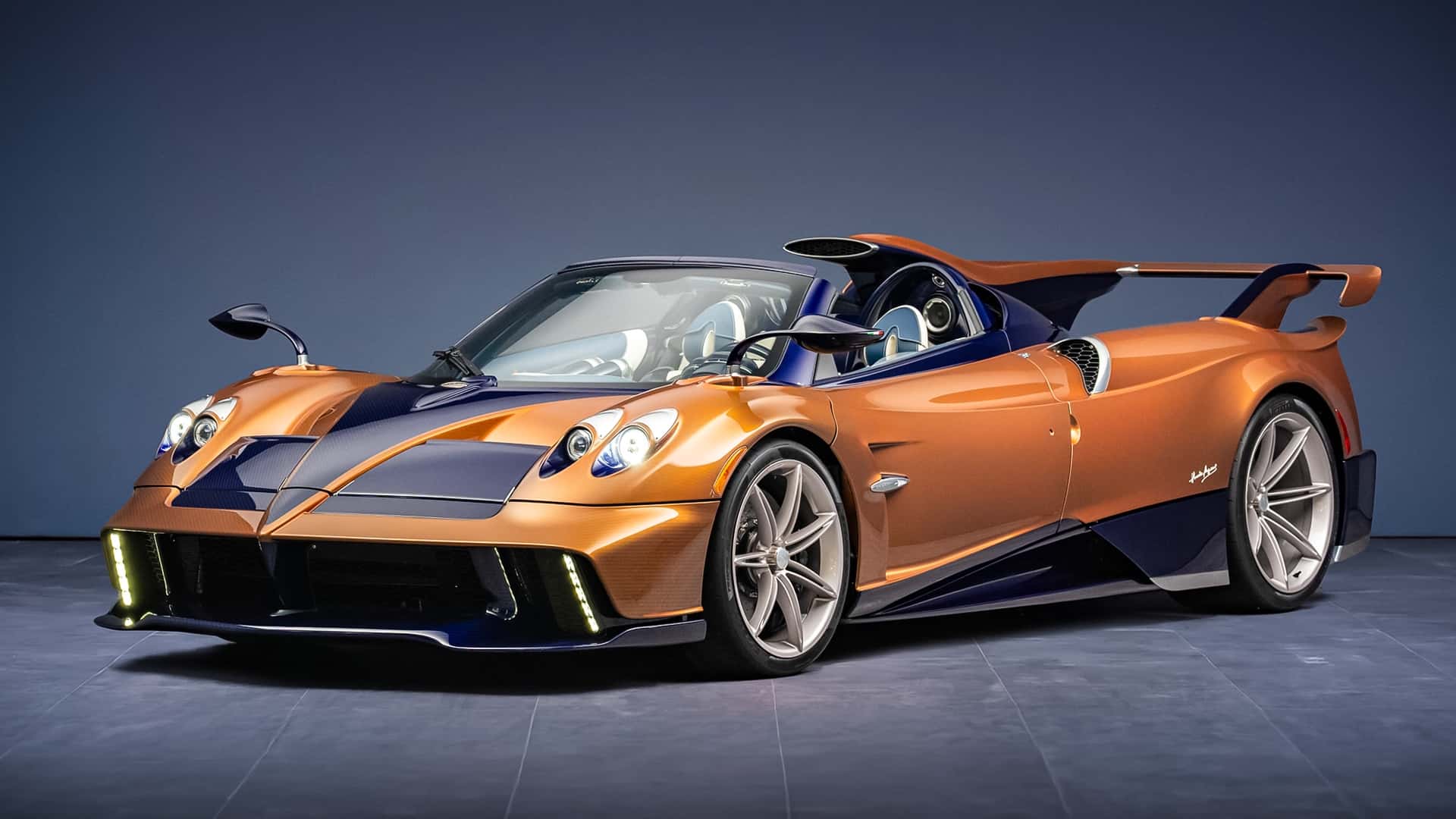
From a design perspective, the one‑off is finished in Pearl Orange with Inky Blue accents, a two‑tone semi‑transparent paint that showcases the carbon‑fiber “fish‑bone” weave. The interior blends Ceramic White and Tricolore Blue leather, while bespoke gauges dominate the dash. The vehicle also sports a wider rear wing with integrated split lights and anodized titanium‑finished aluminum components that match the 20‑ and 21‑inch wheels.
Beyond the specs, the strategic implications are worth unpacking. First, the manual gearbox is a rarity in modern hypercars. Ferrari’s recent 12‑Cilindri Manuale, for example, still relies on a dual‑clutch automatic, and most rivals have shifted to automated manual or fully automatic transmissions that can shift faster than a human. By offering a true stick‑shift, Pagani is catering to a niche of collectors who view manual shifting as an art form – a differentiator that can command premium prices even as the broader market moves toward electric motors that lack traditional gearboxes.
Second, the reliance on an AMG V12 underscores a supply‑chain reality for ultra‑low‑volume manufacturers. Developing an in‑house V12 would require massive R&D investment for a handful of units, so Pagani opts for an existing, proven engine. This approach reduces development risk and shortens time‑to‑market, but it also ties Pagani’s future performance envelope to the strategic decisions of a larger OEM. Should AMG alter emissions standards or phase out large‑displacement internal combustion engines, Pagani could face a bottleneck.
Third, the decision to launch a new manual‑shift hypercar at Goodwood – a festival celebrated for its celebration of automotive heritage – sends a clear market signal. While many manufacturers are unveiling electric concepts, Pagani is reinforcing its brand narrative of “immortal” models that evolve rather than disappear. The source notes that the Huayra 70 Derecho will be displayed alongside the Huayra Codalunga Speedster, the Huayra R with an optional Tempesta package, and a Zonda F Roadster, illustrating a strategy of extending the life of legacy platforms through bespoke variations.
Financially, the one‑off model likely commands a multi‑million‑dollar price tag, though the source does not disclose figures. By leveraging existing chassis and power‑train components, Pagani can keep production costs relatively contained while extracting higher margins from exclusivity. This mirrors a broader trend among boutique manufacturers, such as Bugatti, which continues to monetize legacy models alongside newer offerings.
Audit & Contradictions
The announcement leaves several key questions unanswered. The primary source does not clarify whether the 70 Derecho is built on an entirely new chassis or repurposes an existing Huayra platform. It also withholds performance metrics such as 0‑60 mph times, a data point competitors typically publish for hypercars. Moreover, the claim that the top‑speed limiter is set to 217.5 mph is a single‑source detail; no independent outlet has verified this figure.
According to the fact‑check audit, the core claim that the Huayra 70 Derecho is the second of three anniversary one‑offs is corroborated by other publications, while the engine output, manual gearbox, top‑speed limiter, and Goodwood appearance are single‑source claims. No contradictions were identified, and the overall contradiction level is low.
Future Outlook
Pagani’s manual‑shift bet could influence how other ultra‑luxury manufacturers position their future products. If the 70 Derecho proves popular among collectors, it may encourage rivals to retain or reintroduce manual transmissions in limited runs, preserving a tactile driving experience as a premium differentiator. Conversely, the broader market’s shift toward electrification may pressure Pagani to eventually adopt hybrid or fully electric architectures, especially as emissions regulations tighten across Europe and the United States.
Supply‑chain considerations also loom large. Dependence on AMG’s V12 means Pagani’s production cadence is partly at the mercy of Mercedes‑Benz’s engine strategy. Should the OEM accelerate its move away from large‑displacement internal combustion engines, Pagani may need to explore alternative power sources or develop its own hybrid system to stay viable.
Regulators are unlikely to target a one‑off hypercar directly, but the broader trend of stricter CO₂ limits could indirectly affect the feasibility of future internal‑combustion‑only models. Pagani’s current approach – celebrating heritage while quietly keeping older platforms alive via its Grandi Complicazioni division – may buy time, but the company will eventually need a roadmap for electrified performance if it wishes to sustain its ultra‑exclusive market position.
In sum, the Huayra 70 Derecho is more than a striking visual and auditory spectacle; it is a strategic statement. By championing a manual V12 in a market racing toward silent, autonomous electric cars, Pagani is carving a niche that leans on nostalgia, scarcity, and the enduring allure of driver involvement. Whether that niche can survive the inevitable tide of electrification remains the next chapter in the brand’s storied saga.