Lead Hook
Lucid Motors’ sudden rollout of $10,000‑plus incentives on its 2026 Gravity SUV and Air sedan is more than a marketing splash—it signals a brewing cash‑flow crunch as the company clears out inventory to make room for its 2027 models. In a market where EV startups are battling thin margins, the depth and stacking of these discounts raise questions about Lucid’s production planning, financing health, and competitive positioning.
Deep Dive
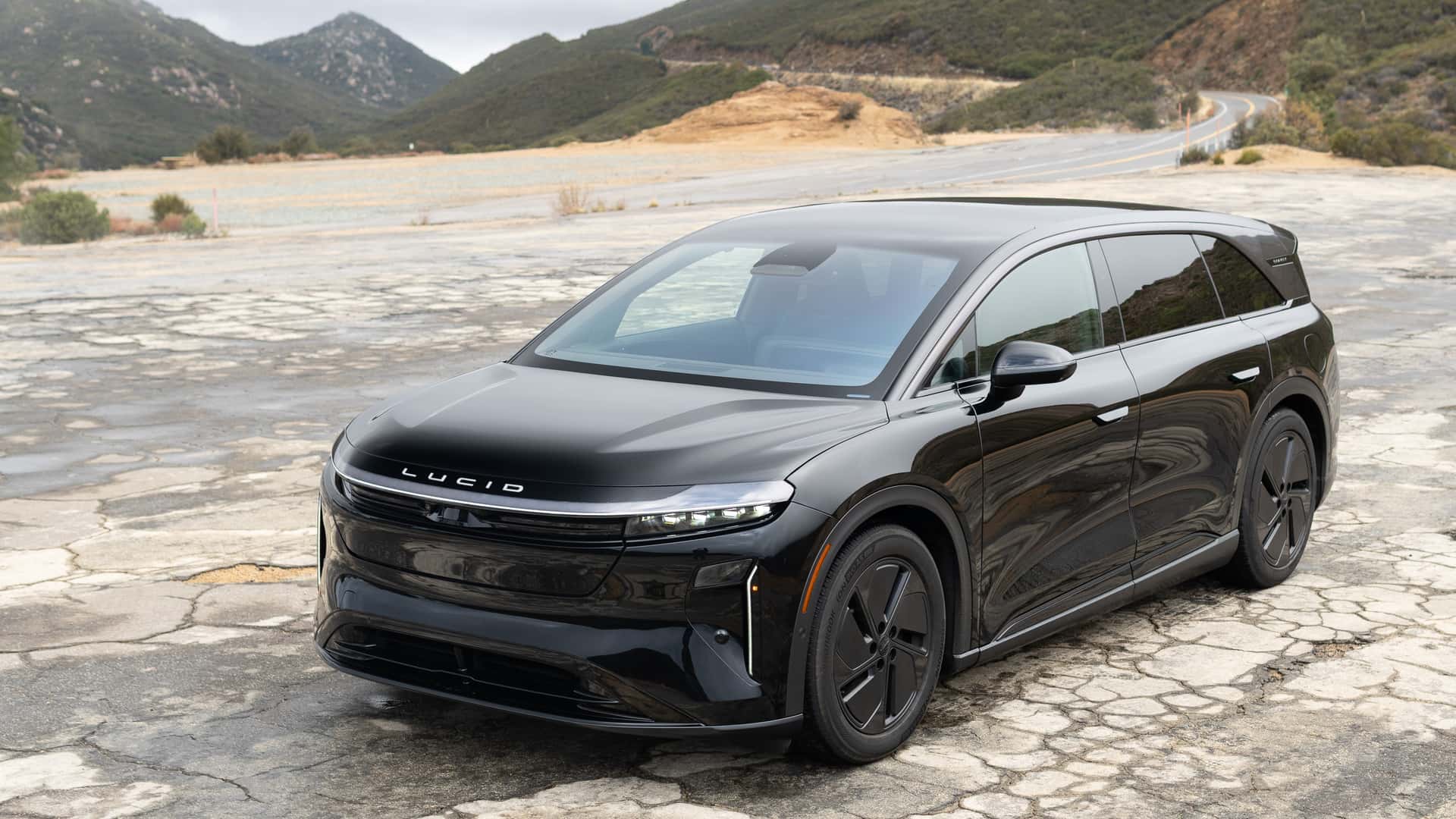
According to InsideEVs, Lucid is discounting inventory vehicles by up to $10,000 this month, but only on the 2026 Gravity SUV and 2026 Air sedan. The headline $10,000 “Lucid Credit” applies to cash purchases of the 2026 Gravity, with an extra $3,000 loyalty credit for existing Lucid owners and a further $3,000 trade‑in allowance—except for the Ineos Grenadier, which Lucid will not accept. The company also pairs the $10,000 credit with a promotional 0 % APR financing offer for up to 72 months on a 2026 Gravity Touring or Grand Touring, requiring a minimum payment of $681 per month and a $20,000 down payment.
Leasing the same Gravity model does not include the $10,000 credit; instead, lessees can still claim the $3,000 loyalty and $3,000 trade‑in credits, resulting in a baseline lease of $699 per month for 24 months with $6,199 due at signing. The Air sedan receives a slightly different structure: the lower‑spec 2026 Air Pure and Touring get a $7,500 cash discount, while the Grand Touring qualifies for a $10,000 cut. Existing owners can add a $2,000 loyalty discount across all Air trims. Financing terms vary—Air Touring can be financed at 0 % APR for up to 60 months with a $2,500 discount, whereas Pure and Grand Touring qualify for 0.99 % APR for up to 60 months with $2,500 and $5,000 credits respectively. Lease‑only loyalty savings for the Air sit at $2,000, with no trade‑in credit mentioned.
The source frames these offers as a way to “empty its inventory, now that the 2027 models have started rolling off the assembly line.” By aggressively pricing older stock, Lucid hopes to free production capacity for the next‑generation vehicles, but the magnitude of the discounts suggests the company may be facing tighter working capital than publicly disclosed.
From a financial‑engineering perspective, stacking multiple credits—cash discount, loyalty credit, and trade‑in allowance—compresses the effective price while preserving the headline MSRP for accounting purposes. The 0 % and 0.99 % APR financing deals also shift cash flow timing: buyers pay less upfront, but Lucid must secure low‑cost capital to fund the loans, a challenge if its balance sheet is already strained.
Competing EV makers are also turning to deep price cuts. InsideEVs notes that Polestar recently announced a $25,000 price reduction on its 2026 Polestar 4, underscoring a broader industry trend where manufacturers use steep discounts to stimulate demand amid slowing sales and looming inventory excess.
Audit & Contradictions
The core claim that Lucid is offering up to $10,000 off 2026 Gravity and Air models is corroborated by other outlets covering the same promotion. However, the detailed breakdown of the $3,000 loyalty and trade‑in credits, the specific APR terms, monthly payment figures, down‑payment requirements, lease pricing, and the stated reason for “clearing inventory because 2027 models have begun rolling off the assembly line” appear only in the primary InsideEVs article. According to the fact‑check audit, these elements are single‑source claims and should be presented as the company’s statements rather than independently verified facts.
There are no reported contradictions between sources; the audit records a “Low” contradiction level, meaning the primary source’s figures stand unchallenged by other reporting.
Future Outlook
If Lucid’s inventory clearance is driven by cash‑flow pressure, the company may need to lean on additional financing or equity raises to sustain production of its 2027 lineup. Competitors such as Polestar, which can afford larger cuts, may further erode Lucid’s market share in the premium EV segment, especially if buyers perceive the discounts as a sign of underlying weakness.
Regulators could also play a role. The U.S. federal EV tax credit, which phases out for manufacturers that exceed a sales threshold, may influence how aggressively Lucid can discount without sacrificing credit eligibility. Should Lucid’s sales volume surge due to the discounts, it could edge closer to that threshold, potentially reducing the credit value for future buyers and complicating its pricing strategy.
In the short term, the stacked incentives are likely to attract price‑sensitive buyers and fleet purchasers who can meet the financing or lease terms. In the longer run, however, the need to clear inventory before the 2027 rollout may hint at over‑production, supply‑chain mismatches, or tighter capital markets—all factors that could shape Lucid’s ability to compete with better‑capitalized rivals.
Analysts will be watching Lucid’s quarterly reports for signs of improved cash conversion and inventory turnover. If the discounts succeed in moving enough units to free up production slots, the company could avoid a deeper cash crunch. If not, it may have to resort to even steeper price cuts or seek strategic partnerships to stay afloat.