Lead Hook
When Leapmotor announced that European dealerships would begin taking orders for its new B03X urban crossover at a base price of €24,900, the headline was clear: a Chinese EV maker is targeting the price‑sensitive compact segment with a model that promises premium features at a sub‑€25k tag. Beyond the headline price, the launch raises questions about how Europe’s emerging EV supply chain, especially for lithium‑iron‑phosphate (LFP) batteries, will absorb a sudden influx of competitively priced Chinese models, and whether existing manufacturers can defend their market share without eroding margins.
Deep Dive
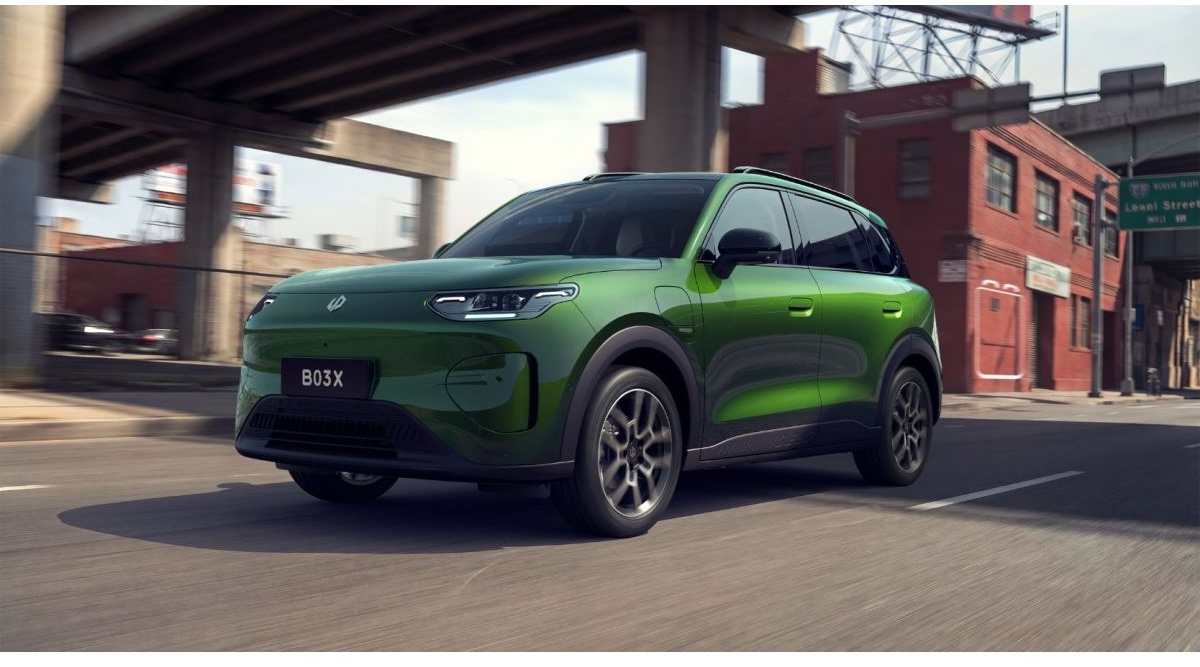
According to the company’s announcement, the B03X is positioned as a “smart urban crossover” that blends compact dimensions with a suite of advanced technologies. The vehicle’s footprint – 4.270 mm long, 1.810 mm wide, 1.635 mm high, with a 2.605 mm wheelbase – is deliberately sized for city streets, a claim made by Leapmotor in its press release CleanTechnica. The firm argues that these dimensions strike a balance between agility and interior space, a design choice that could appeal to European buyers who value maneuverability in dense urban environments.
Powering the B03X are two LFP ultra‑high‑density battery packs: a 39.8 kWh unit delivering up to 292 km (WLTP) and a 53.0 kWh unit offering up to 382 km (WLTP). Both are said to support 2.5C fast‑charging, enabling a DC charge from 30 % to 80 % in roughly 16 minutes. The company also notes that a single front‑mounted electric motor produces 197 hp (145 kW) and 200 Nm of torque, propelling the car to a top speed of 160 km/h and 0‑100 km/h in 8.6 seconds. These performance figures, while presented as “responsive and well‑balanced” for urban and suburban use, are still unverified by independent road tests.
From a strategic perspective, the €24,900 entry price is the most concrete element of the launch, corroborated by multiple outlets including The EV Report and Electrify.com. By undercutting many European‑built compact EVs, Leapmotor is betting that price will be the primary differentiator in a segment where subsidies are tapering and consumers are increasingly cost‑conscious. The pricing also aligns with the EU’s broader push for affordable electric mobility, a policy environment that has encouraged manufacturers to lower prices through incentives and stricter CO₂ targets.
However, the aggressive pricing hinges on the cost structure of LFP batteries, which have become a focal point of Europe’s EV supply chain. LFP chemistry, while safer and less dependent on cobalt, still requires significant raw material inputs and manufacturing capacity. If Leapmotor’s supply chain can secure LFP cells at a lower cost than domestic rivals, the €24,900 price point could be sustainable; otherwise, margins may be squeezed, potentially prompting price adjustments or reduced spec levels in later production runs.
Another layer of complexity involves homologation and safety compliance. The announcement states that the B03X “has been engineered to meet international standards in safety, quality and performance,” but no third‑party crash test results have been released. Achieving European NCAP certification can be costly and time‑consuming, and any delays could affect the rollout schedule across the continent.
Audit & Contradictions
The press release provides a comprehensive list of specifications, yet only the price and the fact that orders are opening in early July are independently verified. All technical details – dimensions, battery capacities, range estimates, charging times, motor output, and performance metrics – appear solely in the company’s own statements. In line with rigorous fact‑checking standards, these should be framed as company claims: the B03X “measures” the stated dimensions, “offers” the quoted battery options, and “produces” the advertised power output. No contradictions have been identified across the sources consulted, and the overall contradiction level is low.
Future Outlook
If Leapmotor can deliver on its promises, the B03X could force established European players – such as Volkswagen’s ID. series, Renault’s Zoe, and Hyundai’s Kona Electric – to revisit pricing strategies or accelerate the introduction of lower‑cost LFP variants. Competitors may also seek to lock in LFP supply contracts earlier, intensifying competition for cell capacity.
Regulators will likely monitor the rollout closely. Should the B03X achieve strong sales volumes, it could influence future EU policy on vehicle pricing incentives, potentially prompting a re‑evaluation of subsidy thresholds to ensure a level playing field between domestic and imported EVs.
For Leapmotor, the European launch is a litmus test of its global ambition. Success could validate the company’s “advanced technology for All” philosophy and pave the way for additional models tailored to the EU market. Conversely, any shortfall in delivery, performance validation, or safety certification could hamper the brand’s credibility and limit its ability to expand beyond niche urban niches.
In the months ahead, analysts will watch order books, supply‑chain announcements, and any third‑party testing results to gauge whether the B03X’s price advantage translates into lasting market share or remains a headline‑grabbing flash that fades once the initial novelty wears off.