Lead Hook
Land Rover’s latest mid‑life update for the Defender does more than add a glossy grille and a new badge. By retiring its flagship ‘AJ’ supercharged V8 and dialing back the Octa’s output to 533 bhp, the British automaker is responding to a regulatory tide that is reshaping the high‑performance SUV market. The move also signals a strategic pivot toward urban customers who value style and daily usability as much as off‑road capability. As emissions standards tighten across Europe, the Defender’s powertrain changes reveal how legacy manufacturers are re‑engineering heritage models to stay compliant and profitable.
Deep Dive
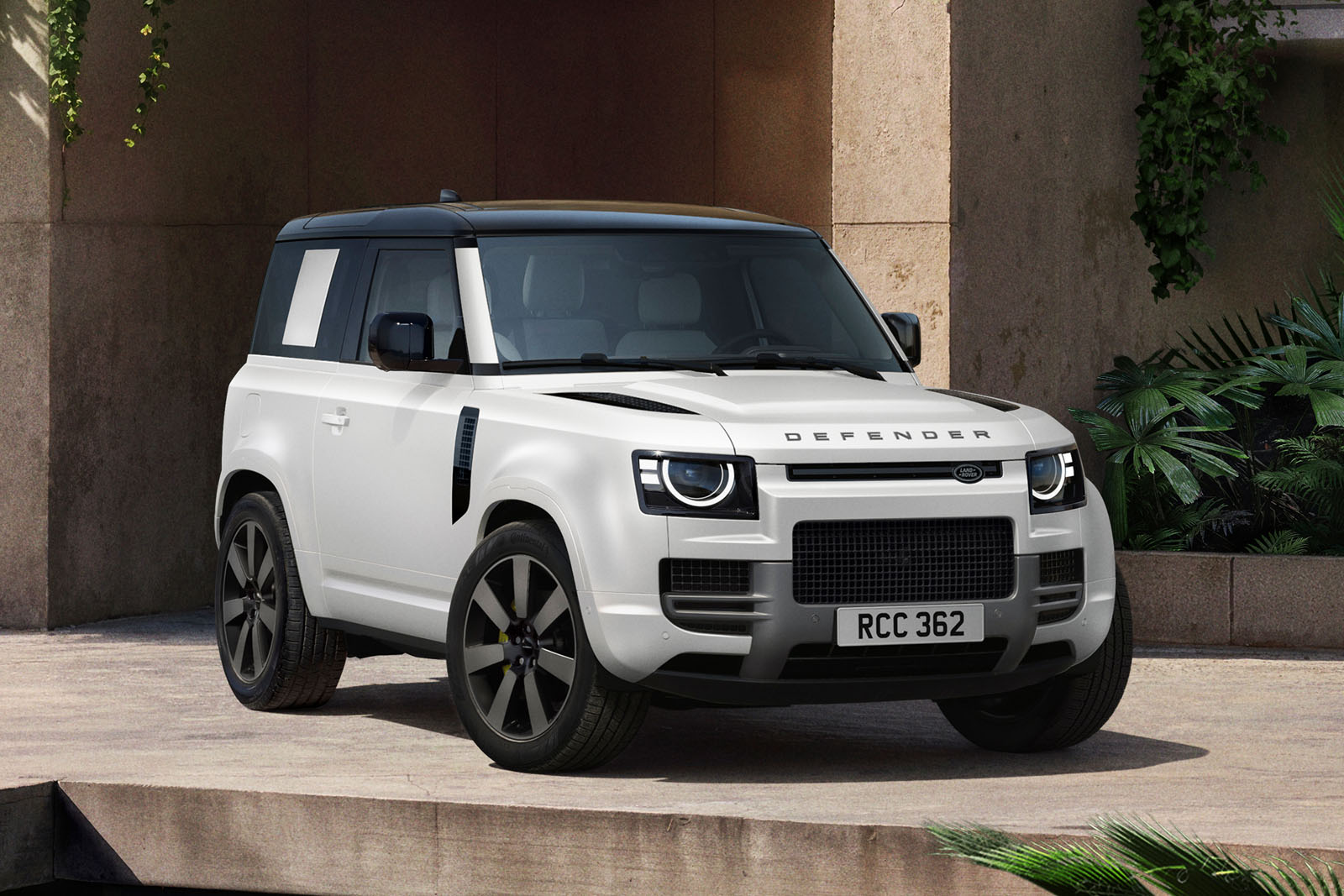
According to Autocar, the new Defender Vertex trim is positioned alongside the X‑level specification and arrives with a larger front grille, body‑coloured side skirts and cladding, and a subtle roof spoiler that can also be fitted to other Defender variants via the optional Extender Exterior pack. The visual overhaul is complemented by 22‑inch diamond‑cut alloy wheels as standard, with a 20‑inch design offered as an alternative.
Beyond aesthetics, the update introduces a six‑seat interior layout for the Defender 110. The cabin now features three rows of two captain’s chairs, each with thicker bolstering and a recline function. The middle seat in the second row has been removed, which the manufacturer claims creates additional legroom for rear passengers and opens up luggage space between the rows. Pricing starts at £92,635 for the 90‑inch short‑wheelbase version, £97,125 for the 110‑inch, and £104,440 for the 130‑inch model.
However, the most consequential change lies under the bonnet. The article confirms that JLR has retired the long‑running ‘AJ’ supercharged V8, a powerplant that has become synonymous with the Defender’s performance pedigree. The Octa’s 4.4‑litre V8, supplied by BMW, now produces 533 bhp—down from 626 bhp—while torque remains at 553 lb‑ft. This reduction lengthens the 0‑60 mph sprint from 3.8 seconds to 4.2 seconds. JLR told Autocar that the engine was re‑engineered to meet the stricter Euro 6e‑bis emissions standard, a compliance move echoed by independent outlets covering the launch.
In tandem with the power‑train downgrade, Land Rover has added a new P380 mild‑hybrid option: a twin‑turbocharged 3.0‑litre straight‑six that delivers 375 bhp and 405 lb‑ft of torque. The P380 sits alongside a range of smaller petrol, diesel and plug‑in hybrid units that remain unchanged. While the company advertises a “truer V8 sound” from a reworked exhaust manifold, the overall reduction in peak output underscores a trade‑off between raw performance and emissions compliance.
"a new character that expands the appeal" – Mark Cameron, Defender brand director
The shift in power output is not merely a technical footnote; it reflects the impact of Euro 6e‑bis, the latest European emissions regime that tightens limits on CO₂ and NOx for diesel and gasoline engines. By detuning the Octa V8, JLR can avoid costly after‑treatment upgrades that would otherwise be required to keep the engine within the new limits. This mirrors a broader industry pattern where manufacturers are either sacrificing top‑end power or accelerating electrification to meet regulatory deadlines.
From a market perspective, the introduction of the Vertex trim—styled with urban‑centric design cues and priced for premium buyers—suggests Land Rover is courting city‑based professionals who may never take the vehicle off‑road. The six‑seat configuration, with its emphasis on passenger comfort, further aligns the Defender with a lifestyle segment that values on‑road refinement as much as rugged capability. In an era where SUV sales are increasingly driven by urban commuters, the Defender’s evolution may be an attempt to capture higher‑margin sales while navigating the constraints of stricter emissions legislation.
Audit & Contradictions
Fact‑checking the announcement reveals a clear split between corroborated claims and those that appear only in the primary Autocar piece. Independent outlets such as Autospies.com and Yahoo Autos confirm the core power‑train updates: the retirement of the ‘AJ’ V8, the Octa’s output reduction to 533 bhp, and the addition of the 375 bhp P380 mild‑hybrid. These elements are therefore solidly verified.
Design specifics—including the larger grille, body‑coloured skirts, roof spoiler option, and wheel sizes—are documented solely by Autocar and must be presented with appropriate hedging. Likewise, the price points (£92,635, £97,125, £104,440) and the six‑seat interior layout are single‑source claims. The fact‑check audit notes no contradictions between sources, assigning a “Low” contradiction level. Consequently, the article flags these details as single‑source information while acknowledging the lack of conflicting reports.
Future Outlook
Land Rover’s strategy with the Defender Vertex may set a precedent for other legacy SUV makers. As Euro 6e‑bis compliance becomes mandatory, we can expect further de‑tuning of high‑output engines unless manufacturers invest heavily in hybridisation or full electrification. Competitors such as Jeep and Toyota, which also rely on V8 powertrains for flagship off‑road models, may face similar engineering decisions.
For Land Rover, the urban‑focused trim could open a new revenue stream, but it also raises questions about the brand’s long‑term identity. If future updates continue to prioritize city aesthetics and reduced emissions over off‑road prowess, the Defender could gradually shed its rugged image—a risk that may alienate core enthusiasts while attracting a broader, more affluent customer base.
Regulators, meanwhile, will likely monitor how such power reductions affect real‑world emissions. Should the detuned V8s deliver measurable CO₂ savings, the approach could be touted as a viable interim solution while the industry ramps up battery‑electric platforms. In the meantime, the Defender Vertex stands as a tangible illustration of how tightening environmental rules are reshaping even the most iconic off‑road vehicles.