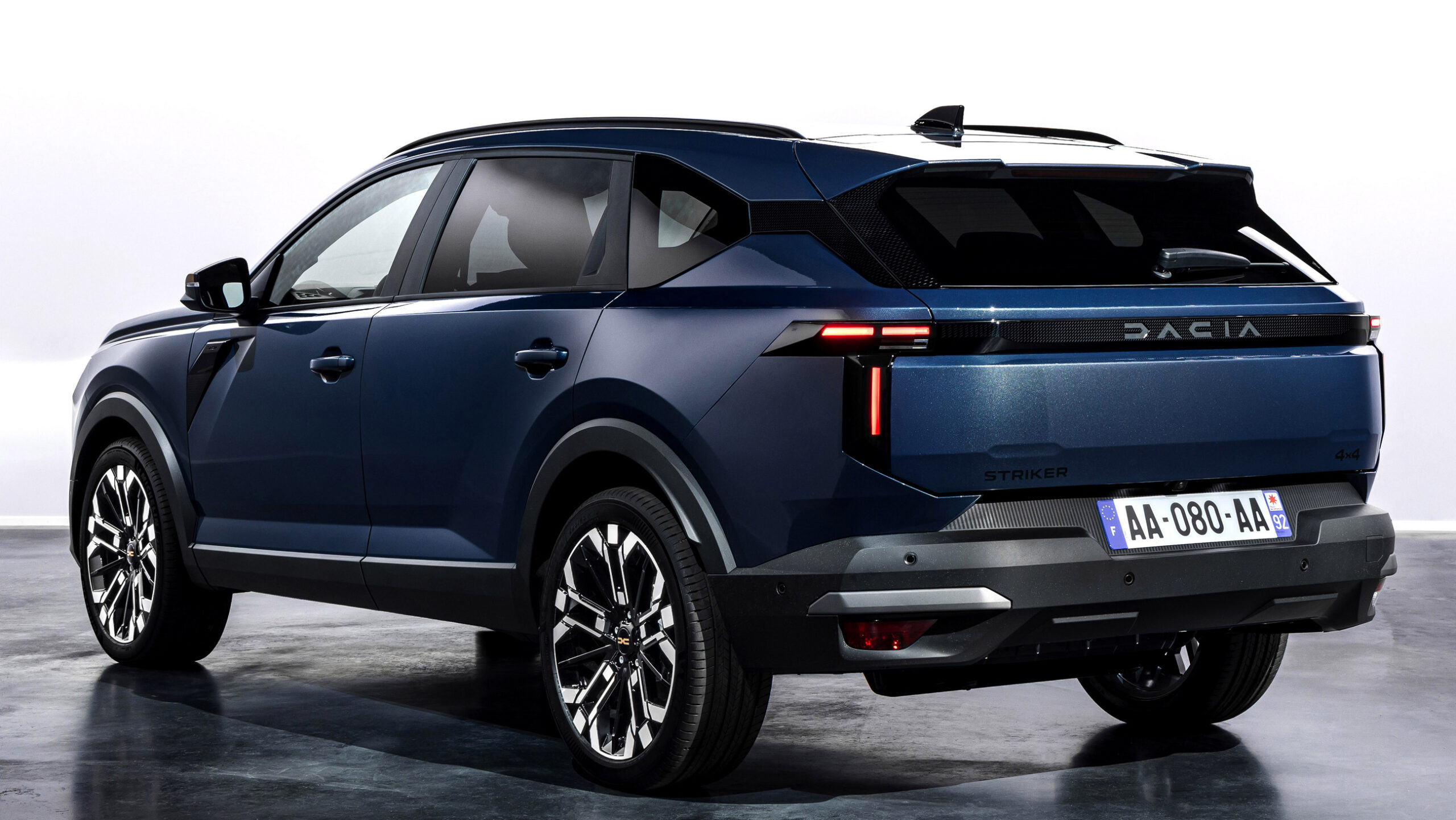
Lead Hook
When Dacia unveiled the Striker, it did more than add another nameplate to the compact segment. By pricing the model at under €25,000 and branding it simultaneously as an SUV, a saloon and an estate, the Romanian‑based brand is probing how far European manufacturers can stretch hybrid technology into the budget tier. In a market where pure‑electric cars still carry price tags well above €30,000, the Striker’s pricing strategy could force regulators, rivals and suppliers to reassess the economics of low‑cost electrification.
Deep Dive
The Striker’s design borrows heavily from Dacia’s existing CMF‑B architecture, the same modular platform underpinning the Duster and Bigster. By re‑using this architecture, Dacia sidesteps the costly development of a dedicated electric chassis, allowing it to embed a self‑charging hybrid system without inflating the sticker price. According to the primary source, the vehicle is offered with two hybrid powertrains. The first, dubbed Hybrid 155 (FWD), pairs a naturally aspirated 1.8‑liter four‑cylinder engine producing 109 hp with a 49 hp electric motor and a modest 1.4 kWh lithium‑ion battery. The second, the Hybrid 150 4×4, adds a turbocharged 1.2‑liter engine (140 hp) and a rear‑mounted 31 hp electric motor, delivering all‑wheel‑drive capability and five selectable driving modes.
Both setups are described as “self‑charging,” meaning the electric motor assists the internal‑combustion engine and recovers energy during deceleration, but they do not require external charging. This approach keeps the vehicle’s cost structure aligned with Dacia’s budget ethos while still delivering the hybrid‑related emissions credits needed to satisfy EU fleet‑average targets.
Beyond powertrain economics, the Striker’s physical dimensions are noteworthy. The source states the model stretches to 4.62 meters in length—about 50 mm longer than the Bigster—while maintaining a roof height of 1.53 meters, which is lower than most SUVs. The lower roof contributes to an aerodynamic coefficient of 0.29 cd, a figure more typical of compact hatchbacks than of lifted wagons. Ground clearance is listed at 190 mm in the standard version and 200 mm for the all‑wheel‑drive variant, offering enough off‑road capability to justify the SUV badge without compromising on on‑road dynamics.
Inside, the Striker follows Dacia’s cost‑efficient philosophy: a 7‑inch digital instrument cluster and a 10.1‑inch infotainment screen are standard across all trims, as are safety features like a rear‑view camera, parking sensors and an ADAS suite that can be disabled via a “My Safety” button. The interior layout is a two‑row, five‑seat configuration, distinguishing it from the three‑row‑capable Jogger, and offers a 600‑liter cargo volume with an Easy Fold rear bench and a modular boot floor. Optional accessories include a 480‑liter roof box and a panoramic glass roof, further blurring the lines between SUV, estate and saloon.
Pricing is the most striking element. Dacia promises a starting price under €25,000 (approximately $28,300), a figure that undercuts many subcompact SUVs and compact hatchbacks, as confirmed by both the primary source and an independent outlet that highlighted the “three‑car” marketing claim. By positioning the Striker at this price point, Dacia is effectively betting that European buyers—especially those in price‑sensitive markets like France, Spain and Italy—will prioritize affordability and hybrid efficiency over pure electric range.
Audit & Contradictions
Two core claims from the announcement are corroborated by an independent news outlet: the sub‑€25,000 starting price and the marketing positioning as an SUV, saloon and estate simultaneously. No contradictions have been identified, and the fact‑check audit rates the overall consistency as “Low” in terms of conflict.
However, several technical details appear only in the primary source and therefore warrant cautious reporting. The vehicle’s overall length of 4.62 meters, the 50 mm difference compared with the Bigster, and the specific ground‑clearance figures (190 mm standard, 200 mm AWD) are single‑source claims. Likewise, the exact specifications of the two hybrid powertrains—engine displacement, horsepower outputs and battery capacity—are reported solely by the source. While there is no reason to doubt these figures, they have not yet been verified by third‑party testing or regulatory filings.
In addition, the source does not disclose production volume targets, supply‑chain constraints, or the extent of any government subsidies that may be supporting the low price. The omission leaves unanswered questions about how Dacia will sustain profitability on a model that undercuts many competitors on cost.
Future Outlook
If the Striker meets its price and performance promises, it could force other manufacturers to reconsider the economics of offering hybrid options in the sub‑€30,000 bracket. Brands such as Renault, Peugeot and Skoda have already hinted at low‑cost hybrid variants, but few have committed to a price as aggressive as Dacia’s.
Regulators may also take note. The European Union’s tightening CO₂ limits for new cars, set to average 95 g/km by 2025, pressure automakers to increase electrified sales. By delivering a hybrid at a budget price, Dacia could help its parent group, Renault, meet fleet‑average targets without relying solely on higher‑priced pure‑electric models.
Supply‑chain implications are equally important. The Striker’s reliance on the existing CMF‑B platform and shared powertrain components suggests a strategy of parts commonality that reduces tooling costs and mitigates semiconductor shortages that have plagued the industry. If the model proves popular, it may validate the “platform‑first” approach for low‑cost electrification across other brands within the Renault‑Nissan‑Mitsubishi alliance.
Finally, consumer reception will be the ultimate test. The market’s appetite for a vehicle that claims to be three different body styles at once—while staying under €25,000—remains unproven. Early sales data from Europe and the UK, expected shortly after launch, will reveal whether the Striker’s hybrid bargain is a fleeting novelty or a blueprint for the next wave of affordable, low‑emission cars.
"the high driving position and outdoor capabilities of an SUV, the versatility and convenience of an estate, and the efficiency and performance of a saloon."
—Dacia marketing language, as reported by Carscoops.