Lead Hook
When a budget brand rolls out a vehicle that can undercut premium wagons by more than €5,000 while promising hybrid efficiency, the story is about more than price. It is a signal that the Renault Group is using its low‑cost Dacia marque to plug a widening gap in Europe’s mainstream segment – a gap left by luxury manufacturers exiting the affordable wagon market and by tightening EU emissions regulations. The Dacia Striker, announced at a price of under €25,000, may become a key lever for Renault to keep its fleet‑average CO₂ numbers in check while still selling volume in a segment that is rapidly disappearing.
Deep Dive
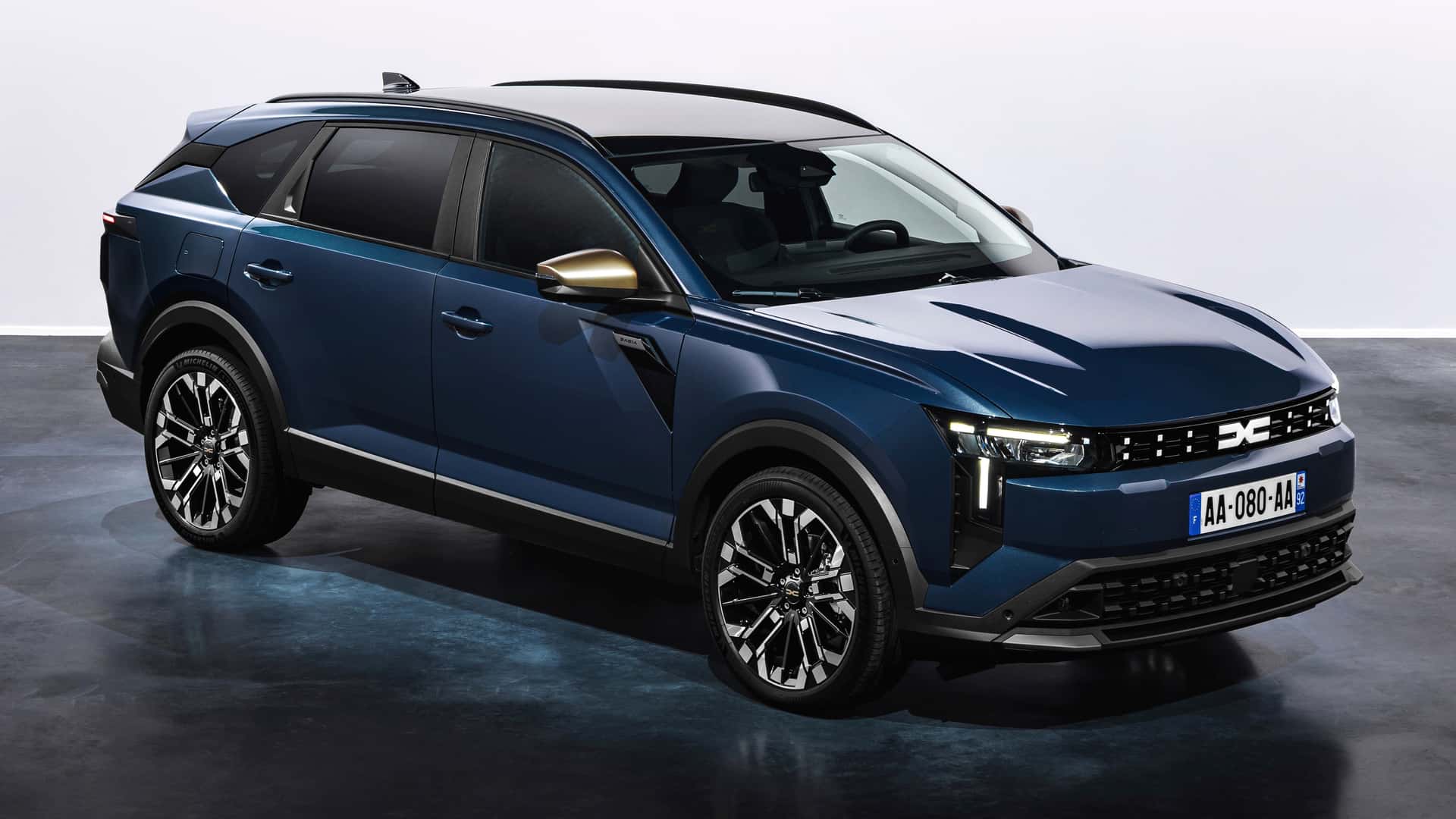
According to Motor1, the Striker is marketed as a “lifted wagon” that blends the ruggedness of an SUV, the versatility of a wagon, and the efficiency of a sedan. The vehicle measures 4.62 meters (about 182 inches) in length, slotting it into the compact (C‑segment) class that traditionally hosts models such as the VW Golf or Peugeot 308. Its dimensions allow it to qualify for lower tax brackets in many European markets, a subtle but important advantage for cost‑sensitive buyers.
The most striking technical claim is the breadth of power‑train options. Motor1 outlines three configurations: a 1.2‑liter three‑cylinder turbocharged gasoline engine that can also run on LPG and is paired with a mild‑hybrid system; a full‑hybrid setup built around a naturally aspirated 1.8‑liter four‑cylinder engine delivering 109 hp plus a 49 hp electric motor; and an all‑wheel‑drive (4×4) version that couples the 1.2‑liter mild‑hybrid engine with a rear‑mounted electric motor, together producing a combined 150 hp. The all‑wheel‑drive model uses a six‑speed dual‑clutch automatic for the front axle and a two‑speed gearbox for the rear motor, with the rear motor disengageable when not needed.
From an emissions‑strategy perspective, the decision to forego diesel entirely aligns with Renault’s broader move away from oil‑burners to reduce fleet‑wide CO₂ output. LPG capability on the base engine offers a lower‑carbon alternative for markets where LPG infrastructure is widespread, while the full‑hybrid system promises up to 80 percent electric operation in city driving – a figure quoted by Motor1 that would help buyers claim lower road‑tax rates in jurisdictions that reward electric‑mode usage.
Beyond power‑train economics, the Striker’s cargo capacity is highlighted as a competitive advantage. Motor1 says the rear hatch opens to a 600‑liter (21.1 cubic‑feet) cargo area and introduces a three‑piece cargo floor with two height settings, allowing owners to configure space for both small parcels and bulkier loads. Inside, the cabin features a 10.1‑inch touchscreen, a 7‑inch digital instrument cluster that uses optical reflections for a 3‑D effect, a panoramic glass roof, and 17‑inch steel wheels that can be upgraded to 19‑inch alloys. Hill Descent Control, plus driving modes labeled Auto, Eco, Snow, Mud/Sand, and Off‑Road, are listed as standard equipment, painting the Striker as a “do‑it‑all” vehicle.
All of these specifications are presented at a starting price of under €25,000, a figure corroborated by multiple outlets including Automotive News and AutoNext. The price point is deliberately positioned below the entry level of competing luxury estates such as the Audi A6 Allroad or Mercedes‑B Class All‑Terrain, which often exceed €30,000. By keeping the Striker under the €25,000 threshold, Dacia can attract families and small‑business owners who need volume and versatility without the premium badge markup.
The strategic calculus for Renault is evident. Europe’s fleet‑average CO₂ targets for 2025 and 2030 require manufacturers to lower emissions across all models, not just flagship electric cars. Offering a low‑cost, hybrid‑enabled wagon expands the group’s low‑emission portfolio, diluting the average emissions of its higher‑selling models. Moreover, with rivals like Volkswagen pulling the plug on its Alltrack line, Dacia’s entry fills a niche that could otherwise drift to competitors or to used‑car markets, preserving Renault’s market share in the mainstream segment.
Audit & Contradictions
The announcement is transparent about price – the sub‑€25,000 figure is verified by independent sources. However, most technical details—including the vehicle’s classification as a lifted wagon, the exact hybrid power‑train outputs, cargo‑space measurements, dimensions, and equipment list – appear only in the Motor1 story. As such, these points must be treated as single‑source claims and are hedged with phrasing such as “according to Motor1.” No contradictions have been identified between the primary article and other outlets; the fact‑check audit rates the contradiction level as low.
What the press release does not disclose are production timelines, supply‑chain constraints, or the cost‑structure that enables the sub‑€25,000 pricing. It also omits any discussion of how the Striker will be homologated for safety and emissions across the varied regulatory regimes of the EU, nor does it address potential challenges in scaling LPG and hybrid components amid global semiconductor shortages. These omissions leave open questions about the model’s real‑world rollout and profitability.
Future Outlook
If the Striker reaches the market as described, it could pressure other manufacturers to revisit low‑priced, hybrid‑ready wagons. Brands that have exited the segment – such as VW with its Alltrack – may feel compelled to re‑enter or to offer cheaper, less‑premium variants under their own budget sub‑brands. At the same time, the Striker’s hybrid and LPG options could set a benchmark for cost‑effective emissions compliance, prompting regulators to consider how such “mixed‑fuel” solutions fit into future CO₂ averaging rules.
For Renault, the Striker could become a cornerstone of its “futuREady” roadmap, which envisions four EVs and new models by 2030. By leveraging Dacia’s reputation for value, the group can diversify its emissions portfolio without cannibalising its higher‑margin Renault‑branded offerings. Competitors will watch closely to see whether the Striker’s blend of price, practicality, and hybrid tech can translate into sustained sales, or whether the lack of independent verification of its specifications will hinder consumer confidence.
In a market where the affordable wagon is rapidly disappearing, the Dacia Striker may not only fill a physical gap on the showroom floor but also plug a strategic one in Renault’s emissions playbook. Whether it succeeds will depend on how quickly the promised specifications materialise on the road and how effectively the brand can navigate the supply‑chain and regulatory complexities that lie ahead.