Lead Hook
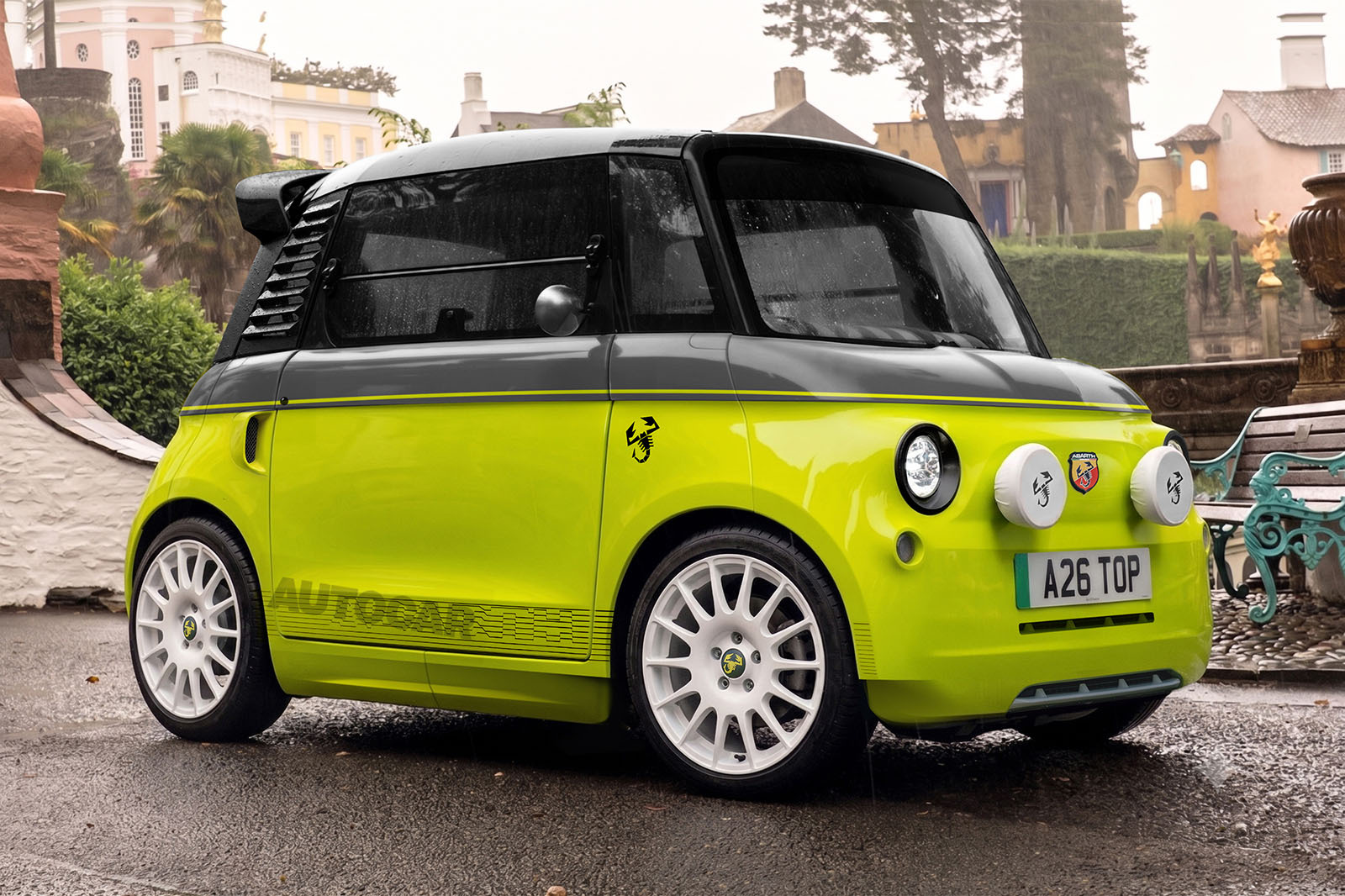
Fiat’s latest ambition is to turn its modest Topolino quadricycle into a “hot” Abarth‑branded model to capture teenagers who have so far ignored the vehicle. The move matters because it pits branding against strict European L6 quadricycle regulations that limit power and top speed, raising questions about whether styling alone can win a generation that traditionally gravitates toward louder, more performance‑oriented micro‑cars.
Deep Dive
According to Autocar, the Topolino is classified as an L6 quadricycle. This classification permits 14‑year‑old drivers to operate the vehicle on public roads in France and Italy, though the United Kingdom still requires a full driving licence. The L6 label, however, imposes strict limits on engine power and maximum speed, meaning any Abarth‑styled Topolino would likely retain the same modest performance as the standard model.The current Topolino buyer demographic skews older; the source reports that the average purchaser is in their mid‑40s. Fiat’s strategy therefore hinges on a shift in perception rather than a technical upgrade. The company recently introduced a Topolino Sport variant in Italy, featuring fresh exterior colours, racing stripes, a black interior and a removable Bluetooth speaker dubbed the Monsterlino. While these touches add a sportier aesthetic, they do not alter the vehicle’s underlying performance envelope.
Executive commentary underscores the marketing focus. CEO Olivier François called an Abarth Topolino “a dream” and suggested it “would be a total hit”. European chief Gaetano Thorel added, “We want to make an Abarth feeling for the Topolino, because we are still trying to boost selling it to young people.” He further explained the challenge: “It’s amazing: Topolino is the most successful quadricycle in Italy, and if we’re being honest we still don’t catch the heart of 16‑ and 17‑year‑olds. I want to gain their hearts, which is why we now have Topolino Sport. An Abarth Topolino could be another solution.”
“It’s amazing: Topolino is the most successful quadricycle in Italy, and if we’re being honest we still don’t catch the heart of 16‑ and 17‑year‑olds. I want to gain their hearts, which is why we now have Topolino Sport. An Abarth Topolino could be another solution.” – Gaetano Thorel, Fiat European chief
The quote highlights a cultural insight: in Italy, parents often prefer the four‑wheel Ligier micro‑car for 14‑year‑olds because its 50 cc petrol engine provides a distinctive sound and a perception of sportiness. Thorel describes the Ligier as a “status thing”, noting that its engine noise and feel make it more appealing than the “gentle” Topolino. This perception gap suggests that simply re‑branding the Topolino with Abarth badges may not be enough to sway youth who associate excitement with audible engine notes and higher speeds.
Regulatory constraints compound the branding dilemma. L6 quadricycles are limited to a maximum continuous power output of 4 kW (approximately 5.4 hp) and a top speed of 45 km/h (about 28 mph) in most EU markets. These caps are designed to keep the vehicles safe for younger drivers but also restrict the performance envelope that many young enthusiasts seek. Consequently, an Abarth‑styled Topolino would likely remain a low‑speed city commuter, differentiating itself only through visual cues such as sportier stripes, a black interior, and the Monsterlino speaker.
From a business perspective, the decision reflects Fiat’s broader micromobility push. By expanding the Topolino lineup, the automaker hopes to increase market share among younger drivers who are increasingly drawn to electric micro‑vehicles for urban use. However, the reliance on a single source for these claims, as noted in the fact‑check audit, means that Fiat’s internal plans have not been independently corroborated, leaving the true extent of development and investment uncertain.
Audit & Contradictions
The source material is the sole origin of all principal assertions – from the contemplated Abarth Topolino to the demographic data and the Topolino Sport launch details. The fact‑check audit labels each of these points as “single‑source”, requiring careful hedging. For example, the claim that the Topolino’s average buyer is in their mid‑40s is reported only by Autocar, and no independent outlet has confirmed it. Likewise, the description of the new Sport variant and the executive quotes are exclusively sourced from the same article.
There are no reported contradictions; the audit notes a “Low” contradiction level, meaning no other outlet has presented conflicting information. Nonetheless, the lack of corroboration highlights a transparency gap – readers should be aware that the narrative rests on Fiat’s statements as filtered through a single journalist.
Future Outlook
If Fiat proceeds with an Abarth‑styled Topolino, the vehicle will likely compete on style rather than performance, positioning it against other European micro‑mobility offerings that emphasize design flair, such as the Renault Twizy or the Peugeot e-Legend. Regulators may monitor whether the Abarth branding could mislead consumers about the vehicle’s capabilities, especially if the marketing emphasizes “hot” attributes without a corresponding increase in power.
Competitors may respond by enhancing the visual appeal of their own L6 quadricycles, or by lobbying for regulatory revisions that allow slightly higher power outputs while maintaining safety standards for young drivers. Meanwhile, manufacturers of four‑wheel micro‑cars like Ligier could leverage their engine sound advantage to retain the status appeal that currently draws parents toward their models.
For Fiat, the success of an Abarth Topolino will hinge on its ability to translate brand heritage into a compelling youth narrative without breaching the performance limits imposed by L6 classification. Should the strategy falter, the company may need to revisit its micromobility roadmap, potentially exploring higher‑powered categories or alternative mobility solutions such as e‑bikes and scooters, which already attract younger urban users.
Overall, the announcement spotlights a broader tension in the European micro‑vehicle market: the desire to attract a youthful demographic through iconic branding must be reconciled with strict regulatory frameworks that keep these vehicles intentionally modest in speed and power. How Fiat navigates this balance will be a telling indicator of the future of branded quadricycles in Europe.