Lead Hook
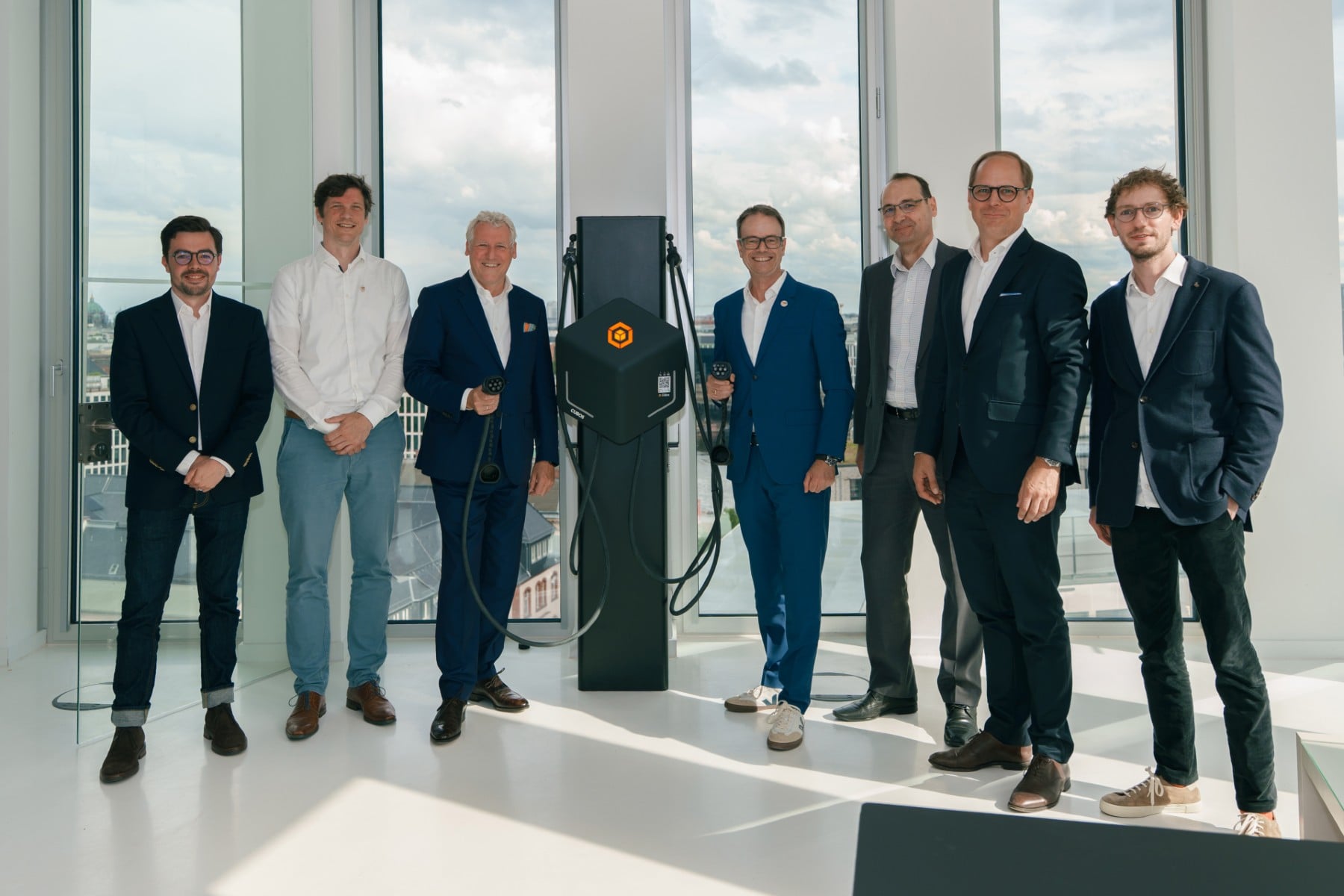
Germany’s fast‑growing electric‑vehicle market is about to see its charging‑point landscape tighten around fewer hands. Cubos, a Wolfsburg‑based energy‑service provider, announced on July 8 that it is acquiring TotalEnergies’ commercial charging business in Germany. The transaction would push Cubos’ network to about 15,000 charging points, including roughly 6,000 points transferred from the French group. While the headline numbers sound like a win for fleet operators, the deal also marks the third major acquisition Cubos has completed in six months, hinting at a broader consolidation trend that could reshape competition, regulation and the economics of e‑mobility in Europe.
Deep Dive
According to the announcement, TotalEnergies’ German B2B portfolio comprises around 6,000 AC and DC chargers, split between employee or fleet car‑park locations (mostly AC) and high‑throughput sites (primarily DC). Cubos says those chargers will be integrated gradually into its own platform, with existing contracts honoured and operations kept seamless for current customers. The company’s own description of the acquisition stresses a strategic shift: “
With the acquisition of TotalEnergies’ B2B charging infrastructure business in Germany, we are taking a decisive step towards our goal of becoming one of the top three CPOs in Germany,” says Cubos CEO Marc Wille.
Beyond the headline figures, the deal reinforces a pattern that Cubos has pursued aggressively since its founding in 2018. In December 2025, the firm took over parts of Swarco Traffic Systems’ e‑mobility unit in Germany, adding more than 1,000 charging points. In April 2026, it acquired the e‑mobility brand ChargeOne from the Heinemann Group, bringing another 3,500 points into its network. Both prior deals, like the TotalEnergies transaction, were announced without financial details, suggesting a focus on scale rather than immediate profitability.
The combined effect of these three takeovers is a network that Cubos claims will be co‑located at the sites of over 1,000 B2B customers. The company’s broader value proposition, as outlined in its corporate literature, is to offer “
photovoltaic and charging solutions, complemented by modern storage systems and intelligent software – Made in Germany,” and to enable clients to “
become independent from the grid through integrated energy solutions, permanently reduce energy costs, and achieve their decarbonisation goals.”
From an operational perspective, the acquisition is presented as a low‑disruption handover. TotalEnergies’ Managing Director Jan Petersen is quoted as saying, “
With Cubos, we have found a reliable partner who will not only continue our B2B charging business but also consistently develop it further with its own technology and a comprehensive service portfolio. We are convinced that our business customers and employees from the B2B sector are in the best hands with Cubos.” The statement reinforces the promise that “
All contracts will be honoured, integration into the Cubos platform will be carried out gradually, and ongoing operations will be seamlessly ensured for all TotalEnergies customers,” – a reassurance aimed at fleet managers wary of service interruptions.
One practical implication of the expanded network is the potential for “integrated energy systems” that combine photovoltaics, storage and charging hardware under a single operator. Cubos argues that such integration can lower the total cost of ownership for fleet operators by reducing reliance on the public grid and smoothing peak‑load charges. However, the announcement does not disclose any concrete cost‑saving figures, nor does it explain how the integration will be technically achieved across a heterogeneous mix of AC and DC chargers inherited from different owners.
Employment-wise, Cubos pledges to retain all jobs tied to the TotalEnergies fleet‑charging business, swelling its workforce to roughly 500 employees. The claim of job security mirrors Cubos’ statements after the Swarco and ChargeOne purchases, where it also said no positions were cut. While this may ease internal concerns, it also raises questions about how Cubos will absorb and train a growing technical staff to manage a diversified hardware portfolio that now includes its own equipment alongside legacy TotalEnergies units.
Audit & Contradictions
The announcement leaves several critical data points opaque. Most notably, financial terms of the deal remain undisclosed, mirroring Cubos’ earlier acquisitions. The only source for the network‑size figures, job‑retention promise and the composition of the acquired portfolio is the company’s own press release, reported by electrive. Fact‑checkers have flagged these as single‑source claims, meaning they have not been independently corroborated by other outlets. The fact‑check audit notes a “Low” contradiction level, indicating no overt conflicts within the source itself, but the lack of external verification means readers should treat the numbers as the company’s own reporting rather than independently audited data.
Other omissions include:
- Details on how Cubos will harmonise different charger brands and communication protocols.
- Any timeline for the full integration of the 6,000 points into Cubos’ software ecosystem.
- Potential regulatory approvals required for a market share that may approach the top three CPOs in Germany.
- Impact on pricing for end‑users, especially fleet customers who may benefit from the promised integrated energy solutions.
Because the source does not address these points, the announcement provides a strategic narrative without the operational granularity that investors, regulators or fleet operators might demand.
Future Outlook
If Cubos successfully consolidates the three acquired portfolios, it could solidify a position among Germany’s leading charge‑point operators, a market currently dominated by a handful of large players. The move may trigger further consolidation as rivals assess whether scaling through acquisitions is more efficient than organic growth. For TotalEnergies, the sale is part of a broader retreat from the German market, following its 2023 divestiture of filling stations to Couche‑Tard and its reported search for buyers of public charging stations. This retreat could open space for domestic firms like Cubos, but it also raises the spectre of reduced competition if a few operators control a majority of B2B sites.
Regulators may scrutinise the deal under Germany’s competition law, especially if Cubos’ network share approaches a threshold that could limit market access for new entrants. The European Commission has previously examined cross‑border CPO mergers for anti‑competitive effects, and a similar review could be triggered here.
From a technology standpoint, Cubos’ promise of integrated photovoltaics and storage could set a benchmark for “energy‑as‑a‑service” models in fleet charging. If the company can demonstrate measurable cost reductions, it may encourage other operators to adopt similar bundled solutions, potentially accelerating the decarbonisation of corporate fleets.
Ultimately, the acquisition underscores a shift in Germany’s e‑mobility ecosystem: from a fragmented landscape of niche providers toward a more concentrated market where a few vertically integrated players control the majority of charging infrastructure. Stakeholders—from fleet managers to policymakers—will need to watch how Cubos balances rapid expansion with the operational and regulatory challenges that accompany such scale.