Lead Hook
When Pricol announced it will carve out its driver‑information and connected‑vehicle systems arm as a new entity called Pricol Autotech, the headline sounded like a routine corporate reshuffle. Yet the move carries weight far beyond a branding exercise. In a market where India is courting domestic electronics and automotive components to reduce import dependence, Pricol’s demerger, capital infusion and claimed growth trajectory could reshape supply‑chain dynamics for a generation of connected‑car suppliers.
Deep Dive
According to ET Auto, the split is intended to sharpen focus on “smart mobility and electronics.” By separating the driver‑information business – the company’s largest segment – Pricol hopes to give the new unit a clearer mandate, potentially attracting dedicated investment and allowing more agile product development cycles.
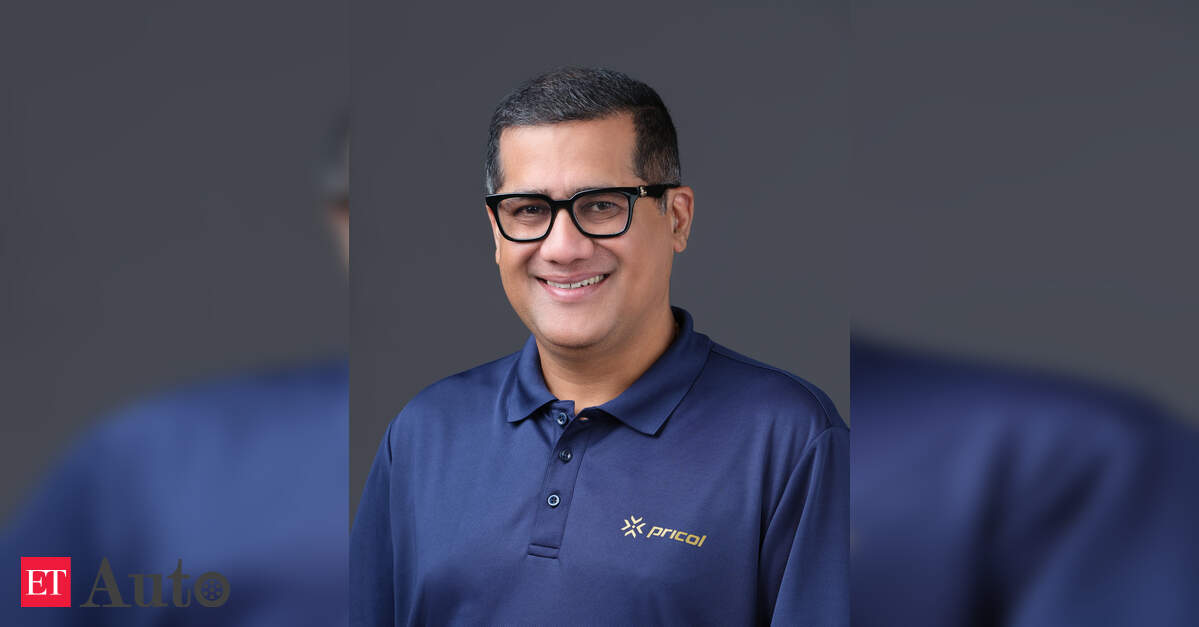
The same source notes that under CEO Vikram Mohan, Pricol moved from a debt‑laden position to a “debt‑free business growing at 15–20% CAGR.” The turnaround is attributed to sustained technology investment, strategic restructuring and lessons learned from costly overseas acquisitions, particularly in Brazil. Mohan’s own narrative underscores a hands‑on approach: “When I stepped into this company, not knowing anything about the product and never having stepped into its gates a day before that,” he recalls, highlighting the cultural reset that accompanied the financial one.
“Fearing that this could bring this whole mother ship down, I persisted by putting in more money. Rapidly within two years, the ₹125 crore pumped in became ₹400 crore.” – Vikram Mohan
The quoted capital escalation from ₹125 crore to ₹400 crore within two years illustrates a willingness to inject substantial equity to stabilise operations, especially after a “sticky situation in Brazil” where the plant’s modernization efforts stalled amid a sluggish local recovery. By financing the demerger internally, Pricol sidesteps the need for external debt, preserving its newly advertised “long‑term debt‑free” status.
From a technical perspective, the driver‑information segment sits at the intersection of telematics, ADAS (advanced driver‑assistance systems) and emerging V2X (vehicle‑to‑everything) communication standards. Splitting it into a dedicated Pricol Autotech could enable tighter integration with OEM road‑maps, faster iteration on firmware updates, and a clearer path to compliance with forthcoming Indian safety regulations that increasingly mandate connectivity features. Moreover, the demerger may simplify the accounting of R&D spend, allowing the new entity to showcase margins that appeal to private‑equity funds eyeing India’s burgeoning automotive electronics market.
Strategically, Mohan’s outlook frames the move within a broader national narrative: “I believe the next decade is going to be the decade of India… we are in a state, Tamil Nadu, which is one of the fastest growing in terms of electronics, auto etc.” By locating the demerged unit in a state already attracting electronics and auto investment, Pricol Autotech could benefit from state‑level incentives, a skilled workforce pipeline and proximity to OEMs consolidating supply chains within India.
Audit & Contradictions
The announcement leaves several verification gaps. All of the core claims – the demerger itself, the debt‑free status, the 15‑20% compound annual growth rate, the ₹125 crore to ₹400 crore capital increase, and Mohan’s decade‑long outlook for India – appear only in the ET Auto piece. No independent outlet has corroborated these figures, and the fact‑check audit flags each as a single‑source statement. Consequently, they must be presented with hedging language such as “according to ET Auto” or “the company says.” The audit found no contradictions among the reported facts, assigning a low contradiction level.
Future Outlook
If Pricol Autotech can sustain the claimed 15‑20% growth without external debt, it may set a template for other Indian component makers seeking to spin off high‑tech units. Competitors could respond by either consolidating similar capabilities under a single roof to achieve economies of scale, or by pursuing their own demergers to attract niche investors. Regulators, meanwhile, may view the move as a positive signal that Indian firms are aligning with the country’s push for greater self‑reliance in automotive electronics, potentially influencing future policy on incentives for domestic R&D.
For OEMs, a focused Pricol Autotech could mean a more transparent supplier relationship, with clearer cost structures and faster rollout of over‑the‑air updates – a critical capability as Indian vehicles become increasingly software‑centric. However, the reliance on internal capital infusion also raises questions about capital efficiency: while the company avoids debt, the concentration of cash in a single unit may limit flexibility for broader group investments.
In short, the demerger is more than a headline; it is a strategic gamble that could recalibrate how Indian auto suppliers finance, innovate and partner with OEMs in the coming decade. Whether Pricol Autotech delivers on its ambitious growth promise will likely become a bellwether for the viability of tech‑first, debt‑free models in India’s fast‑evolving automotive ecosystem.