Lead Hook
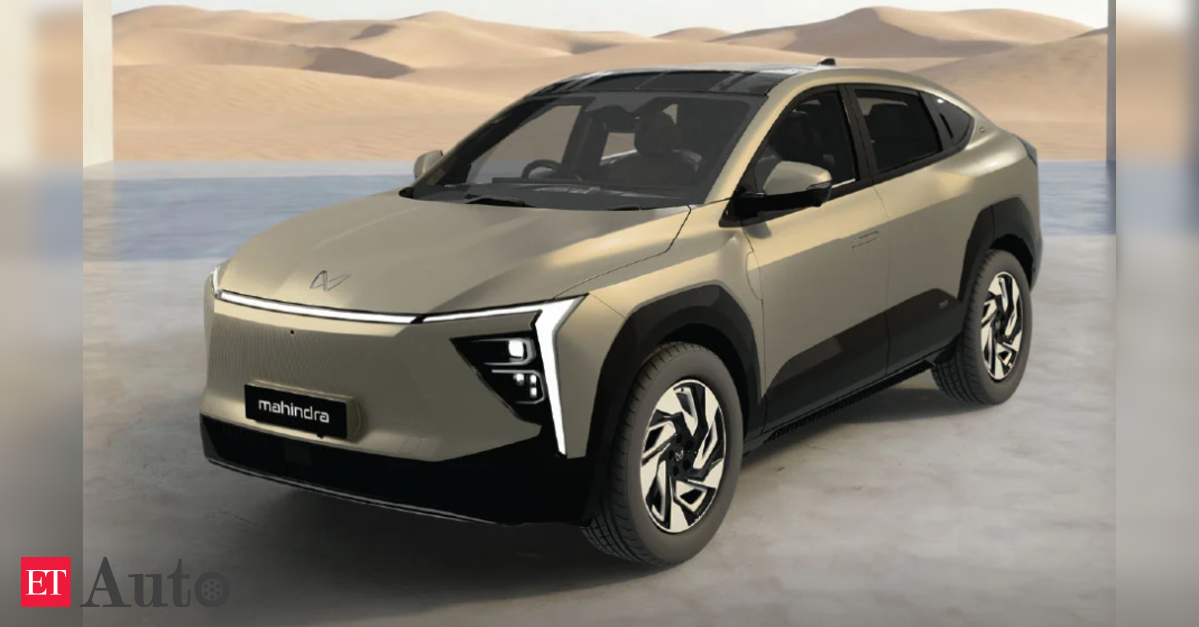
India’s electric‑vehicle (EV) market is projected to become one of the world’s largest in the next decade, yet the path to that future is not uniform. On July 7, 2026, a report in the Economic Times’ auto portal highlighted two opposite routes: Mahindra & Mahindra (M&M) is “taking a premium path,” while Tata Motors (TaMo) is “betting on scale” (Economic Times). The divergence matters beyond branding; it signals how each firm is positioning its supply chain, capital, and regulatory risk in a market still shaped by nascent charging infrastructure and shifting government incentives.
Deep Dive
Both manufacturers are confronting the same macro‑environment: the Indian government has set an ambitious target of 30% EV sales by 2030, backed by subsidies, reduced GST on EVs, and a push for public‑charging networks. However, the policy framework also imposes strict localisation norms for batteries and critical components, meaning that scale and premium positioning are not merely marketing choices but strategic bets on how to source, finance, and sell vehicles.
Capital allocation and supply‑chain exposure. A premium strategy typically means higher per‑unit engineering spend, tighter component tolerances, and a reliance on higher‑margin battery packs—often sourced from global players with proven chemistry. Mahindra’s move, as reported, suggests it will prioritize features such as longer range, advanced infotainment, and premium interiors to command a price premium. This approach can cushion the firm against price wars but also ties up capital in R&D and higher‑cost inventory, increasing exposure to fluctuations in battery prices and foreign‑exchange risk.
In contrast, Tata’s scale‑first narrative implies a focus on volume production, likely using cost‑optimized battery packs sourced from domestic manufacturers that meet localisation requirements. By pushing large numbers, Tata can amortise fixed costs across a broader base, potentially securing better terms from suppliers and leveraging economies of scale in tooling and logistics. The trade‑off is thinner margins and a heavier reliance on the speed of infrastructure rollout; without sufficient charging points, a high‑volume, lower‑priced EV may struggle to attract price‑sensitive buyers.
Regulatory incentives and compliance risk. The Indian government’s subsidy scheme currently favours vehicles priced below a certain ceiling. A premium‑priced Mahindra EV could miss out on direct buyer subsidies, relying instead on brand cachet and early‑adopter enthusiasm. Tata’s lower‑priced models are more likely to sit within subsidy thresholds, making them attractive to a broader consumer base. However, upcoming revisions to the subsidy formula—potentially shifting from price‑based to range‑or battery‑capacity based criteria—could alter the calculus for both firms.
Infrastructure bottlenecks. India’s public‑charging network is expanding but remains uneven, with major gaps in Tier‑2 and Tier‑3 cities. A premium vehicle that promises longer range may mitigate the need for frequent charging, but its higher price could limit adoption in markets where charging access is scarce. Tata’s volume‑oriented models, designed for urban commuters, will depend heavily on rapid expansion of fast‑charging stations to avoid range‑anxiety among cost‑conscious buyers.
Market segmentation and consumer psychology. Indian car buyers have historically gravitated toward value‑for‑money propositions, yet the EV segment is seeing early adopters willing to pay extra for perceived quality and status. Mahindra’s premium push appears to target this niche, aiming to build a halo effect that could later cascade into more affordable models. Tata’s strategy banks on capturing the mass market quickly, hoping to lock in brand loyalty before competitors scale up.
Both strategies also intersect with the broader semiconductor and battery‑cell supply constraints that have plagued the global auto industry since 2022. By opting for premium components, Mahindra may secure a more reliable supply chain through long‑term contracts with established chip makers, whereas Tata’s emphasis on volume may force it to source from emerging domestic players, potentially exposing it to yield variability.
Audit & Contradictions
The Economic Times article is the sole source for the two strategic claims: Mahindra’s premium EV approach and Tata’s scale‑focused EV approach. According to the fact‑check audit, these statements are “single‑source” with no independent corroboration from the listed outlets (Compound Semiconductor, Nature, WSJ, Autocar Professional) and no reported contradictions. The audit’s “Low” contradiction level confirms that while the claims are unchallenged, they have not been independently verified. Readers should therefore treat the strategic characterisations as the publication’s interpretation rather than proven corporate policy.
Future Outlook
If Mahindra successfully delivers a high‑end EV that resonates with affluent Indian consumers, it could carve out a profitable niche and set a benchmark for domestic premium EVs, prompting rivals to invest in higher‑spec platforms. Conversely, a mis‑step—such as under‑estimating subsidy impacts or over‑relying on imported battery technology—could erode its margin advantage.
Tata’s scale gamble hinges on the speed of charging‑network deployment and the evolution of subsidy criteria. A rapid rollout could cement Tata’s position as the volume leader, attracting fleet operators and first‑time EV buyers. However, any delay in infrastructure or a shift toward performance‑based incentives could force Tata to recalibrate its pricing, potentially narrowing the margin gap with Mahindra.
For policymakers, the divergent paths underscore the need for a balanced incentive structure that does not unintentionally favour one segment over the other. Encouraging both premium innovation and mass‑market accessibility could accelerate overall EV adoption while mitigating supply‑chain strain.
Investors and industry observers will be watching how each company navigates capital allocation, supply‑chain contracts, and regulatory shifts in the coming quarters. The outcomes will likely shape not only the competitive dynamics between Mahindra and Tata but also the broader trajectory of India’s EV ecosystem.