Lead Hook
When a new electric SUV can shave two minutes off a promised 29‑minute charge window, headlines celebrate a technical win. Yet the same test that proved the Rivian R2 can reach 80% state of charge (SOC) in 26 minutes 51 seconds also exposed a hidden bottleneck: the vehicle’s appetite for more than 600 amps of current, a level that only a handful of ultra‑high‑power DC chargers can provide. As automakers race to claim the fastest‑charging badge, the real story may be less about peak kilowatts and more about whether the charging ecosystem can keep up.
Deep Dive
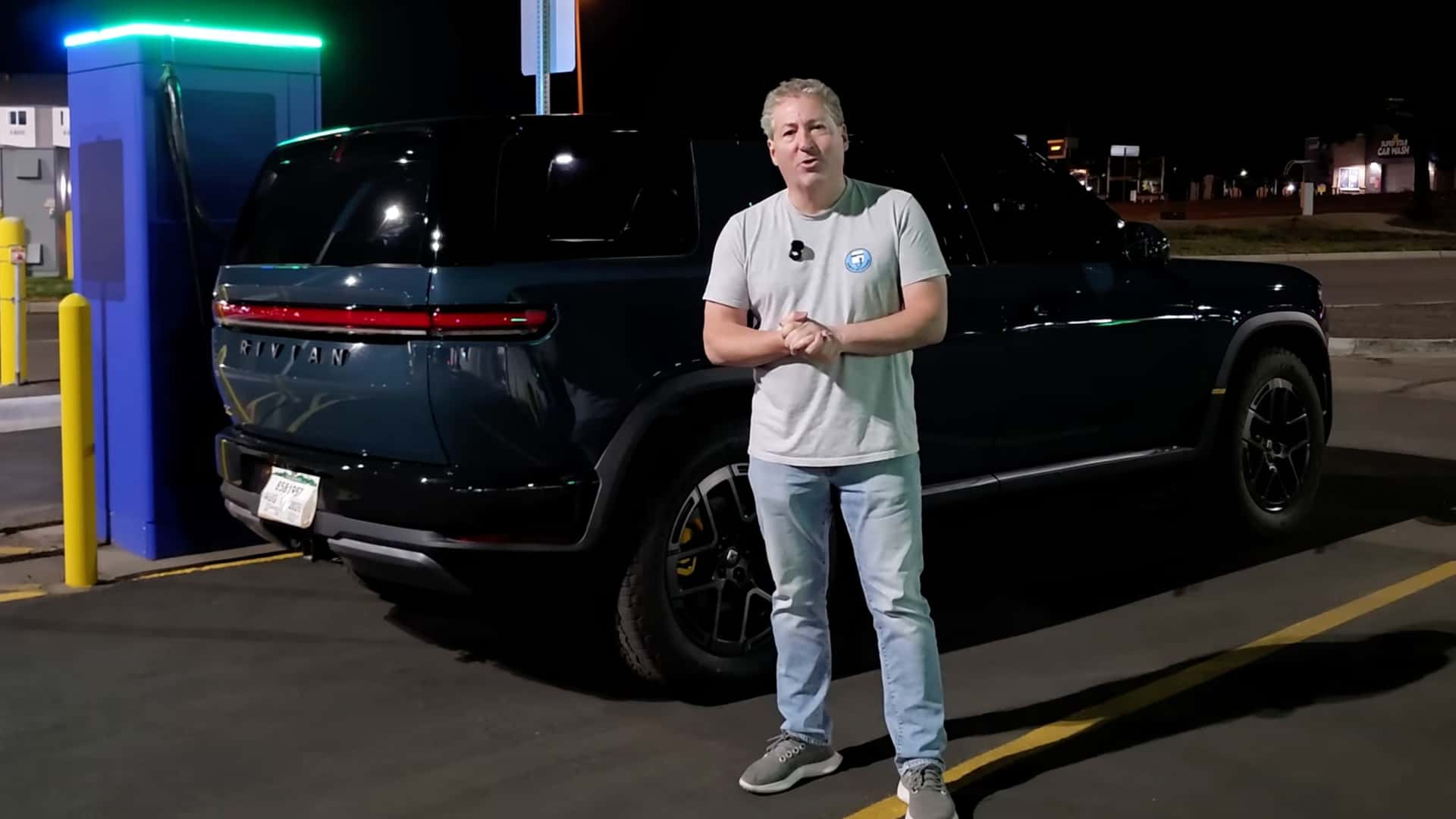
InsideEVs’ independent charging test, performed by YouTuber Tom Moloughney of the State of Charge channel, recorded a detailed power‑level curve for the R2. The vehicle surged above 200 kW within the first 38 seconds of a charge, climbed to a peak of 226 kW at roughly 31% SOC, and then began to taper as the battery filled. After ten minutes the R2 was at 45% SOC pulling 171 kW; by the fifteen‑minute mark it reached 60% SOC at 135 kW; at about twenty minutes it hit 70% SOC with 116 kW; and finally, after 26 minutes 51 seconds it arrived at 80% SOC drawing just 68 kW (InsideEVs).
That timeline translates to roughly 50 miles of highway range added in five minutes, 100 miles in eleven, and 150 miles in nineteen – numbers Moloney compared to a Tesla Model Y and noted they lag a few minutes behind an 800‑volt Hyundai Ioniq 5. "This is not a top‑of‑class characteristic of R2. But as far as I'm concerned it is acceptable," he said, underscoring that the R2’s fast‑charge performance sits in the middle of the current EV field (InsideEVs).
The test also revealed the R2’s capacity to accept more than 600 amps of current. Moloney pointed out that only a few chargers – notably Alpitronic units used by Walmart and Ionna, and the ABB A400 – can deliver that level of amperage. The ABB unit can provide 600 amps, but only through its CCS connector; because the R2 ships with a native NACS port, Moloney employed a 500‑amp adapter to bridge the CCS side to the vehicle (InsideEVs).
This technical nuance matters because the R2’s advertised 10‑80% charge time presumes access to a charger capable of sustaining the high‑amp draw. In practice, the majority of public DC fast‑charging networks in the United States still operate at 250‑350 kW with current limits well below 600 amps. Even the emerging 350‑kW stations, which are touted as the next step for high‑speed EVs, typically cap at 500 amps. Consequently, most R2 owners will likely experience slower charge times than the lab‑tested best case, unless they secure a spot at a rare ultra‑high‑current location.
The infrastructure mismatch has broader economic implications. Deploying 600‑amp capable chargers requires larger power transformers, thicker cabling, and upgraded grid connections – capital expenditures that can run into millions per site. For charging‑network operators, the return on such investment hinges on sufficient demand from high‑amp‑compatible vehicles. Rivian’s decision to equip the R2 with a NACS port, while aligning with the growing Tesla‑standard ecosystem, adds another layer of complexity: adapters are needed to tap into the few CCS‑based 600‑amp chargers that exist, potentially deterring users who value simplicity.
From a regulatory perspective, the situation highlights a gap in current standards. The Society of Automotive Engineers (SAE) has defined the DC fast‑charging protocol (J1772) up to 500 A, but the industry is already pushing beyond that threshold. If automakers continue to design vehicles that can ingest >600 A, policymakers may need to revisit grid‑interconnection rules, permitting processes, and incentives to accelerate the rollout of truly ultra‑high‑power stations.
Audit & Contradictions
The core claim – that the Rivian R2 reaches 80% SOC in 26 minutes 51 seconds, about two minutes faster than Rivian’s own 29‑minute spec – is corroborated by multiple independent outlets (EVChargingStations.com, ArenaEV, Charged EVs). No contradictions were identified across the sources, yielding a low contradiction level.
However, several details appear only in the InsideEVs report and therefore must be presented as single‑source observations. These include the exact peak power of 226 kW at 31% SOC, the step‑down power curve at each SOC milestone, the R2’s ability to accept >600 A, the use of a 500‑amp adapter to connect a CCS‑type ABB A400 charger to the native NACS port, and the qualitative comparison to the Tesla Model Y and Hyundai Ioniq 5. As such, readers should treat these points as the test author’s findings rather than universally verified data.
Future Outlook
If Rivian and its competitors continue to chase higher amperage limits, the charging‑network landscape will need to evolve rapidly. Operators that invest early in 600‑amp capable stations could capture a premium segment of EV owners seeking the fastest possible top‑ups, but they also risk underutilization if vehicle adoption lags. Conversely, manufacturers may opt to tune their battery management systems to deliver optimal charge times on the more common 500‑amp infrastructure, sacrificing a few minutes of speed for broader usability.
For the R2, the practical impact may be modest in the short term. Most owners will likely charge at 250‑350 kW stations, where the vehicle’s power draw will plateau well before the 226 kW peak, extending the 10‑80% window by a minute or two. Yet the headline of “faster than claimed” will still serve Rivian’s marketing narrative, especially as the brand positions the R2 as a more affordable, mass‑market alternative to its larger R1S.
Regulators may watch this dynamic closely. As more EVs demand higher currents, grid‑capacity planning and permitting processes could become a bottleneck. Incentive programs that fund ultra‑high‑power charger deployments, or standards that harmonize NACS and CCS high‑amp capabilities, could shape which manufacturers ultimately reap the benefits of their fast‑charging engineering.
In the end, the Rivian R2’s impressive lab‑tested charge time is a double‑edged sword: it proves the vehicle can exceed its own specs, but it also spotlights a charging‑infrastructure gap that could limit real‑world advantage. The next chapter for Rivian – and the EV industry at large – will be less about how fast a battery can take a charge and more about how quickly the grid can deliver the required current.