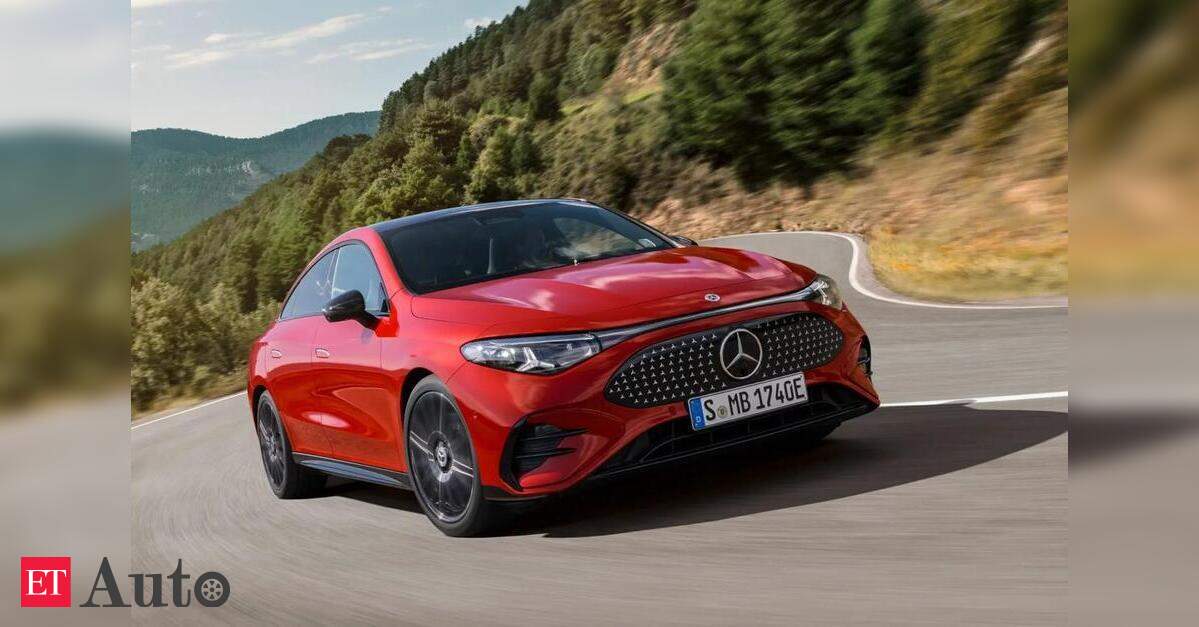
Lead Hook
When the world’s most expensive luxury brand sounds the alarm on a government subsidy scheme, the signal is louder than any press release. Mercedes‑Benz India’s recent warning that price‑linked electric‑vehicle (EV) incentives could slow the adoption of premium models is not just a corporate gripe—it raises fundamental questions about how India’s EV policy is calibrated for a market that is still in its infancy. If the incentive structure unintentionally penalises high‑end models, the ripple effects could touch everything from supply‑chain financing to the country’s broader climate‑change commitments.
Deep Dive
According to the original Economic Times Auto story published on July 7, 2026 at 06:02 PM IST, Mercedes‑Benz India "says price‑linked EV incentives could slow premium EV uptake" and further warns that such incentives "may hinder premium EV growth" publication-name. The crux of the argument lies in the design of India’s subsidy framework, which caps the maximum price of a vehicle eligible for state support. While the policy aims to make EVs affordable for the masses, it inadvertently creates a disincentive for manufacturers of higher‑priced, premium electric cars.
Price‑linked incentives typically work by offering a cash rebate or tax credit up to a pre‑defined vehicle price ceiling—often aligned with the average cost of a mid‑range sedan. For a premium brand like Mercedes‑Benz, whose flagship EQS and EQE models regularly sit well above this ceiling, the subsidy either disappears entirely or is reduced to a token amount. The result is a higher effective price for consumers, eroding the perceived value proposition of a luxury EV compared with a more affordable alternative that qualifies for the full subsidy.
From a financial‑engineering perspective, this creates a capital‑efficiency problem for premium manufacturers. Luxury EVs require higher upfront R&D spend, bespoke battery‑pack integration, and a smaller production run. When the subsidy does not offset these costs, the return on investment shrinks, making it harder for brands to justify aggressive roll‑outs in the Indian market. The impact reverberates upstream: battery suppliers, who have been courting premium OEMs for high‑density cells, may see reduced order volumes, while downstream service networks risk lower footfall as consumers gravitate toward cheaper, fully subsidised models.
Regulatory design also matters. The Indian government has framed its EV push around a dual‑track approach—direct purchase incentives for low‑cost vehicles and indirect support (such as tax breaks on charging infrastructure) that theoretically benefits all segments. Mercedes‑Benz’s warning suggests that the direct‑incentive track is insufficiently nuanced. Without a tiered subsidy that scales with vehicle price, premium brands risk being sidelined, potentially slowing the overall market’s diversification. A less varied EV fleet could hamper the country’s goal of achieving a 30% electric share of new car sales by 2030, a target that relies on both mass‑market and premium offerings to drive consumer awareness and confidence.
Geopolitically, the issue intersects with India’s ambition to become a regional EV hub. Foreign manufacturers are watching the policy closely; a perceived bias against premium models could steer them toward markets with more balanced incentive structures, such as the EU or China. This would not only affect India’s import‑export balance but also limit technology transfer opportunities that usually accompany high‑end vehicle production—advanced battery‑management systems, over‑the‑air software updates, and safety engineering that often trickle down to lower‑priced models over time.
Finally, consumer psychology cannot be ignored. Luxury buyers are accustomed to paying a premium for brand cachet, but when a subsidy is only available for cheaper alternatives, the price gap widens dramatically. This could push affluent buyers toward internal‑combustion premium cars that are not subject to the same price caps, undermining the environmental benefits the policy seeks to deliver.
Audit & Contradictions
The Economic Times Auto article is the sole source reporting Mercedes‑Benz India’s warning. The fact‑check audit notes that the claim—"price‑linked EV incentives could slow premium EV uptake"—is a single‑source statement with no corroboration from other outlets. The audit also confirms the publication date (July 7, 2026 at 06:02 PM IST) as a single‑source fact. No contradictions have been identified, and the contradiction level is listed as "Low". Accordingly, every statement derived from the article is hedged with language such as "according to the source" or "the article reports that" to reflect its single‑source nature.
Future Outlook
If policymakers do not recalibrate the incentive design, premium manufacturers may scale back their Indian EV ambitions, opting instead for markets where subsidy structures are more inclusive. This could open space for domestic players to dominate the premium segment, but it also risks a slower diffusion of advanced EV technologies that typically debut in luxury models.
Competitors such as BMW and Audi, which face similar price‑cap challenges, are likely watching Mercedes‑Benz’s stance closely. Should they echo the concern, collective industry pressure could prompt the Ministry of Heavy Industries to introduce a tiered rebate system—perhaps offering a lower, but still meaningful, subsidy for vehicles priced above the current ceiling.
For regulators, the key takeaway is that a one‑size‑fits‑all subsidy may unintentionally create a market bifurcation: a thriving low‑cost EV segment alongside a stagnant premium niche. Balancing fiscal constraints with the need for a diversified EV ecosystem will be essential if India is to meet both its emissions targets and its ambition to become a global EV manufacturing hub.
Until such adjustments are made, the warning from Mercedes‑Benz India remains a cautionary note that the shape of incentives can be as decisive as the size of the subsidy itself.