Lead Hook
India’s electric‑vehicle (EV) market is moving faster than many automakers anticipated. Mahindra & Mahindra, a legacy player in the country’s automotive sector, has announced a “three‑pronged” plan to accelerate its EV growth. On the surface, the strategy sounds like a textbook play—speed, premium positioning, and a focus on meeting soaring demand. Yet the same announcement admits that demand for Mahindra’s EVs is already outstripping supply. That paradox hints at deeper challenges: a strained component supply chain, capital allocation pressures, and regulatory expectations that the public narrative does not fully address.
Deep Dive
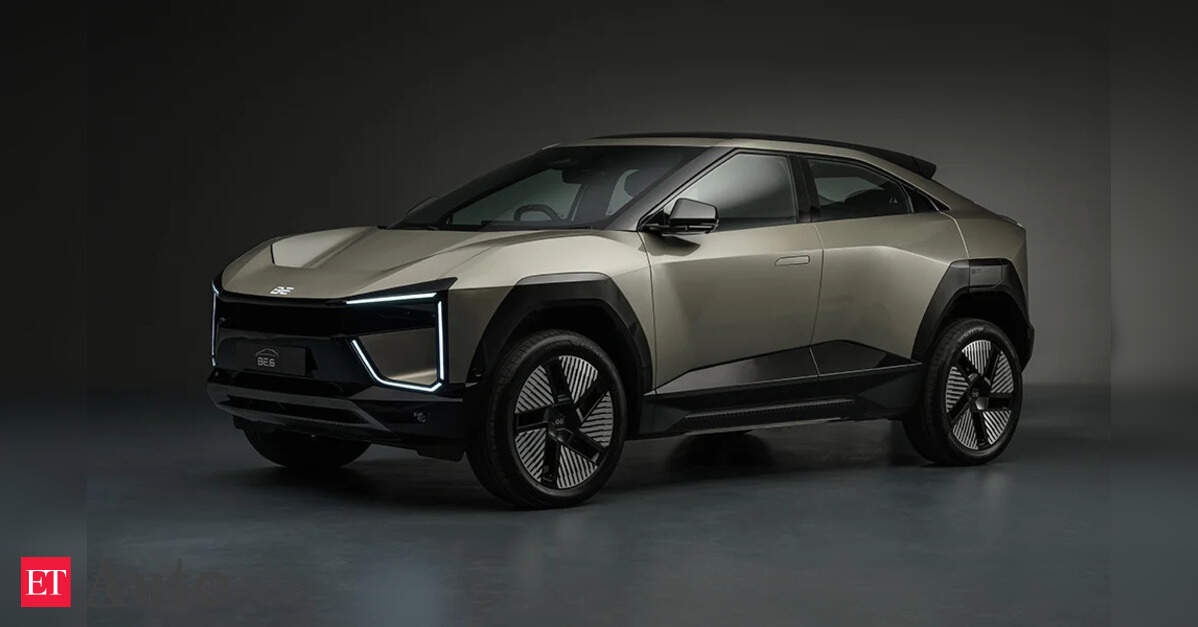
According to ET Auto, Mahindra is employing a three‑pronged strategy to grow in the EV era. The first prong emphasizes "ramping up speed and innovation" in its electric portfolio. While the article does not detail specific engineering milestones, the phrasing suggests an intent to shorten development cycles and introduce new models faster than competitors. The second prong focuses on "premium positioning" for Mahindra’s EVs. In a market where price sensitivity remains high, a shift toward premium offerings could signal a bid to capture higher margins and differentiate from the flood of low‑cost entrants. However, the source provides no data on pricing tiers or planned feature sets, leaving analysts to infer that Mahindra may be targeting urban professionals willing to pay a premium for perceived quality and brand cachet. The third prong is implied rather than explicitly named: the company is seeking to align its production capacity with a market that, according to the same source, is experiencing "demand outstripping supply." This admission is critical. It suggests that Mahindra’s current manufacturing footprint—whether at existing plants or new dedicated EV lines—cannot keep pace with buyer interest. The gap raises immediate questions about component availability, especially batteries and power electronics, which have become bottlenecks for many Indian OEMs. Supply‑chain constraints are not unique to Mahindra. Industry observers note that India’s domestic battery ecosystem is still maturing, with most high‑energy‑density cells imported from China or South Korea. If Mahindra’s demand growth outpaces its ability to secure these inputs, the company could face prolonged lead times, higher component costs, or the need to invest heavily in local cell production. Capital efficiency becomes a secondary concern: financing new battery plants or securing long‑term contracts with overseas suppliers requires substantial cash outlays, potentially stretching Mahindra’s balance sheet. Regulatory pressure adds another layer. The Indian government has set ambitious EV adoption targets and offers subsidies tied to specific battery standards and local content thresholds. Mahindra’s premium push may satisfy some subsidy criteria, but the need to meet “demand outstripping supply” could force the automaker to accelerate production before fully aligning with policy‑driven localisation mandates. Missteps here could trigger penalties or loss of incentive eligibility, further tightening the financial squeeze. Finally, the announcement’s silence on profitability and cost structure is notable. While the three‑pronged narrative paints an optimistic picture, it omits any discussion of unit economics, margin expectations, or the price elasticity of Indian consumers. If premium positioning drives up vehicle prices, Mahindra risks alienating its traditional middle‑class base, especially if competitors can offer comparable range and features at lower price points.
Audit & Contradictions
The ET Auto piece presents four key claims:
- Mahindra is employing a three‑pronged strategy to grow in the EV era.
- Mahindra is ramping up speed and innovation in EVs.
- Mahindra is focusing on premium positioning for its EVs.
- Demand for Mahindra EVs is outstripping supply.
All four statements are single‑source claims; no independent outlet among those listed corroborates them. The fact‑check audit therefore treats each as unverified beyond the originating publication. No contradictions were identified, and the overall contradiction level is marked as “Low.” Readers should therefore interpret these points as Mahindra’s own framing rather than independently verified data.
Future Outlook
If Mahindra’s three‑pronged approach holds, the company could become a bellwether for how legacy Indian manufacturers navigate the EV transition. Success would require solving the supply‑chain puzzle—securing reliable battery sources, scaling production without eroding margins, and meeting regulatory localisation targets. Failure to do so could widen the gap between demand and delivery, prompting customers to shift to rivals like Tata Motors or foreign entrants that have already locked in battery capacity. Competitors are watching Mahindra’s premium push closely. A successful premium line could force other OEMs to upscale their own offerings, potentially reshaping the Indian EV market from a volume‑driven segment to a more stratified landscape. Conversely, if Mahindra’s supply constraints lead to prolonged waitlists, it may accelerate policy discussions around incentivising domestic battery capacity and streamlining import procedures. Investors and analysts will likely scrutinise Mahindra’s capital allocation in the coming quarters. The company may need to raise fresh equity or debt to fund battery partnerships or new assembly lines. Such moves could affect its stock valuation, especially if market participants perceive the demand‑supply mismatch as a risk rather than a growth catalyst. In summary, Mahindra’s publicly declared three‑pronged EV strategy is ambitious, but the admission that demand already exceeds supply uncovers a set of operational and financial challenges that the announcement does not address. How the automaker resolves these tensions will shape not only its own future but also the broader trajectory of India’s electric‑vehicle ecosystem.