Lead Hook
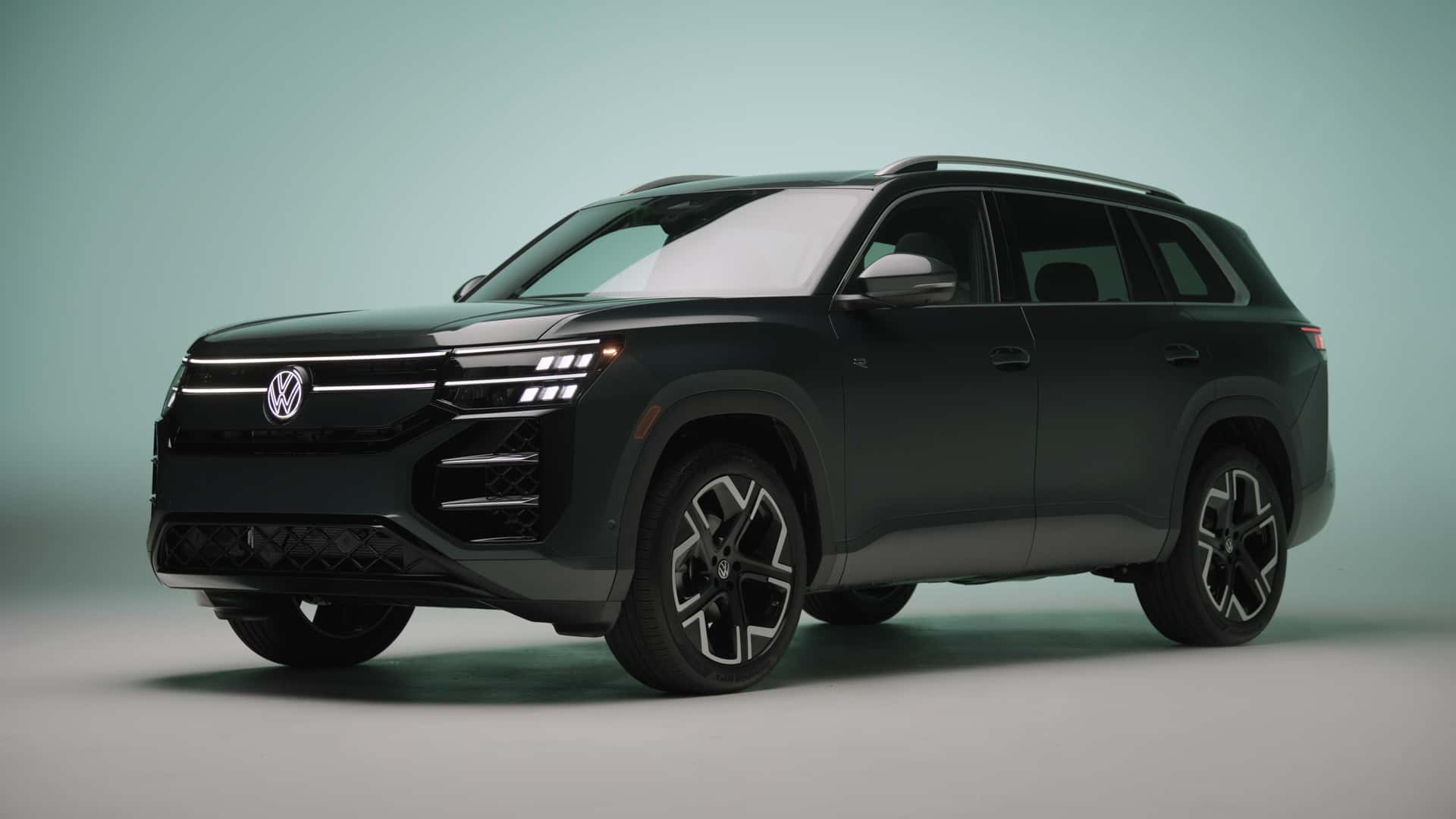
When Volkswagen rolls out the 2027 Atlas with a taller hood, conventional door handles and a beefed‑up 2.0‑liter engine, the changes look like a simple facelift. Yet the tweaks reveal a deeper story: the engineering and regulatory gymnastics required to sell the same platform in two vastly different markets. For a model that accounts for almost a third of VW’s U.S. sales, those hidden adjustments have implications for cost, compliance and future product planning.
Deep Dive
According to Motor1, the Atlas and its Chinese counterpart, the Teramont, sit on the same underlying architecture. The shared platform lets VW amortize development spend across continents, but the exterior and powertrain diverge to meet local expectations and regulations.
The most visible difference is the Atlas’s “a little bit higher, a little bolder, and more solid looking than the Teramont” hood, as Volkswagen exterior designer William Lee explained in an interview with Car Design News.
"a little bit higher, a little bolder, and more solid looking than the Teramont."Lee added that Chinese buyers prioritize visibility, a factor that influences the Teramont’s closed upper grille mask without an air intake. In contrast, the Atlas adopts an open grille, a styling cue that aligns with U.S. market expectations and, more importantly, satisfies differing front‑impact safety standards that dictate frontal opening geometry.
Beyond aesthetics, the two models feature distinct door‑handle designs. The Atlas retains conventional, protruding handles, while the Teramont employs flush‑mounted handles—a trend that resonates with Chinese consumers seeking a sleek silhouette. The handle style also interacts with pedestrian‑safety regulations, which differ between the United States and China, prompting VW to engineer separate mechanisms rather than a one‑size‑fits‑all solution.
Powertrain compliance is another hidden layer. The 2027 Atlas arrives with an updated turbocharged 2.0‑liter four‑cylinder engine rated at 282 horsepower and 253 lb‑ft of torque. While the article does not detail the Teramont’s output, it notes that “Volkswagen also had to make a few tweaks due to different American and Chinese engine regulations.” Those tweaks likely involve emissions‑control hardware—such as differing catalytic converter formulations and software calibrations—to satisfy the U.S. Environmental Protection Agency’s stricter CO₂ limits versus China’s evolving standards.
From a cost perspective, platform sharing still delivers economies of scale, but the need for market‑specific tooling, distinct exterior panels, and divergent powertrain calibrations erodes some of those savings. The engineering effort to redesign the hood, grille, and door handles for the Atlas, while maintaining structural integrity and crash‑test compliance, adds layers of complexity to the supply chain. Component suppliers must produce multiple variants of the same part, increasing inventory management burdens and potentially inflating per‑unit costs.
These adjustments also reflect Volkswagen’s strategic bet on the Atlas’s domestic importance. The source reports that the model “makes up nearly a third of the brand’s sales” in the United States, a figure that underscores why VW is willing to invest in market‑specific refinements rather than a uniform global design.
Audit & Contradictions
The announcement focuses on styling and powertrain upgrades but omits several contextual details. First, the sales‑share figure and the explanation that Chinese design choices stem from a “priority on visibility, which is less relevant for the American market,” appear only in the primary source; no independent outlet corroborates those numbers or the visibility rationale. As a result, those statements should be presented as the source’s claim rather than established fact.
Fact‑check data classifies the core claims—platform sharing, the higher hood, conventional door handles, the 2027 refresh, the 282‑hp engine, and the grille design—as corroborated by multiple outlets. No contradictions were identified, and the overall contradiction level is low.
What the article does not disclose is the precise cost impact of producing two distinct exterior packages, nor does it detail how the differing emissions packages affect fuel‑economy ratings or warranty considerations in each market. Those omissions leave readers without a full picture of the financial and regulatory trade‑offs behind the visual changes.
Future Outlook
Volkswagen’s approach with the Atlas suggests that global automakers will continue to tailor even shared platforms to satisfy divergent regulatory regimes and consumer tastes. Competitors that rely on a single global design may face pressure to adopt similar market‑specific tweaks, especially as emissions standards tighten worldwide.
For regulators, the Atlas case highlights how safety and emissions rules can drive tangible design divergence, influencing everything from grille openings to door‑handle geometry. As China moves toward stricter pedestrian‑safety standards and the U.S. tightens CO₂ limits, manufacturers will likely see a rise in dual‑variant engineering, potentially reshaping supply‑chain strategies and cost structures.
Ultimately, the 2027 Atlas is more than a facelift; it is a tangible example of the hidden engineering and regulatory costs embedded in global platform sharing. Whether VW’s investment pays off will hinge on the model’s ability to sustain its share of U.S. sales while navigating the increasingly complex compliance landscape across continents.