Lead Hook
Imagine an electric vehicle that needs half the battery replacements over its lifetime. A new study from the University of Cambridge suggests that a simple tweak—keeping a lithium‑ion cell under a steady ~12.5 bar of pressure—might double its lifespan. If the finding holds up beyond the lab, it could upend how automakers design battery packs, cut ownership costs, and shift the economics of raw‑material procurement. Yet the promise comes with a caveat: the pressure‑control method has only been demonstrated on a single pouch cell using a bespoke pneumatic‑bellows rig, and scaling it to the multi‑kilowatt‑hour packs that power today’s EVs could demand major redesigns of module architecture, safety systems, and manufacturing lines.
Deep Dive
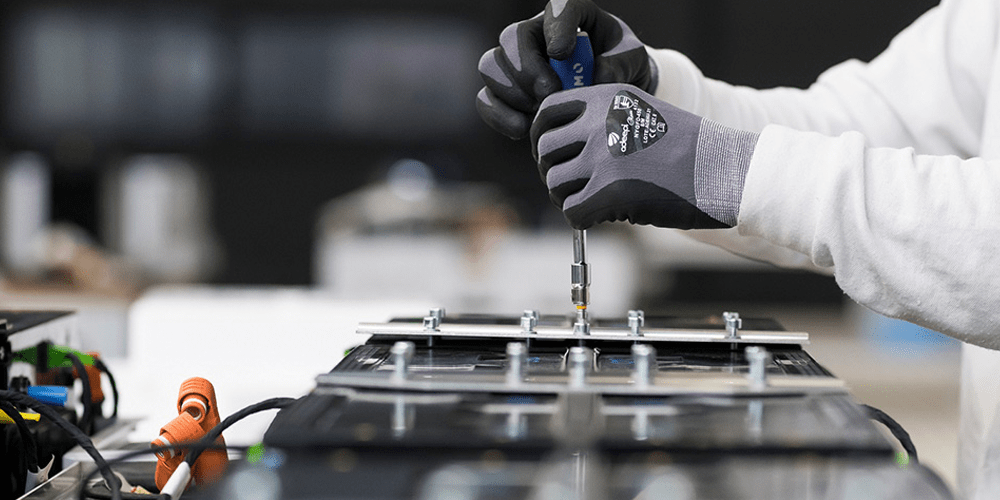
According to electrive.com, the Cambridge team published their findings in the journal Nature Energy under the title “The interplay between stack pressure, mechanical expansion and degradation pathways in lithium‑ion batteries.” The researchers compressed a commercial pouch cell with pneumatic bellows—small air‑filled cushions that act like a clamp—and kept the pressure constant while a sensor logged minute volume changes throughout charge and discharge cycles.
They report that maintaining pressure around 12.5 bar—roughly four times the standard pressure of conventional button cells—placed the battery in a “happy place” where expansion and contraction were balanced.
“If the pressure is too high, it can cause lithium plating to form on the anode, and too little can cause the cathode to crack.”The team observed that under these conditions the cell’s degradation rate slowed dramatically, leading to the headline claim that constant pressure could double battery lifespan.
While the core claim that pressure can extend life is corroborated by multiple outlets (electrive.com, MSN, and the University of Cambridge press release), the specifics of the optimal pressure, the bellows apparatus, and the patent filing appear only in the primary article. Those details must therefore be presented as the researchers’ own statements rather than independently verified facts.
From an engineering perspective, the implication is profound. Modern EV packs are composed of dozens of modules, each containing multiple cells stacked or arranged in a honeycomb. Applying a uniform 12.5 bar across a large‑format cell would require robust mechanical enclosures capable of withstanding sustained loads without adding excessive weight. Current pack designs already incorporate stiffeners and pressure‑relief vents to manage thermal expansion; adding a permanent compressive force could conflict with existing safety standards that mandate venting during thermal runaway.
Moreover, the bellows system used in the lab is not a ready‑made commercial component. Scaling it would involve redesigning cell holders, integrating pressure sensors, and possibly re‑engineering the electrolyte to tolerate higher mechanical stress. Each of these steps could raise production costs and complicate supply‑chain logistics, especially for manufacturers that source cells from multiple vendors with differing form factors.
Financially, the prospect of halving battery replacement cycles could improve the total cost of ownership (TCO) for EV owners, but the upfront engineering investment may offset those savings in the short term. A patent filed by Cambridge Enterprise—cited in the source article—covers the pressure‑maintenance technology, suggesting that any commercial rollout would likely involve licensing agreements or joint‑development programs with battery manufacturers.
Regulators may also need to revisit standards for pack integrity. Current ISO and UN regulations focus on crash safety, thermal management, and electrical isolation. Introducing a sustained mechanical load as a design parameter would require new test protocols and certification pathways, potentially delaying adoption until standards catch up.
Audit & Contradictions
The announcement leaves several key points unaddressed. First, the claim that constant pressure can double lifespan is supported by independent reporting, but the exact pressure value (12.5 bar) and the four‑fold increase over button‑cell standards are single‑source statements that should be hedged as “according to the study.” Second, the description of the pneumatic‑bellows apparatus and the patent filing are also sourced solely from the primary article; no external verification exists at this time.
Fact‑check data note a “low” contradiction level, meaning the core claim aligns with other outlets, while the granular details lack independent corroboration. No outright contradictions appear in the source material, but readers should be aware that the technology has only been demonstrated at laboratory scale and has not yet been tested in full‑size EV packs.
Future Outlook
If the pressure‑control concept can be engineered into commercial battery modules, it could reshape competitive dynamics. Companies with in‑house cell manufacturing—such as Tesla, BYD, and CATL—might integrate pressure‑optimisation into their next‑generation cell designs, gaining a durability edge. Smaller cell suppliers could partner with Cambridge Enterprise to license the technology, potentially creating a new revenue stream.
Beyond individual manufacturers, the finding could influence policy. Governments that subsidize EV adoption often tie incentives to battery lifespan or recyclability. Demonstrating a clear pathway to double battery life could unlock additional funding for research and encourage regulators to incorporate mechanical‑stress metrics into future standards.
However, the road from lab bench to production line is fraught with practical challenges. Engineers will need to develop scalable pressure‑application mechanisms that do not compromise safety, weight, or cost. Battery pack designers must reconcile the new mechanical load with existing thermal‑management systems. Until those hurdles are cleared, the “pressure play” remains an intriguing scientific insight rather than an imminent market shift.