Lead Hook
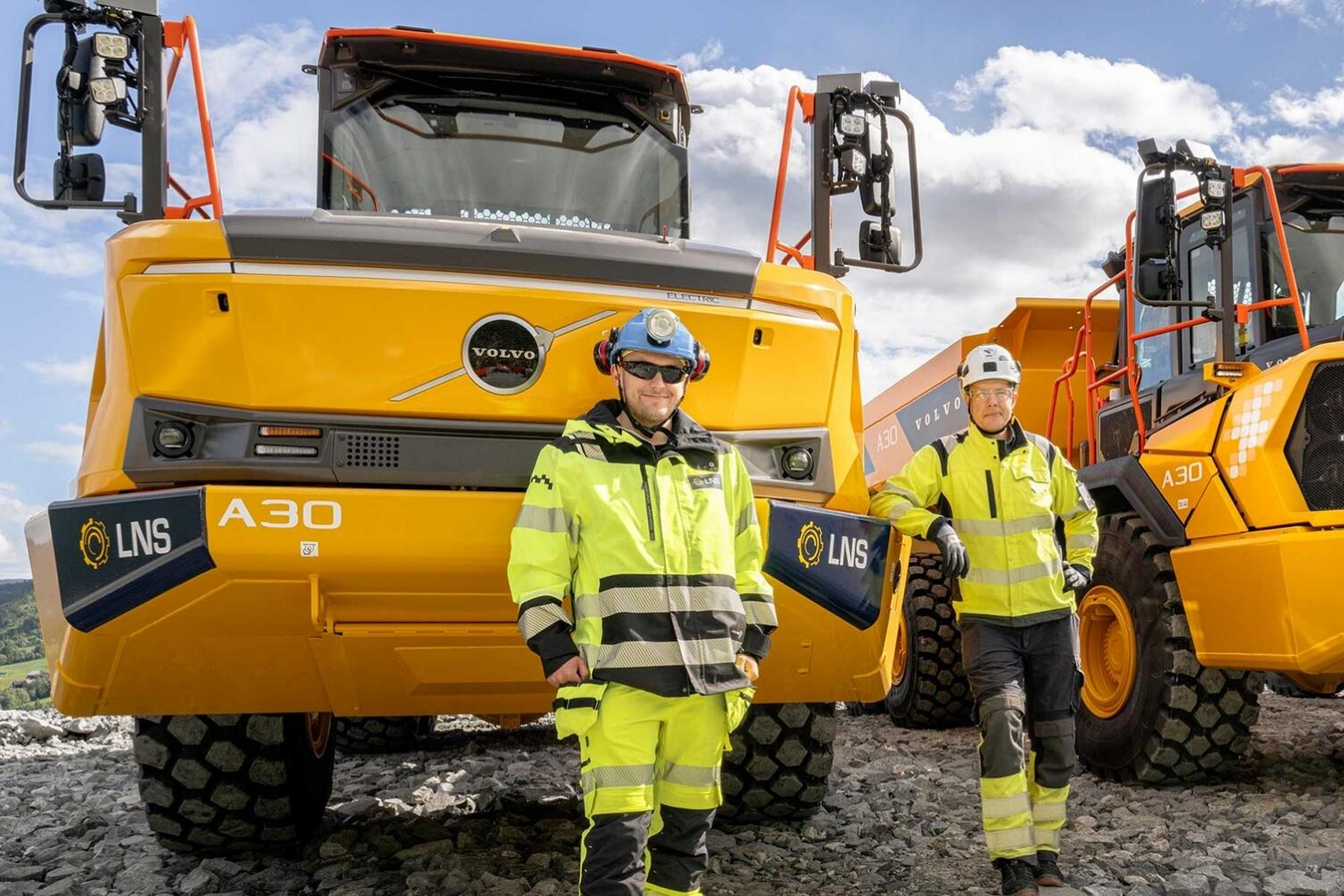
When Volvo Construction Equipment (Volvo CE) handed over four battery‑electric A30 articulated haulers to a Norwegian construction firm, the headline was clear: the world’s first series‑produced electric haulers of this size are now on a real‑world job site. What the press release does not spell out, however, is how this milestone sits at the intersection of Norway’s aggressive emissions‑free construction policy, the logistical challenges of powering 30‑tonne machines in a 20‑km tunnel, and the broader supply‑chain pressure on large‑format batteries that could shape the future of heavy‑duty electrification across Europe.
Deep Dive
According to electrive, Volvo CE delivered four A30 Electric units to LNS (Leonhard Nilsen & Sønner AS) and has three more slated for delivery in the coming month. The machines will be operated by Hafslund Kraft on the Hemsil 3 hydropower tunnel project in Hallingdal, a construction effort expected to finish by 2029 and to raise annual electricity output by roughly 110 GWh. The haulers are tasked with moving material through a roughly 20‑km tunnel, a setting where “regular blasting breaks provide sufficient time for recharging, while locally emission‑free vehicles are especially effective in enclosed work environments such as tunnels,” the source notes.
From a technical standpoint, the A30 Electric carries a payload of 29 tonnes and is driven by a 265 kW electric motor. Its 245 kWh battery is designed to deliver four to four and a half hours of operation, depending on usage, and can be recharged at up to 350 kW. Production of the A30 (and the larger A40) began in April at Volvo’s Braås plant in Sweden, and Volvo claims it is the first manufacturer to produce battery‑electric articulated haulers of this size on a series scale.
The deployment underscores a confluence of regulatory and engineering factors unique to Norway. The country’s public‑sector procurement policies increasingly mandate zero‑emission equipment for infrastructure projects, turning Norway into a proving ground for heavy‑duty electric machinery. Yet the very conditions that make the tunnel an ideal testbed—limited ventilation, long continuous runs, and the need for rapid turnaround—also expose the limits of current battery technology. A 245 kWh pack delivering four hours of work translates to roughly 60 kWh per hour of haulage, a figure that must be balanced against the energy required for blasting, lighting, and ventilation in a confined tunnel.
Charging logistics become critical. The source highlights that blasting cycles naturally create downtime that can be used for recharging, but it does not detail the infrastructure required to deliver 350 kW bursts in a remote, underground environment. Installing high‑power chargers underground involves not only electrical distribution upgrades but also safety certifications, thermal management, and redundancy to avoid project delays. For a project of this scale, the capital cost of such infrastructure could rival the cost of the haulers themselves, raising questions about the overall cost‑effectiveness of electrification versus conventional diesel units.
Supply‑chain considerations add another layer of complexity. Large‑format lithium‑ion cells capable of delivering 245 kWh at 350 kW charge rates are still a niche product, primarily sourced from a limited set of manufacturers. Any disruption—whether raw‑material constraints, geopolitical tensions, or factory bottlenecks—could delay future deliveries, especially as Volvo plans to roll out three additional units in the next month. The fact that Volvo is the first to mass‑produce such haulers suggests that the market is still embryonic, with few competitors able to meet the same performance envelope.
Audit & Contradictions
The announcement is transparent about the delivery numbers and the projected 110 GWh generation boost, but these figures appear only in the primary source and lack independent corroboration. The fact‑check audit flags the following as single‑source claims that should be treated with caution: the exact count of four units delivered (with three more pending), the estimate that Hemsil 3 will add approximately 110 GWh of annual generation, and the assertion that the operational profile—specifically blasting breaks—makes the tunnel especially suited to battery‑electric haulers. No contradictions were identified across the available reports, and the audit notes a low level of conflict overall.
Technical specifications such as payload, motor power, battery capacity, runtime, and charging rate are also reported solely by the primary source. While these numbers are likely accurate, they have not yet been verified by independent outlets, meaning they remain contingent on Volvo’s own data.
Future Outlook
Volvo’s rollout of the A30 Electric could set a precedent for other manufacturers eyeing the heavy‑duty electric market. If Norway’s policy framework continues to reward zero‑emission construction, we may see a cascade of similar deployments across Scandinavia and the broader European Union, where emissions‑free mandates are tightening. Competitors such as Caterpillar, Komatsu, and Liebherr are already investing in electric powertrains, but none have announced series‑scale production of articulated haulers matching Volvo’s payload class.
From a market perspective, the success—or failure—of the Hemsil 3 deployment will provide valuable data on total cost of ownership, battery degradation in harsh tunnel environments, and the practicality of high‑power underground charging. Positive outcomes could accelerate financing models that bundle equipment and charging infrastructure, while setbacks might reinforce the perception that diesel remains the more reliable choice for heavy transport in remote sites.
Regulators will also be watching. Should the tunnel project demonstrate that emissions‑free heavy machinery can meet productivity targets without prohibitive infrastructure costs, policymakers may tighten emissions standards for public works, effectively nudging the entire sector toward electrification. Conversely, if the logistical hurdles prove too costly, subsidies or transitional allowances for hybrid or low‑emission diesel solutions could become a more realistic policy path.
In short, Volvo’s delivery is more than a headline about a new machine; it is a litmus test for the scalability of heavy‑duty electric construction equipment under real‑world constraints. The coming months—when the additional three haulers arrive and the tunnel’s charging systems come online—will reveal whether Norway’s ambition can be matched by the industry’s ability to supply, power, and maintain such advanced machines at scale.