Lead Hook
When Tesla markets its lithium‑iron‑phosphate (LFP) packs as the “durable” solution that can be charged to 100 % without penalty, the claim carries weight for rental operators and fleet managers who chase low‑maintenance assets. Yet a three‑year‑old Model 3 that spent its life on the tropical island of Maui returned a built‑in battery health reading of just 90 % after barely 26,000 miles. The shortfall, revealed by a YouTuber’s hands‑on test, forces a rethink of how climate, usage patterns, and fast‑charging habits can erode the very advantage LFP is supposed to guarantee.
Deep Dive
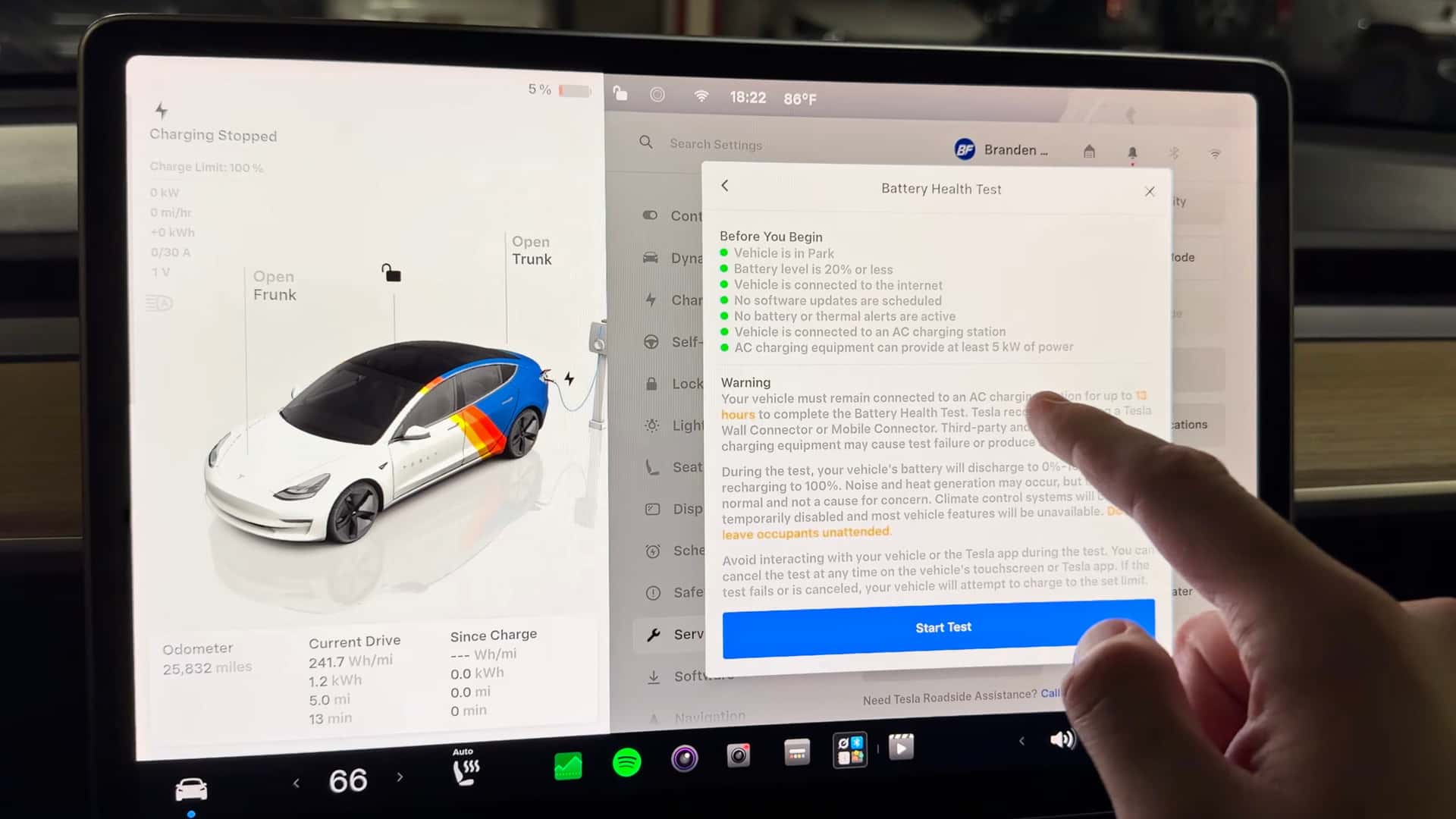
According to InsideEVs, the vehicle’s built‑in health diagnostic—run after the car was left plugged in overnight to discharge and then recharge—reported 90 % battery health and a usable capacity of 55.62 kWh. By contrast, the third‑party Tessie app had earlier estimated a remaining capacity of 92.27 %. The discrepancy, while modest, underscores how different measurement methods can paint divergent pictures of the same pack.
The source attributes the faster‑than‑expected wear to three intertwined factors typical of rental operations on a sun‑baked island. First, rental cars are often charged to full capacity daily, a practice that stresses any lithium chemistry. Second, the Maui environment combines high ambient temperatures with frequent short trips, prompting the climate control system to work harder and draw additional power from the pack. Third, the island’s public fast‑charging infrastructure is dominated by 50‑kW chargers, but a 12‑stall Tesla Supercharger capable of delivering the Model 3’s peak rate is also available, meaning the vehicle could have been regularly subjected to high‑power charging sessions.
While LFP chemistry is praised for tolerating higher state‑of‑charge (SOC) levels and for its thermal stability, the source notes that “LFP packs can withstand more than NMC packs, but rental use, tropical heat, and charging habits still matter.” This caveat suggests that the advertised durability is not a blanket guarantee; instead, it hinges on real‑world operating conditions that can differ dramatically from the controlled environments of laboratory testing.
To provide context, the source compares the Maui Model 3 with a newer 2025 Model Y Long‑Range RWD equipped with a nickel‑manganese‑cobalt (NMC) pack. That vehicle, driven by the tester’s wife, registered 88 % health after roughly 13,000 miles—a figure that, while lower than the brand‑new expectation, appears comparable when mileage is considered. The source also references a three‑year‑old Model Y Standard‑Range from Europe, also using LFP, which retained 92 % capacity after 34,000 miles and showed only a 1 % decline over its most recent year. These side‑by‑side data points hint that the Maui rental’s degradation may be more a product of its specific use case than an inherent flaw in LFP chemistry.
From an economic standpoint, the difference between 92 % and 90 % capacity translates into a reduction of usable range by roughly 5–6 %, which can be material for a rental fleet that bills by the mile. Moreover, the accelerated degradation could shorten the effective service life of the battery, prompting earlier replacement cycles and higher total cost of ownership (TCO). For manufacturers, such outcomes may pressure them to refine battery‑management software, adjust warranty terms, or even reconsider the chemistry mix for markets where high heat and intensive fast‑charging are common.
Audit & Contradictions
The article’s central claim—that the 2023 Model 3’s LFP battery degraded despite its “durable” label—is corroborated by multiple outlets that republished the story. However, the granular numbers and causal explanations are single‑source assertions. Specifically, the 90 % health figure, the 55.62 kWh usable capacity, the Tessie estimate of 92.27 %, and the attribution of degradation to rental use, tropical heat, and fast‑charging all come solely from the InsideEVs report and therefore must be framed as such (e.g., “According to the source…”). The comparison with the 2025 Model Y’s 88 % health and the European Model Y’s 92 % health are likewise single‑source claims.
The fact‑check audit found no contradictions between the source and other outlets; the contradiction level is low. Nonetheless, the source does not disclose the exact charging patterns, dwell times, or the frequency of supercharging sessions, leaving a gap in the evidence base for the suggested causes.
Future Outlook
If rental fleets and rideshare operators begin to see similar wear patterns in hot, high‑usage environments, they may temper enthusiasm for LFP‑based vehicles despite the chemistry’s lower cost and safety advantages. Manufacturers could respond by tightening software limits on maximum SOC for rentals, introducing more aggressive thermal‑management strategies, or offering differentiated warranties for fleet customers.
On the supply‑chain side, a shift away from LFP in certain markets could dampen demand for iron‑phosphate raw materials, nudging producers back toward nickel‑cobalt‑manganese (NCM) supplies. Conversely, if Tesla refines its battery‑management algorithms to mitigate the identified stressors, it could reinforce LFP’s position as the go‑to chemistry for cost‑sensitive, high‑turnover vehicles, preserving its strategic advantage in the global EV market.
Regulators and consumer‑protection agencies may also take note. As battery health becomes a more visible metric for used‑car valuations, clear disclosure standards could emerge, forcing manufacturers to standardize testing methods and reporting. Until such frameworks are in place, the Maui Model 3 case serves as a reminder that “durable” is a relative term, heavily contingent on how and where a battery is used.