Lead Hook
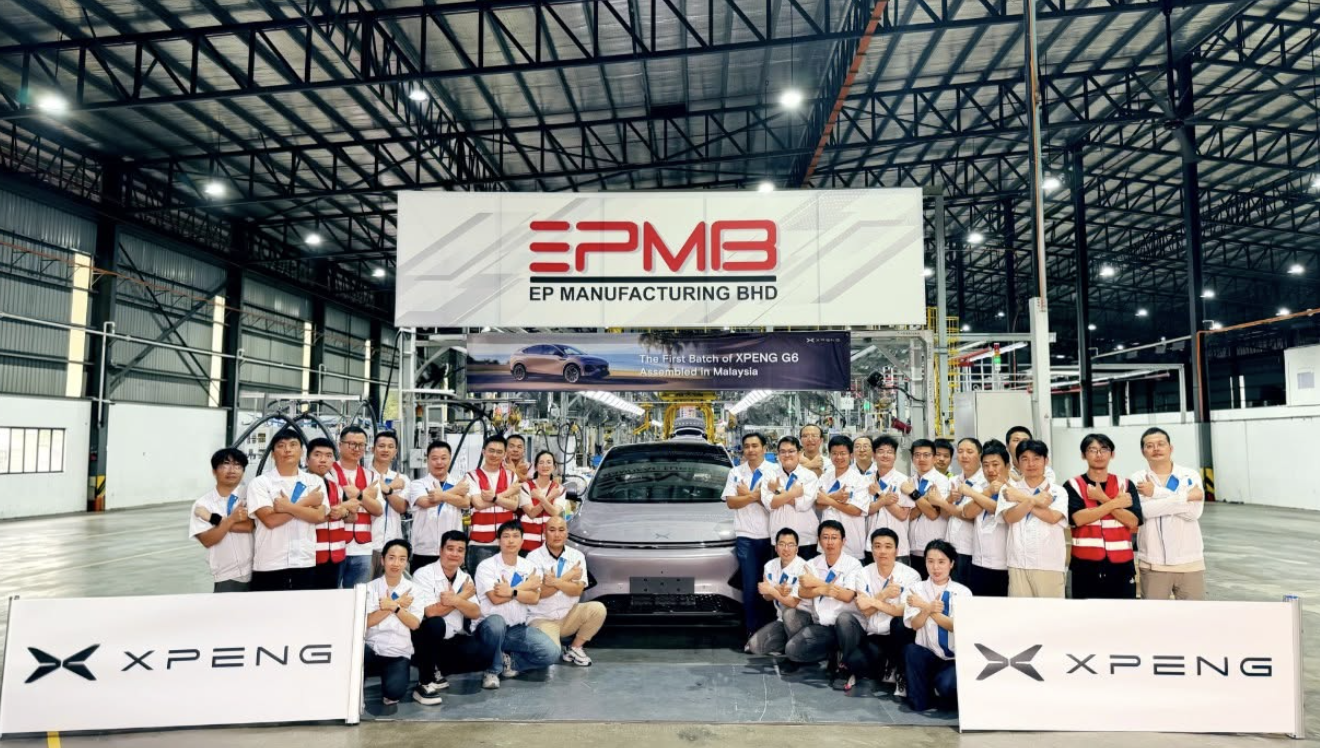
When the first locally assembled XPENG G6 emerged from EP Manufacturing Berhad’s (EPMB) plant in Melaka this June, it was more than a milestone for a single model. It signaled a strategic pivot by Chinese EV makers toward a distributed manufacturing network that could sidestep tariff walls, shorten delivery windows, and hedge against geopolitical shocks. For Malaysia, the event dovetails with a government‑led push to transform the nation into a Southeast Asian EV production hub, a move that could reshape regional supply chains and recalibrate the balance of power between China and its neighbors.
Deep Dive
According to CleanTechnica, the XPENG‑EPMB agreement, signed less than six months before the G6’s debut, covers the G6 electric SUV and the X9 premium MPV – including its range‑extended PowerX REEV variant – and grants EPMB the first right to assemble three additional XPENG models in the future. By securing early‑stage rights to multiple platforms, XPENG signals that Malaysia is being groomed as a long‑term manufacturing base rather than a one‑off export node.
The same source notes that XPENG describes Malaysia as one of its “strategic overseas assembly locations,” joining existing production in Indonesia and a European assembly line run by Magna Steyr in Austria. This phrasing underscores a deliberate diversification strategy: Chinese automakers are spreading production across several jurisdictions to mitigate the risks of relying solely on Chinese factories, which can be vulnerable to trade restrictions, supply‑chain bottlenecks, or sudden policy shifts.
Beyond XPENG, CleanTechnica lists several other Chinese brands that have earmarked Malaysia for ASEAN production or assembly – Leapmotor (through Stellantis’ Gurun plant in Kedah), MG (via EPMB in Melaka), Great Wall Motor (also with EPMB), and BYD (with announced plans for local manufacturing). The clustering of these commitments creates an emerging ecosystem of suppliers, tooling specialists, and logistics providers that can service multiple OEMs, driving economies of scale that would be impossible for a single brand operating in isolation.
Infrastructure development appears to be keeping pace. The article reports that Kuala Lumpur’s Merdeka 118 recently opened Malaysia’s largest AC charging hub, featuring 32 charging bays. While the hub’s primary purpose is to support EV owners, its capacity also demonstrates that the country is preparing the necessary back‑end to sustain higher vehicle volumes coming off the assembly line.
From a supply‑chain perspective, CKD (completely knocked‑down) production offers several efficiencies. Parts can be sourced regionally – for instance, Malaysia’s established right‑hand‑drive component manufacturers can provide chassis and interior modules – while final assembly occurs close to key Southeast Asian markets. This reduces shipping costs and lead times compared with exporting fully built units from China. Moreover, local assembly allows manufacturers to adapt vehicle specifications quickly in response to divergent regulatory regimes, such as differing emission standards or safety requirements across ASEAN members.
Policy shifts reinforce the commercial calculus. The source mentions that Malaysia’s EV incentives have evolved from pure demand‑stimulus measures toward policies that reward local value creation, including assembly, component manufacturing, and technology development. By tying incentives to domestic participation, the government nudges foreign OEMs toward deeper integration with local suppliers, further cementing the nascent supply‑chain network.
Audit & Contradictions
All of the concrete claims cited above – the June 2026 rollout of the XPENG G6, the scope of the XPENG‑EPMB agreement, XPENG’s strategic positioning of Malaysia, the involvement of Leapmotor, MG, Great Wall Motor and BYD, and the opening of Merdeka 118’s 32‑bay AC charging hub – originate from a single CleanTechnica article. The fact‑check audit flags each as a “single‑source claim,” meaning no independent outlet has corroborated the details at the time of writing. The audit notes a low level of contradiction, indicating internal consistency within the source, but the lack of external verification warrants a cautious reading. Readers should treat these statements as reported by CleanTechnica rather than independently verified facts.
Future Outlook
If the CKD model proves successful, Malaysia could attract further investment from OEMs seeking a foothold in the fast‑growing ASEAN market without incurring the full cost of greenfield factories. Competitors such as Thailand, Vietnam and Indonesia are also courting EV manufacturers, so Malaysia’s advantage will hinge on how quickly it can scale its supplier base, streamline customs procedures, and maintain a stable policy environment.
For Chinese automakers, a multi‑node production strategy may become the norm. By spreading assembly across Indonesia, Malaysia, and Europe, firms can hedge against protectionist measures and respond to region‑specific consumer preferences – for example, right‑hand‑drive models for Southeast Asia versus left‑hand‑drive variants for Europe.
Regulators in Malaysia will likely face pressure to deepen the ecosystem beyond assembly. Incentives tied to local component content could stimulate the development of battery‑pack manufacturers, power‑electronics firms, and software houses, turning the country from a mere assembly hub into a full‑stack EV supplier. Success in that arena could attract downstream investments, such as vehicle‑to‑grid pilots or autonomous‑driving testbeds, further differentiating Malaysia from other regional players.
In sum, the XPENG G6’s June debut is a visible indicator of a broader strategic shift: Chinese EV makers are building a resilient, region‑focused supply chain anchored in Malaysia’s existing automotive expertise. Whether this model can sustain long‑term growth will depend on the speed of infrastructure rollout, the depth of local supplier integration, and the consistency of supportive government policies.