Lead Hook
When Kia rolls out the next‑generation Sportage, the headline will likely focus on a bigger cabin and a sleek Android‑powered screen. Yet a quieter detail – the unusually low placement of the rear turn signals – could become a regulatory flashpoint in markets that are tightening visibility standards. The design choices spotted in a heavily camouflaged prototype hint at how Kia is balancing interior ambition with cost‑saving platform tricks, and they raise questions about how quickly the Korean automaker can adapt if safety agencies demand a redesign.
Deep Dive
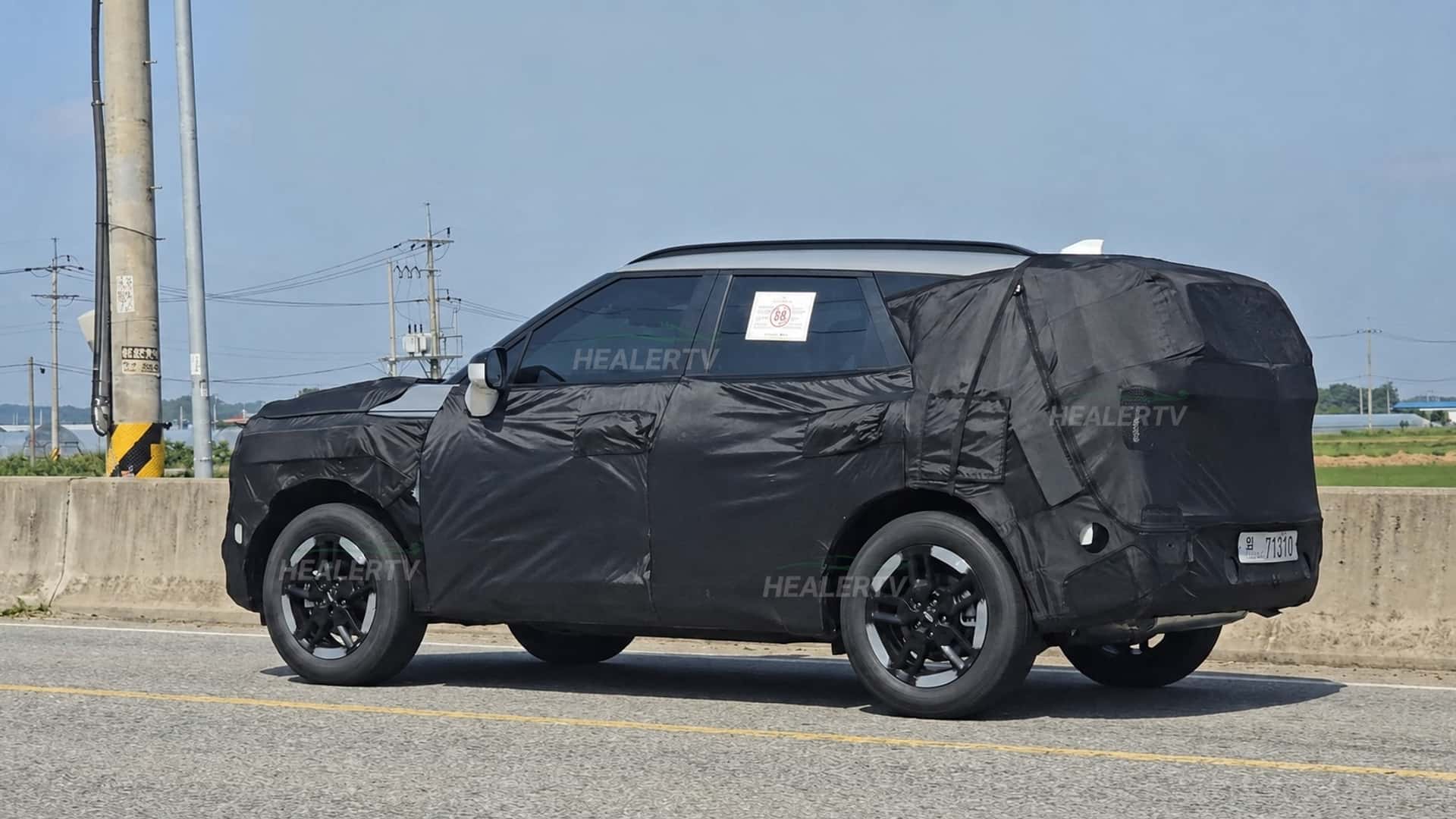
According to Motor1, the prototype observed by YouTuber Healer TV suggests the upcoming Sportage will be “larger and boxier” than the current model, adopting a more upright silhouette that adds a sense of presence on the road. While exact dimensions were not disclosed, visual comparison with the 2023‑2024 Sportage indicates a modest increase in overall length and a higher roofline, a trend that mirrors the industry’s push toward more spacious crossovers.
The interior overhaul appears to be the centerpiece of the redesign. The article notes the introduction of an Android‑powered “Pleos Connect” infotainment system, already seen on select Hyundai models. A dominant central screen will dominate the dash, but Kia is expected to retain “some physical controls” for climate and audio functions, a nod to user‑feedback that fully digital cabins can be distracting. This hybrid approach allows Kia to share software architecture across the Hyundai‑Kia umbrella, driving down development costs while still offering brand‑specific styling cues.
From a supply‑chain perspective, the move to a unified Android platform is significant. It reduces the number of distinct hardware modules that need to be sourced, simplifies firmware updates, and leverages Google’s ecosystem for navigation, voice control, and over‑the‑air (OTA) capabilities. However, it also ties Kia’s future updates to Google’s roadmap and raises data‑privacy considerations that regulators in Europe and the United States are beginning to scrutinize more closely.
Another visual cue that sets the prototype apart is the placement of the rear turn signals. The article points out that the signals are “mounted unusually low in the corners of the rear bumper,” a design habit common among Korean brands. While this styling choice can create a cleaner rear‑light cluster, it also makes the signals harder to see from certain angles – a potential liability under stricter U.S. Federal Motor Vehicle Safety Standards (FMVSS) that require a minimum visibility angle for rear turn signals. If the low‑mounted lights fail to meet those thresholds, Kia could be forced to re‑engineer the bumper for the North American market, adding cost and delaying the launch.
Timing is another critical factor. Motor1 reports that the Sportage has already entered the 2027 model year in the United States, but the next‑generation version is not expected to reach North America before the 2028 model year, with a global debut slated for sometime next year. This staggered rollout suggests Kia is using the 2027 model as a bridge, allowing the company to fine‑tune the new platform on markets with fewer regulatory hurdles before committing to the stricter U.S. safety environment.
Sales data underlines why Kia is eager to refresh the model. The same source notes that Kia delivered about 570,000 units last year, with the Sportage accounting for just over 18 % of those deliveries, making it the brand’s best‑selling vehicle. Keeping the Sportage competitive is therefore essential for Kia’s overall market share, especially as rivals such as Toyota’s RAV4 and Honda’s CR‑V continue to refresh their line‑ups with hybrid powertrains and advanced driver‑assist systems.
By sharing the new infotainment hardware with the Hyundai Tucson – which is expected to debut the interior first – Kia can achieve economies of scale, reducing per‑unit cost and shortening the development timeline. Yet the design divergence, particularly the low turn‑signal placement, indicates that Kia may be prioritizing visual differentiation over a fully harmonized global design language.
Audit & Contradictions
The Motor1 article is the sole source for every concrete claim in this story. The fact‑check audit flags the following statements as single‑source and therefore hedged:
- "The next‑generation Kia Sportage appears larger and boxier than the current model, with a more upright shape." – single source.
- "Rear turn signals are mounted unusually low in the corners of the rear bumper." – single source.
- "The new Sportage will feature an Android‑powered Pleos Connect infotainment system with a large central screen while retaining some physical controls." – single source.
- "The Sportage is expected to debut globally next year and will not reach the North American market before the 2028 model year." – single source.
- "Kia delivered about 570,000 units last year, with the Sportage accounting for just over 18 % of total deliveries." – single source.
The fact‑check summary rates the contradiction level as "Low," meaning no direct conflicts were found, but the lack of corroboration means each point should be treated as Kia’s own reported intention rather than independently verified fact.
Future Outlook
If regulators in the United States or Europe tighten rear‑signal visibility requirements before the 2028 launch, Kia may need to redesign the bumper, potentially delaying the Sportage’s entry into those markets and eroding its sales momentum. Competitors that have already adopted higher‑mounted turn signals – such as Mazda and Subaru – could gain a marginal safety advantage in consumer perception.
On the technology front, the rollout of the Pleos Connect system positions Kia to offer OTA updates, new app integrations, and faster rollout of hybrid‑powertrain software. However, reliance on a single Android platform also makes Kia vulnerable to any future licensing or security issues that could affect the entire Hyundai‑Kia family.
From a cost perspective, sharing the infotainment hardware with the Tucson should improve Kia’s margin on the Sportage, helping the brand maintain profitability even as it pushes for higher hybridization across its lineup. Yet the visual differentiation strategy – exemplified by the low turn‑signal design – suggests Kia is still betting on brand‑specific styling to attract buyers, a gamble that could backfire if safety regulations force a uniform redesign.
In sum, the next‑gen Sportage promises a more spacious cabin and a modern infotainment experience, but its low‑mounted turn signals could become the Achilles’ heel that forces Kia to adapt faster than it anticipated. How the company navigates that tension will be a bellwether for how Korean automakers balance platform efficiency with regional safety compliance in the coming decade.