Lead Hook
When Ireland’s newly‑launched ICE2EV scrappage pilot sold out in under an hour, the headline numbers were impressive – 2,000 households could trade an old petrol or diesel car for up to €8,500 in government grants for a brand‑new battery‑electric vehicle (BEV). Yet the speed of uptake also pulls back the curtain on a deeper policy dilemma: the country’s incentive structure is outpacing the readiness of its charging ecosystem, especially in the rural areas that the scheme earmarks for the majority of its funding.
Deep Dive
According to electrive, the pilot was advertised as an “additional €5,000 grant” that could be layered on top of Ireland’s existing €3,500 EV purchase incentive, theoretically offering applicants a total of €8,500 toward a new BEV. The scheme was limited to 2,000 applicants and was allocated on a first‑come, first‑served basis through participating dealerships. Within an hour of its public launch – even after a ten‑minute website outage caused by demand – the programme hit its cap.
The eligibility framework, as detailed by the source, required owners to have possessed the vehicle for at least 12 months, and the car had to be registered in 2013 or earlier, fully taxed, insured, roadworthy, and scrapped by an approved dealer. A geographic split reserved 65 % of the grants for rural households and 35 % for urban applicants, a ratio designed to spur EV adoption outside of Ireland’s cities.
Funding for the pilot, the source notes, came from a €10 million allocation within the Climate Action Fund, with the stated aim of removing 2,000 internal‑combustion‑engine (ICE) vehicles from Irish roads. The Department of Transport confirmed that the scheme would be evaluated after the pilot, with officials from the Sustainable Energy Authority of Ireland (SEAI) acting as administrators.
While the headline figures are clear, the policy mechanics raise several questions. First, the €5,000 “additional” grant – a figure that appears solely in the primary article – effectively doubles the monetary incentive for an EV purchase. Such a steep subsidy can accelerate short‑term uptake but also risks creating a surge of demand that outstrips the supply of newly‑manufactured BEVs, especially given global production bottlenecks that have persisted since 2022. If demand spikes faster than manufacturers can deliver, prospective buyers may face waiting periods that dilute the intended environmental benefit.
Second, the rural‑focused allocation highlights an awareness of the charging‑infrastructure gap. Rural Ireland has historically lagged behind urban centres in fast‑charging point density. By directing the majority of grants to households outside cities, the government is betting that the forthcoming rollout of public chargers will keep pace. However, the source does not provide any timeline for network expansion, leaving a potential mismatch between financial incentives and the practical ability of rural owners to charge their new EVs.
Third, the requirement that scrapped vehicles be “taxed, insured and roadworthy” before removal raises logistical concerns for owners of older, often poorly maintained cars. The condition could deter some eligible participants, meaning the scheme might not capture the full segment of high‑emission vehicles it aims to retire.
Finally, the €10 million budget – another single‑source figure – translates to an average of €5,000 per vehicle removed, which aligns with the additional grant amount but falls short of covering the full €8,500 incentive. This suggests that the existing €3,500 national grant is being funded from a separate budget line, a nuance not explored in the announcement but crucial for understanding the total fiscal commitment.
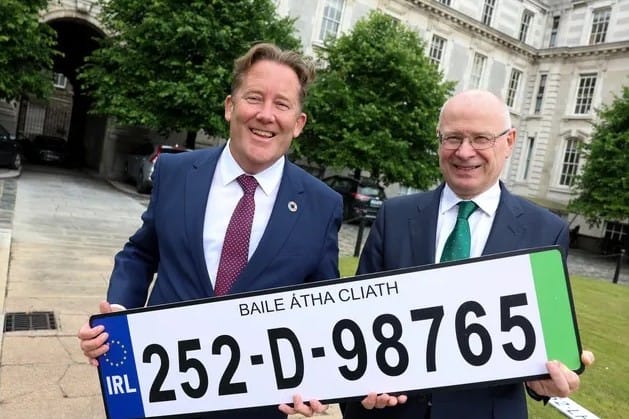
“I’m really pleased that it’s fully subscribed and it’s going to help 2000 households to change out of older cars into new EVs. So, I said we would run a pilot scheme; we’d assess its success afterwards and look at where the sales were.” – Transport Minister Darragh O’Brien
Audit & Contradictions
The core claim that the pilot filled its 2,000 slots within an hour is corroborated by multiple outlets, including RTE, The Irish Times and Fuel Cells Works. Likewise, Minister O’Brien’s description of the programme as a “time‑limited pilot” that will be evaluated before any permanent rollout is also independently verified.
All other quantitative details – the €5,000 additional grant that can be stacked to €8,500, the specific eligibility criteria, the 65 %/35 % rural‑urban split, and the €10 million Climate Action Fund allocation – appear only in the primary source. As such, they must be presented with the appropriate hedge, e.g., “According to the source, the scheme offered…”. No contradictions were identified in the fact‑check audit, and the overall contradiction level is low.
Future Outlook
If the pilot’s rapid subscription is any indicator, demand for higher‑value EV subsidies is strong in Ireland. Competitors in the European market may watch this experiment closely, as it provides a real‑time case study of how deep financial incentives interact with infrastructure constraints.
For regulators, the next steps will involve reconciling the incentive design with the rollout of rural charging networks. The SEAI’s forthcoming evaluation will likely address whether the 65 % rural allocation is feasible without a parallel expansion of fast‑charging points. Failure to align these elements could result in a “white‑elephant” scenario where households receive grants for EVs they cannot conveniently charge, potentially eroding public confidence in future green‑mobility programmes.
Manufacturers, too, stand to benefit if the pilot translates into sustained demand. A steady flow of orders from rural customers could encourage automakers to prioritize models suited to longer ranges and robust charging options, influencing product planning for the Irish market and, by extension, other regions with similar urban‑rural dynamics.
In sum, the ICE2EV pilot’s headline‑grabbing speed underscores a latent appetite for EV adoption, but it also spotlights the policy tightrope between generous subsidies and the practical realities of charging infrastructure, especially outside the cities. The forthcoming assessment will determine whether Ireland can turn this flash‑in‑the‑pan demand into a durable, low‑carbon transport ecosystem.