Lead Hook
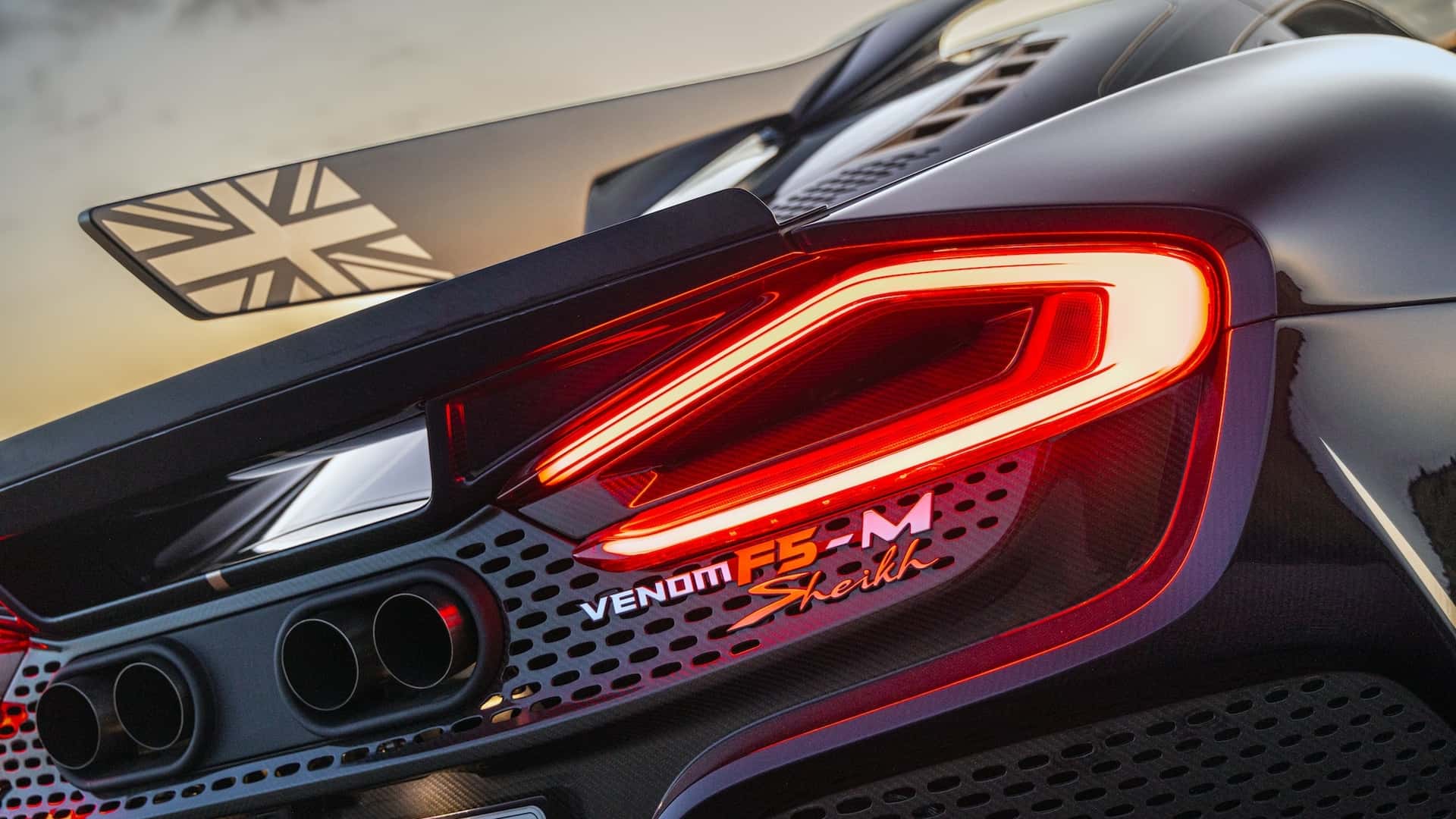
When Hennessey unveiled the Venom F5‑M at Goodwood, the headline was unmistakable: a manual‑shift hypercar with more than 2,000 horsepower. The spectacle matters far beyond brag‑ging rights. It forces the industry to confront a set of rarely discussed challenges—whether a gated six‑speed gearbox can survive the torque of a 2,031‑hp V8, how emissions and safety regulators will view a car that trades electronic aids for raw driver skill, and whether a $2.65 million, 12‑unit run can sustain a boutique maker’s cash flow in a market that increasingly favors electrified, autonomous platforms.
Deep Dive
According to the primary report from Motor1, the Venom F5‑M’s powerplant is a twin‑turbocharged 6.6‑liter V8 delivering a claimed 2,031 hp. This figure places the car behind only the Rimac Nevera (2,107 hp) and Koenigsegg Gemera (2,300 hp) in the current production‑car hierarchy. The power is routed exclusively to the rear wheels via a six‑speed gated manual transmission, a rarity in the hypercar segment where dual‑clutch automatics dominate.
Engineering a manual gearbox for this output is a monumental task. Traditional manual clutches are designed for significantly lower torque; exceeding 1,500 lb‑ft (the approximate torque implied by 2,000 hp at 6,000 rpm) would normally demand reinforced internals, oversized friction plates, and bespoke cooling solutions. Hennessey’s decision to “gate” the shifts—requiring the driver to lift the shift lever before moving to the next gear—adds a mechanical safeguard that can help manage the immense forces on the shift linkage and synchronizers. However, the source does not detail the specific materials or cooling strategies employed, leaving an information gap that only a technical deep‑dive from the manufacturer could fill.
Beyond the transmission, the F5‑M introduces a new carbon‑fiber monocoque chassis, an integrated roof scoop, and a 55‑inch dorsal fin intended to generate additional downforce above 200 mph. The addition of adaptive suspension marks the first time this technology appears on a Venom model, according to the same Motor1 article. Adaptive systems can modulate damper stiffness in real time, a crucial aid when handling the massive aerodynamic loads generated by the dorsal fin at top speed. Yet, the interplay between a manual gearbox and adaptive suspension raises regulatory questions: many safety standards for high‑performance vehicles assume electronic stability controls that can intervene during driver error. A purely mechanical shift platform may limit the effectiveness of such systems, potentially complicating type‑approval in stricter jurisdictions.
From a financial perspective, the article states Hennessey plans to build just 12 examples of the F5‑M, each priced at $2.65 million. This ultra‑limited production run suggests a business model that relies on high margins per unit rather than volume. The price point also positions the car squarely against other bespoke hypercars that are beginning to incorporate hybrid or fully electric powertrains—segments that benefit from government incentives and a growing pool of affluent buyers seeking greener performance. By betting on a combustion‑only, manual‑shift experience, Hennessey is courting a niche of purists, but the sustainability of that niche remains untested.
The vehicle’s exclusive roadster configuration, as reported by Motor1, further narrows its appeal. Roadsters traditionally sacrifice structural rigidity compared with coupes, requiring additional reinforcement—often adding weight that can erode performance gains. The article does not disclose the vehicle’s curb weight, leaving analysts to speculate on the power‑to‑weight ratio and whether the added chassis reinforcements offset the benefits of the new dorsal fin and adaptive suspension.
Audit & Contradictions
Motor1’s coverage corroborates two core claims that appear across other outlets: the Venom F5‑M exceeds 2,000 hp and employs a gated six‑speed manual transmission. Those facts are widely accepted. All other details—exact 2,031 hp output, $2.65 million price, 12‑unit limited run, exclusive roadster layout, adaptive suspension, carbon‑fiber monocoque, integrated roof scoop, 55‑inch dorsal fin, Goodwood debut, and Alex Brundle’s hill‑climb runs—are presented only in the Motor1 piece. As such, they must be framed as the source’s statements rather than independently verified data.
Just when you thought the Venom F5 couldn't get any more ridiculous, Hennessey went and added more power, an adaptive suspension, and a gated six‑speed manual transmission. It sounds insane—in the best possible way.
—Motor1 editorial commentary.
The fact‑check audit notes no contradictions between the source and other reports, assigning a “Low” contradiction level. Nonetheless, the absence of third‑party testing data for the power figure or durability testing for the manual gearbox means the claims remain uncorroborated beyond Hennessey’s own marketing.
Future Outlook
The Venom F5‑M’s arrival forces several industry players to reassess their strategies. For established hypercar manufacturers like Koenigsegg and Rimac, the F5‑M underscores that raw horsepower is no longer the sole differentiator; drivetrain architecture and driver engagement are becoming headline features. If Hennessey can demonstrate reliability in real‑world use—particularly the durability of its manual gearbox under extreme torque—it could spark a niche resurgence of manual‑shift hypercars, prompting rivals to explore hybrid‑assisted manuals or novel clutch technologies.
Regulators may also take note. The United States and European Union are tightening emissions testing and safety standards for high‑performance internal‑combustion vehicles. A manual hypercar that eschews electronic stability aids could face additional scrutiny, especially if it cannot meet mandatory crash‑avoidance criteria without driver intervention. Hennessey’s limited production run may exempt it from some type‑approval requirements, but any future scaling would likely encounter tighter oversight.
From a market perspective, the $2.65 million price tag sets a high barrier to entry, limiting the customer base to ultra‑wealthy collectors. As wealth concentration shifts and younger buyers increasingly favor electrified luxury, the long‑term demand for a combustion‑only, manual‑shift experience is uncertain. Hennessey’s gamble may prove profitable as a halo product that elevates brand cachet, but it also risks becoming a footnote if broader consumer preferences continue to move toward electric and autonomous performance.
In sum, the Venom F5‑M is more than a headline‑grabbing novelty; it is a litmus test for the engineering feasibility, regulatory tolerance, and market appetite for ultra‑high‑power manual hypercars in an era that is rapidly electrifying. Whether the F5‑M can sustain its performance on the hill climbs at Goodwood or survive the rigors of everyday track use will be the true measure of its legacy.