Lead Hook
Hyundai’s decision to start assembling the Ioniq 5 in Thailand does more than add another production line to its global network; it signals a concerted push to slash EV prices in a market where cost remains the biggest barrier to adoption. By shifting from fully imported knock‑down units to locally built cars, the Korean automaker claims a price reduction of roughly 15 percent and a further 300,000 baht launch discount for the first 400 buyers. If the price‑cut holds, the Ioniq 5 could become one of the most competitively priced premium EVs in Southeast Asia, challenging both incumbent Japanese brands and fast‑growing Chinese newcomers.
Deep Dive
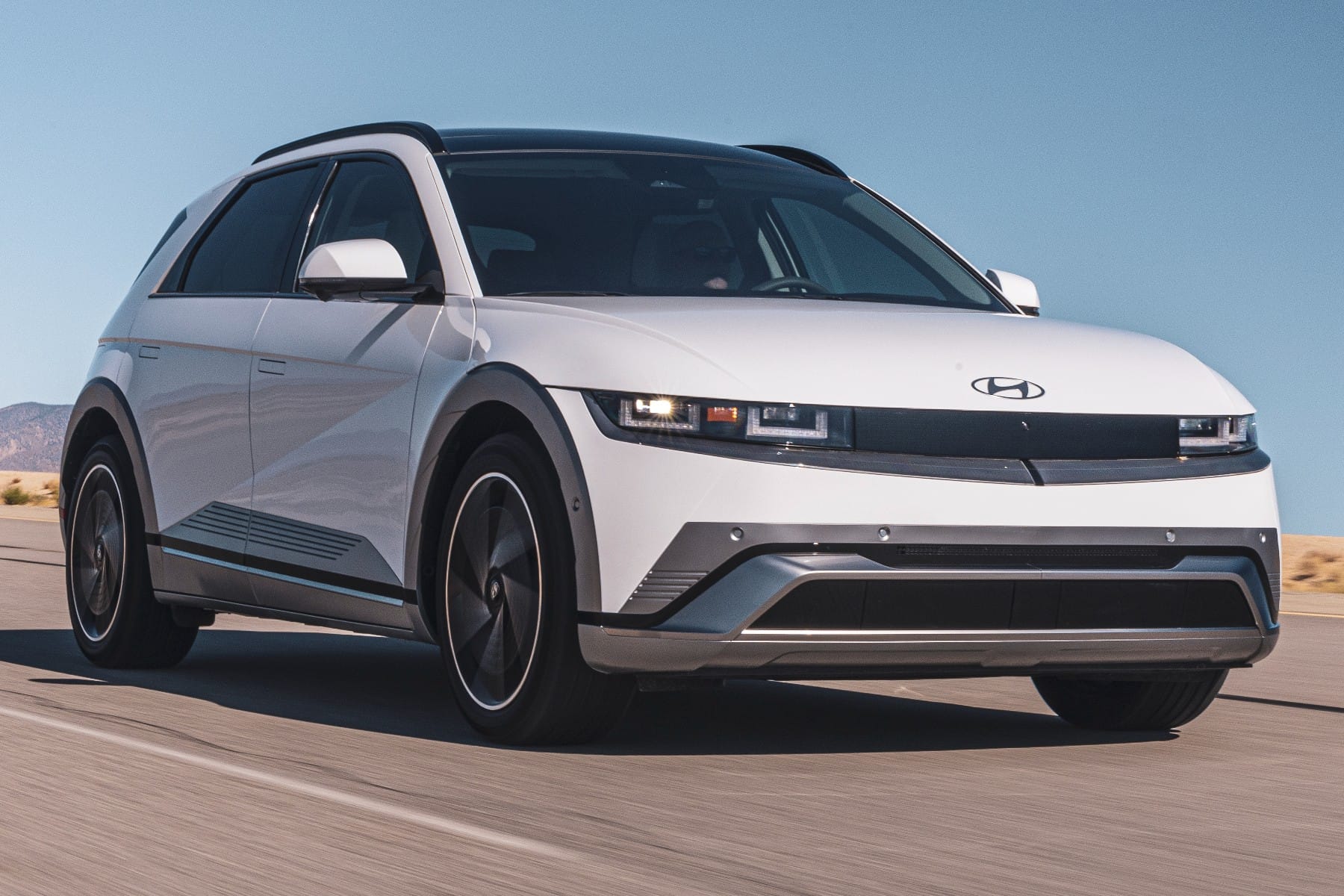
According to electrive, the locally assembled Ioniq 5 is offered at 1.699 million baht (about €44,713). This is down from the 1.988 million baht (≈€52,319) price the model fetched when imported as a completely built‑up (CBU) unit from South Korea, a reduction of 289,000 baht (≈€7,606) or roughly 15 percent. Hyundai is further sweetening the launch with a 300,000 baht (≈€7,895) discount for the first 400 customers, bringing the sticker price to 1.399 million baht (≈€36,818). The company frames the combined effect as a 30 percent saving compared with the CBU version.
The price strategy hinges on the partnership with Thonburi Automotive Assembly Plant (TAAP), a local contract manufacturer that already builds Mercedes‑Benz models for the Thai market. The Thailand Board of Investment (BOI) has reportedly approved a 1 billion‑baht investment for Hyundai’s EV and battery assembly operations, according to the same source. While the BOI approval and the TAAP partnership appear only in Hyundai’s own announcement, they illustrate a broader policy environment that rewards foreign automakers for localising production.
From an engineering standpoint, the Thai‑spec Ioniq 5 N Line mirrors the global specification: a single rear‑mounted permanent‑magnet synchronous motor delivering 168 kW and 350 Nm of torque, paired with an 84 kWh nickel‑manganese‑cobalt (NMC) battery pack. The vehicle can sprint from 0‑100 km/h in 7.5 seconds, reach a top speed of 185 km/h, and achieve a WLTP‑rated range of 530 km. Charging times are also unchanged – a full 10‑100 % charge takes 7.35 hours on a 10.5 kW AC charger, while a 350 kW DC fast charger can lift the state of charge from 10 % to 80 % in just 18 minutes.
Why does Hyundai focus on the N Line configuration for overseas production? The source notes that Thailand is the only overseas site assembling this specific trim, making it the seventh global production location after South Korea, the United States, Singapore, Vietnam, Indonesia and India. By concentrating the higher‑spec N Line in Thailand, Hyundai may be testing the market’s willingness to pay a premium for sportier styling and additional equipment, while still keeping the base price competitive through local assembly.
The economic logic of local assembly rests on tariff avoidance and labour cost differentials. Thailand imposes a 30 percent import duty on fully built EVs, a levy that evaporates when a vehicle is assembled domestically from knock‑down kits. Moreover, Thailand’s automotive workforce enjoys lower average wages than South Korea, and the BOI’s investment incentives further narrow the cost gap. The net effect is a cheaper final‑mileage price for consumers, which Hyundai believes will accelerate market penetration in a region where EVs still command a price premium of 30‑40 percent over internal‑combustion equivalents.
From a supply‑chain perspective, the Thai assembly line also brings the battery pack closer to regional raw‑material sources and battery‑cell manufacturers, potentially reducing logistics costs and lead times. While the source does not detail battery sourcing, the BOI’s approval of a battery‑assembly component suggests Hyundai aims to create a more vertically integrated ecosystem within Thailand.
Audit & Contradictions
The core claim that Hyundai has begun local assembly of the Ioniq 5 in Thailand is corroborated by an independent outlet, confirming the launch’s factual basis. However, several key details appear only in Hyundai’s own announcement and lack external verification. These single‑source statements include the exact pricing (1.699 million baht for the locally built model and the 300,000 baht discount for the first 400 buyers), the partnership with TAAP, the BOI’s 1 billion‑baht investment approval, the ranking of Thailand as the seventh global production site, and the exclusive overseas assembly of the N Line variant. The fact‑check audit notes a “Low” contradiction level, meaning no conflicting reports have emerged, but readers should treat the uncorroborated figures as company‑provided data pending independent confirmation.
Future Outlook
If Hyundai’s price‑cut strategy succeeds, it could force rival manufacturers to reconsider their own localisation plans. Japanese brands such as Toyota and Nissan, which already operate extensive CKD operations in Thailand, may need to accelerate EV‑specific assembly to stay price‑competitive. Meanwhile, Chinese EV makers, who have been expanding aggressively across Southeast Asia with low‑cost models, could find their price advantage eroded if Hyundai can deliver a premium vehicle at a comparable price point.
Regulators are likely to watch the rollout closely. The BOI’s incentive package signals a willingness to nurture an EV manufacturing hub, but sustained success will depend on the development of supporting infrastructure—particularly rapid‑charging networks. Thailand’s broader EV‑charging strategy will therefore become a critical factor in determining whether the Ioniq 5’s reduced price translates into higher sales volumes.
Finally, the focus on the N Line trim suggests Hyundai is testing a niche market segment that blends sportier aesthetics with electric power. Should demand exceed expectations, Hyundai may expand the range of locally assembled variants, potentially adding more affordable base models or higher‑capacity battery options. Such a move would deepen Thailand’s role in Hyundai’s global EV supply chain and could position the kingdom as a pivotal export hub for the Southeast Asian market.