Lead Hook
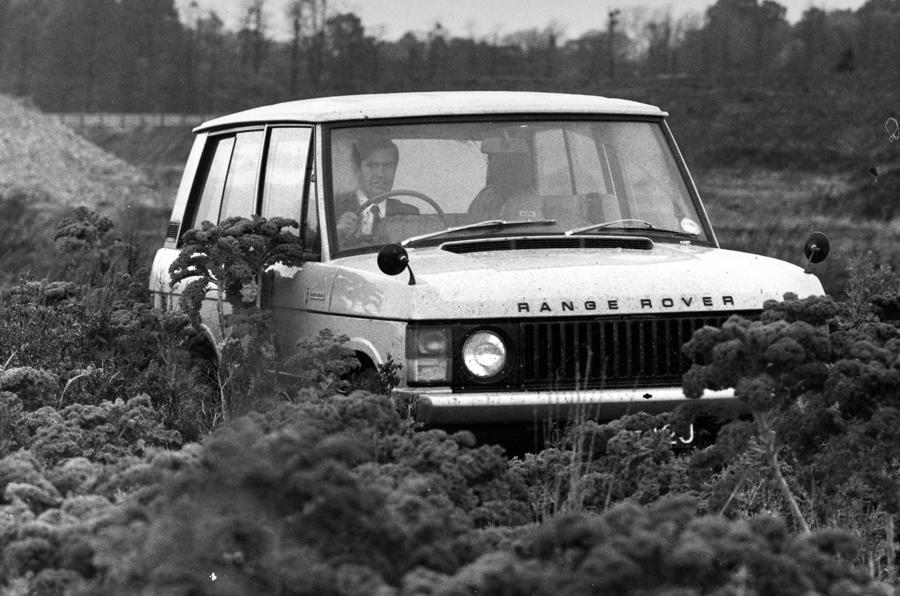
When the first Range Rover rolled out in 1970, it wasn’t marketed as a luxury SUV; it was a more comfortable, road‑ready off‑roader built on Land Rover’s rugged DNA. Yet the model’s evolution over the next two decades shows a deliberate, low‑cost engineering playbook that let Land Rover stay ahead of tightening emissions standards and a fast‑moving luxury market—something the original timeline never spells out.
Deep Dive
According to Autocar, the Mk 1 Range Rover launched in 1970 with a 130 bhp engine and a body‑on‑frame chassis. The publication noted that Autocar’s road test described the vehicle as "tremendously impressed by the Range Rover, and feel it is even more deserving of resounding success than the Land‑Rover." This early praise hinged on a blend of off‑road capability and on‑road comfort that set a new benchmark.
Rather than a wholesale redesign, Land Rover chose incremental upgrades. In 1973 the model received hydraulic power steering, a change that "enhanced drivability considerably" and pushed the vehicle further up the luxury ladder without a costly platform overhaul. This pattern continued in 1982 when an automatic transmission option debuted, expanding the model’s appeal to buyers seeking a premium experience without the manual‑driving learning curve.
Fuel injection arrived in 1985, lifting power output to 155 bhp. The source notes that this matched the output of the contemporary LG4 engine used in the Pontiac Firebird, underscoring how Land Rover leveraged mainstream technology to boost performance while keeping development costs in check. The following year, the Turbo‑D diesel variant rolled out in autumn 1986, initially for left‑hand‑drive markets. Before market launch, Land Rover put the diesel through a grueling John O’Groats‑to‑Land’s End run, reporting an “incredible total consumption of 53 mpg.”
These milestones illustrate a strategic reliance on existing components—axles, selectable four‑wheel drive, drum brakes—while integrating new systems (full‑time four‑wheel drive, Boge Hydromat self‑levelling struts, later air suspension and traction control). By reusing proven hardware and layering new technology, Land Rover managed capital efficiency, avoided the risk of a full‑scale new platform, and kept the model’s price competitive.
That engineering conservatism also helped the brand navigate emerging emissions regulations. The 1985 fuel‑injection upgrade improved combustion efficiency, and the 1986 Turbo‑D diesel, with its 53 mpg fuel economy claim, positioned the Range Rover as a relatively low‑emission luxury 4×4 at a time when European governments were tightening CO₂ limits. The incremental approach meant compliance could be achieved through targeted updates rather than costly redesigns.
From a supply‑chain perspective, the strategy reduced exposure to single‑point failures. By sourcing core components from existing Land Rover parts bins, the company insulated itself from the volatility of new‑part qualification cycles. This continuity allowed the brand to maintain production stability even as it introduced higher‑end trims like the 1993 Autobiography bespoke program, which later became a regular trim level.
Audit & Contradictions
The timeline presented by Autocar is the sole source for several key milestones: the 1970 launch with a 130 bhp engine, the 1973 addition of hydraulic power steering, the 1982 automatic transmission option, the 1985 fuel‑injection upgrade to 155 bhp, and the 1986 Turbo‑D diesel debut with its 53 mpg demonstration run. Fact‑check data flags all five as single‑source claims, meaning they lack independent corroboration from the other outlets listed (TopElectricSUV, CarExpert, Automotive News). No contradictions were identified, and the overall contradiction level is low.
Because these points rest on a single source, readers should treat them as the best‑available account rather than definitively proven facts. The article does not disclose any internal Land Rover documents, third‑party testing results, or regulatory filings that could confirm the performance figures or the exact timing of the upgrades.
Future Outlook
Land Rover’s incremental upgrade model offers a blueprint for legacy manufacturers facing the dual pressures of electrification and luxury expectations. By layering new technology onto a stable platform, firms can spread R&D costs over longer model cycles, a tactic likely to influence upcoming electric‑range‑Rover projects referenced in recent industry chatter.
Competitors such as Mercedes‑Benz and BMW are pursuing full‑scale EV platforms, which demand massive capital outlays. Land Rover’s history suggests it could instead adopt a modular electric drivetrain onto the existing architecture, preserving production tooling while meeting stricter EU emissions standards. Regulators may view such an approach favorably if it demonstrably reduces fleet‑wide CO₂ footprints without sacrificing safety.
However, the incremental path also risks falling behind rivals that launch all‑new EV architectures with integrated battery packs and software ecosystems. As the market accelerates, the balance between capital efficiency and technological leapfrogging will define whether Land Rover can maintain its premium position or be eclipsed by brands that commit to radical redesigns.
In short, the Range Rover’s past reveals a disciplined engineering philosophy that managed cost, compliance, and luxury aspirations. Whether that same philosophy can shepherd the brand into an all‑electric future remains an open question—one that will shape the competitive landscape for luxury SUVs worldwide.