Lead Hook
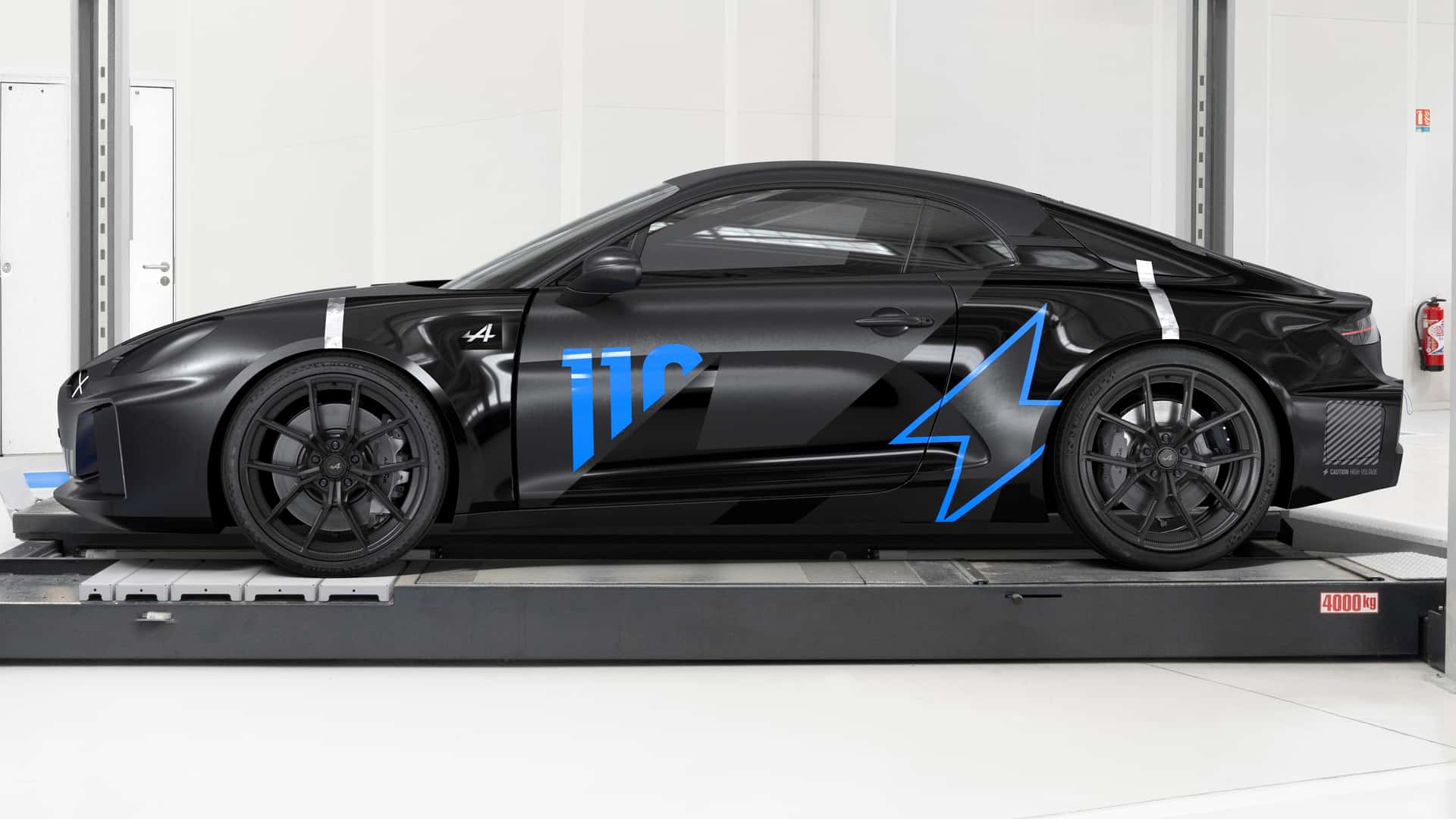
When Alpine rolls the A110 Future onto the tarmac at Goodwood next week, the headline will be bold: the "world's first true EV sports car." Yet beyond the hype lies a quieter story about how the French marque is wrestling with the physics of electrification. The original A110 earned its legend by weighing just 1,102 kg (2,430 lb) and delivering razor‑thin handling. Replacing its turbocharged 1.8‑liter engine with a dual‑motor, split‑battery system threatens to add the very mass that defined the car’s charm. Understanding whether Alpine can preserve its performance DNA while meeting Europe’s zero‑emission push is crucial for the future of niche sports car makers.
Deep Dive
According to Motor1, the A110 Future is a rear‑wheel‑drive development mule equipped with two electric motors and a pair of rear‑mounted battery packs arranged in a split layout. Alpine says the configuration is meant to hit a 40:60 front‑to‑rear weight distribution, a balance that the internal‑combustion A110 historically achieved through its lightweight aluminum chassis.
The company also highlights an 800‑volt electrical architecture, a silicon‑carbide (SiC) inverter for higher efficiency, and a cell‑to‑pack battery design that integrates high‑energy‑density cells directly into a single large pack. All of these elements are described as ways to keep the overall weight in check, even though Alpine does not provide a target curb weight for the EV version.
Alpine’s heritage platform, the Alpine Performance Platform (APP), remains aluminum‑intensive, and the suspension is likewise built from aluminum to mitigate added mass. The move to an 800‑volt system is significant because it enables ultra‑fast charging—an essential feature for a sports car that may be used for short, high‑intensity drives rather than long‑haul trips. However, the source does not disclose charging rates, range, or power output, leaving analysts to speculate on real‑world performance.
Beyond the technical layout, the announcement carries symbolic weight. The A110 badge has been produced 35,450 times since its 1969 debut, with the second generation ending at unit 28,701 in Dieppe just days ago, according to the same source. By positioning the Future as a direct successor in spirit—if not in lineage—Alpine is betting that its brand cachet can survive a fundamental shift from gasoline to electricity.
Alpine’s own language is unapologetically ambitious. The company calls the car the "world's first true EV sports car" and claims it will "outperform the best of today's combustion sports cars" while delivering "exceptional torque and performance."
"world's first true EV sports car"These statements echo Alpine’s desire to claim a first‑mover advantage in a segment where rivals such as Porsche and Caterham are also developing electric models, but the source does not provide comparative data to substantiate the superiority claim.
From a supply‑chain perspective, the reliance on high‑energy‑density cells and a SiC inverter suggests Alpine is tapping into components that are still relatively scarce and costly. While the source notes that the battery uses high‑energy‑density cells, it also concedes that the new A110 will likely be heavier than its predecessor. The engineering trade‑off between performance and weight is a classic dilemma for EV sports cars, and Alpine’s decision to keep the rear‑wheel‑drive layout while adding two motors and split batteries indicates a commitment to preserving driving dynamics at the expense of added complexity.
Regulatory pressure in Europe is another undercurrent. The EU’s tightening CO₂ targets and upcoming bans on new internal‑combustion sales push manufacturers toward electrification, but niche brands must balance compliance with the expectations of enthusiasts who prize lightweight, analog experiences. Alpine’s approach—maintaining a two‑seat layout and promising a future 2+2 model under the revived A310 nameplate—signals an attempt to broaden its appeal without abandoning its sports‑car roots.
Audit & Contradictions
The announcement leaves several key details opaque. The source provides no concrete figures for total vehicle weight, power output, range, or pricing. All technical specifications—including the dual‑motor setup, split battery packs, 800‑volt architecture, SiC inverter, aluminum‑intensive platform, and cell‑to‑pack design—are reported solely by Alpine and have not been independently verified. The fact‑check summary notes a "Low" contradiction level, meaning no direct conflicts have been identified, but it also flags that these specifications are single‑source claims and should be treated with caution.
Furthermore, while the claim of being the "world's first true EV sports car" is corroborated by another Motor1 article, the performance assertion that the A110 Future will "outperform the best of today's combustion sports cars" remains unsubstantiated beyond Alpine’s own statement. The source does not address the potential weight penalty, nor does it discuss how the vehicle will meet the expectations set by the historic 1,102 kg curb weight of the previous model.
In short, the narrative is built on Alpine’s promotional language, with independent confirmation limited to the headline claim of being the first true EV sports car. Readers should view the technical and performance details as provisional until third‑party testing or additional disclosures emerge.
Future Outlook
If Alpine can deliver an EV that truly matches or exceeds the dynamics of its gasoline‑powered predecessor, it could set a benchmark for other low‑volume manufacturers. However, the engineering challenges highlighted—particularly weight management and component sourcing—may limit how quickly the A110 Future can move from prototype to production, slated for 2027 according to the source.
Competitors such as Porsche, which is developing 718 Boxster and Cayman EVs, and Caterham, with its Project V concept targeting a curb weight near 1,190 kg, are also racing to define the electric sports car niche. Alpine’s early public debut at Goodwood will be a litmus test for market enthusiasm, but the ultimate test will be whether the car can reconcile the brand’s lightweight heritage with the realities of battery mass.
Regulators will likely watch the A110 Future closely, as its classification could influence future emissions standards for sports cars. Should Alpine succeed, it may encourage other boutique manufacturers to accelerate EV programs, potentially reshaping the segment’s landscape ahead of the EU’s 2035 internal‑combustion ban.
Until performance metrics and pricing are disclosed, the A110 Future remains a promise—a glimpse of how Alpine intends to navigate the crossroads of tradition, technology, and regulation.