Lead Hook
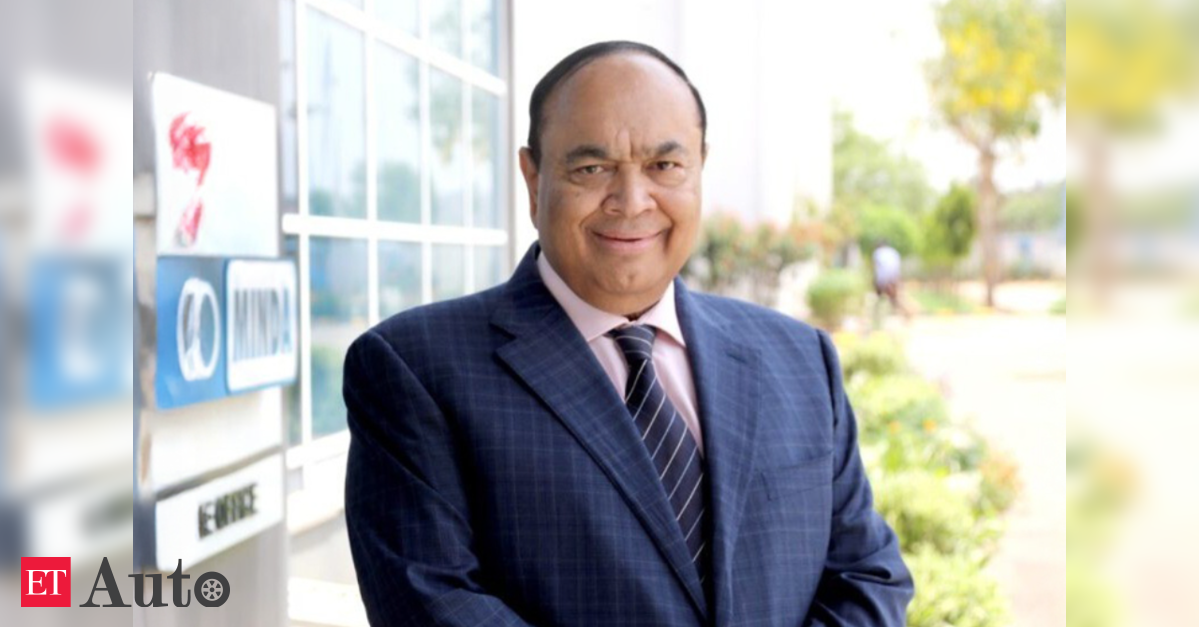
When Uno Minda’s chairman Nirmal Minda announced that the company will "power every future vehicle, regardless of technology," the headline sounded like a bold pledge to dominate the next generation of cars, trucks and two‑wheelers. Yet the statement leaves a critical question unanswered: how will a single supplier sustain parallel development across electric, hybrid, fuel‑cell and internal‑combustion powertrains without over‑extending its supply chain and capital base? The answer matters not just for Uno Minda but for an Indian auto sector that is positioning itself as a global sourcing hub.
Deep Dive
According to the ET Auto article published on July 4, 2026, Uno Minda’s vision is explicitly technology‑agnostic – the firm intends to provide components for any power‑train architecture that the market adopts ET Auto. The company’s portfolio already spans lighting, acoustics, and a range of electronic modules, giving it a foothold in both traditional and emerging vehicle systems.
In practice, a technology‑agnostic growth strategy means maintaining parallel R&D pipelines, tooling lines, and supplier contracts for disparate power‑train technologies. While this breadth can hedge against a mis‑read of market direction, it also forces the firm to allocate capital across multiple, often competing, development tracks. In capital‑intensive industries, spreading investment can dilute focus, lengthen time‑to‑market and increase inventory complexity.
India’s broader ambition to become a global sourcing hub for automotive components, as highlighted in the same source, adds another layer of pressure. The country’s large labor pool and cost advantages attract multinational OEMs, but the shift also raises expectations for local suppliers to meet global quality and volume standards across all vehicle architectures. For Uno Minda, delivering on a promise to power every future vehicle will likely require scaling up manufacturing capacity in parallel with the diversification of its product mix.
Supply‑chain logistics become a pivotal factor. Electric vehicles demand high‑volume semiconductor and battery‑management components, while internal‑combustion platforms still rely on robust mechanical and acoustic systems. Coordinating these divergent material flows – from silicon wafers to steel stampings – can strain warehousing, forecasting and logistics networks. Any bottleneck in one segment could ripple across the entire portfolio, jeopardising the firm’s ability to meet OEM delivery windows.
From a financial perspective, the technology‑agnostic stance may affect Uno Minda’s cost structure. Maintaining multiple production lines typically incurs higher fixed costs, and the need for specialized tooling can increase depreciation expenses. If market adoption skews heavily toward a single technology (for example, a rapid shift to full electric), the firm could be left with under‑utilised assets tied to legacy platforms.
Regulatory dynamics further complicate the picture. India’s push for stricter emissions standards and incentives for electric mobility creates a policy environment that favours clean‑tech investments. However, the same regulations can accelerate the decline of internal‑combustion components, potentially rendering parts of a technology‑agnostic portfolio redundant faster than anticipated.
Audit & Contradictions
The announcement makes three concrete claims:
- Uno Minda aims to power every future vehicle, regardless of technology – a claim verified by the ET Auto piece.
- The company is pursuing a technology‑agnostic growth strategy – this appears only in the primary source and is therefore a single‑source claim that should be treated as the company’s perspective.
- India is becoming a global sourcing hub for automotive components – likewise, this assertion is found solely in the primary article and is not independently corroborated.
Fact‑check data indicate no contradictions in the reporting, and the contradiction level is low. Nonetheless, the single‑source nature of points 2 and 3 means readers should view them as Uno Minda’s framing rather than independently validated industry trends.
Future Outlook
If Uno Minda can successfully navigate the supply‑chain and capital challenges inherent in a technology‑agnostic model, it could emerge as a one‑stop shop for OEMs seeking to future‑proof their vehicle line‑ups. Competitors that specialize in a single power‑train niche may find themselves vulnerable if OEMs demand broader component suites, especially as Indian manufacturers expand export ambitions.
Conversely, should the company’s diversification dilute focus, it may cede ground to more specialised suppliers that can deliver faster, cheaper and at higher volumes for a dominant technology. Investors and analysts will likely watch Uno Minda’s capital allocation reports, capacity expansions, and partnership announcements for signals of how the firm balances breadth with depth.
Regulators may also keep an eye on how a multi‑technology supplier aligns with India’s emissions targets and electric‑mobility incentives. Clear compliance pathways and transparent reporting on carbon footprints could become differentiators as the government tightens standards.
In short, the headline promise of powering every future vehicle is ambitious, but the real story will unfold in the boardrooms where decisions about tool‑making, inventory, and R&D spend are made. The success of Uno Minda’s technology‑agnostic strategy will hinge on whether the company can turn breadth into a competitive advantage without over‑stretching the very supply chains it seeks to command.