Lead Hook
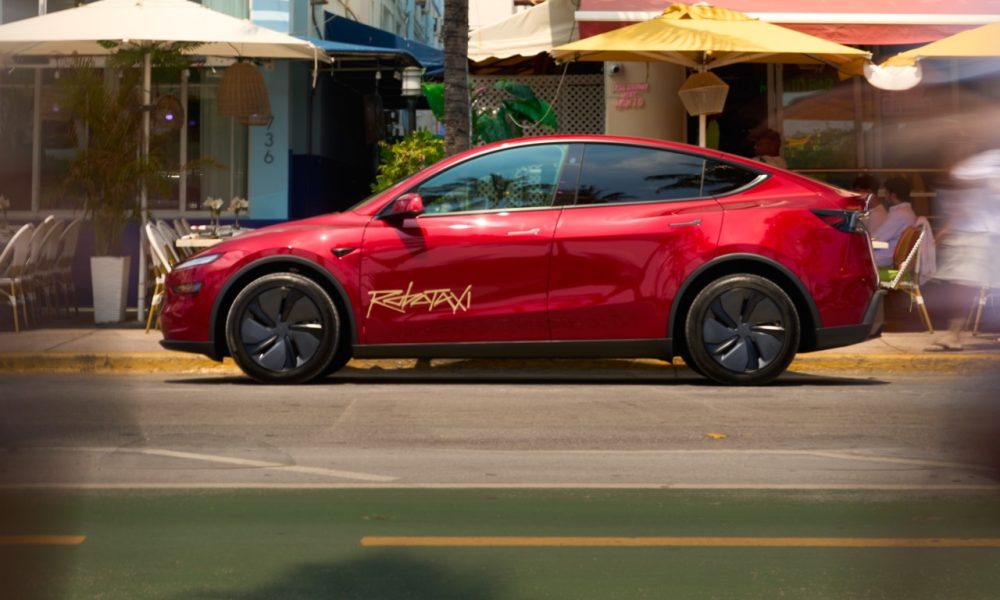
When Tesla announced that its Robotaxi service is now operating in Miami, the headline reads like another milestone in the company’s push to dominate autonomous ride‑hailing. Yet the real story lies in what the announcement omits: a state‑by‑state rollout that forces Tesla to confront a patchwork of local regulations, safety expectations heightened by a recent fatal crash in Texas, and the capital efficiency of deploying a limited‑area geofence in a tourism‑heavy market.
Deep Dive
According to Teslarati, the Miami launch marks Tesla’s entry into its third state for autonomous ride‑hailing, following Texas and California. The company has defined a geofence of roughly 10 to 14 square miles that encompasses western and central Miami, including Miami International Airport (MIA) and major corridors such as SR 826 (Palmetto Expressway), US 41 (Tamiami Trail), and connectors SR 968, 953, 959, and 972. By focusing on high‑traffic, airport‑linked routes, Tesla is mirroring the strategy it employed in Austin and the Bay Area, where it initially limited service to dense corridors before expanding outward.
Prior to the Florida rollout, the Robotaxi network debuted in Austin on June 22, 2025, then spread to the San Francisco Bay Area in July 2025, achieving full commercial service in Austin by November 18, 2025. The subsequent addition of Dallas and Houston on April 18, 2026, broadened Tesla’s footprint across Texas. This incremental expansion, as reported by the same source, underscores a deliberate “city‑by‑city” approach that allows Tesla to fine‑tune its Full Self‑Driving (FSD) software in diverse traffic environments while managing exposure to regulatory scrutiny.
Florida’s tourism ecosystem—encompassing Fort Lauderdale, Palm Beach, and the Boynton area—introduces a distinct demand profile. The source notes that these coastal regions “will attract perhaps millions of tourists in any given year,” suggesting a potential surge in ride‑hailing volume. However, the announcement does not address how Tesla plans to scale vehicle numbers, charging infrastructure, or support staff to meet seasonal spikes, leaving investors to infer the financial impact of such a focused deployment.
The regulatory backdrop is equally critical. While Texas and California have relatively mature frameworks for autonomous vehicle testing, Florida’s statutes on driver‑less operation remain less defined. The modest size of the Miami geofence may be a tactical decision to stay within a jurisdiction where Tesla can negotiate limited permits without triggering a statewide licensing requirement. This cautious footprint reduces immediate compliance costs but also signals that Tesla’s broader vision—nationwide, driver‑less mobility—still hinges on a fragmented legal landscape.
Safety concerns loom large after a Texas manslaughter case where a driver allegedly overrode FSD, leading to a fatal crash. Although the Miami rollout is unrelated, the timing raises questions about Tesla’s ability to demonstrate consistent safety performance across disparate markets. The source does not elaborate on how Tesla’s internal safety audits or external audits by state agencies will be integrated into the Miami operation, leaving a gap in public accountability.
From a capital efficiency perspective, the limited‑area strategy allows Tesla to leverage existing vehicle inventory rather than committing to large‑scale fleet purchases. By deploying a subset of its Model Y fleet equipped with FSD, Tesla can test profitability on a per‑mile basis before scaling. Yet the article does not disclose the number of vehicles allocated to Miami, nor the projected revenue per vehicle, making it difficult to gauge whether the rollout is financially sustainable or merely a branding exercise.
Audit & Contradictions
The core claim—that Tesla’s Robotaxi is now active in Miami, its third autonomous state—is corroborated by multiple outlets, including The News International and ClubAlfa.it. However, several details appear only in the Teslarati piece and should therefore be presented with caution. The exact size of the Miami geofence (10‑14 sq mi) and the specific streets listed are single‑source claims. Likewise, the precise chronology of earlier rollouts—Austin launch on June 22, 2025; Bay Area expansion in July 2025; full service in Austin by November 18, 2025; Dallas and Houston addition on April 18, 2026—are not independently verified elsewhere. The mention of Florida’s tourist hotspots as high‑traffic generators also originates solely from the primary article.
Because the fact‑check audit identified no contradictions, the overall reliability of the announcement remains high, but the lack of independent confirmation for the geofence specifics and rollout timeline warrants a hedged presentation: “According to Teslarati, the Miami geofence covers approximately 10 to 14 square miles…” and “The source reports that the network previously launched in Austin on June 22, 2025…” This approach respects the single‑source nature of those details while still informing readers of the broader narrative.
Future Outlook
Tesla’s Miami entry sets a benchmark for competitors such as Waymo and Cruise, which have traditionally favored broader geographic pilots. By opting for a tightly defined zone, Tesla can amass granular performance data, potentially accelerating software iterations. If the Miami rollout demonstrates reliable safety metrics and profitable utilization, it could encourage other states to grant similar limited permits, gradually building a patchwork of autonomous corridors that collectively approximate national coverage.
Regulators, meanwhile, will likely scrutinize the Miami operation for compliance with local traffic laws and consumer protection standards. The recent Texas incident may prompt Florida officials to demand more transparent data sharing from Tesla, especially regarding driver overrides and incident reporting. Such oversight could shape the regulatory playbook for autonomous ride‑hailing across the United States.
Investors should monitor Tesla’s disclosed vehicle counts in Miami, its partnership with local authorities on permitting, and any forthcoming safety audits. The success—or stumble—of this modest geofence will inform expectations for the company’s next expansion phases, potentially into other high‑tourism markets like Orlando or Tampa.
In sum, the Miami launch is more than a headline; it is a litmus test for Tesla’s ability to navigate regulatory mosaics, maintain safety credibility after a high‑profile crash, and prove that a city‑by‑city, low‑capital‑commitment model can sustain a profitable autonomous ride‑hailing business.