Lead Hook
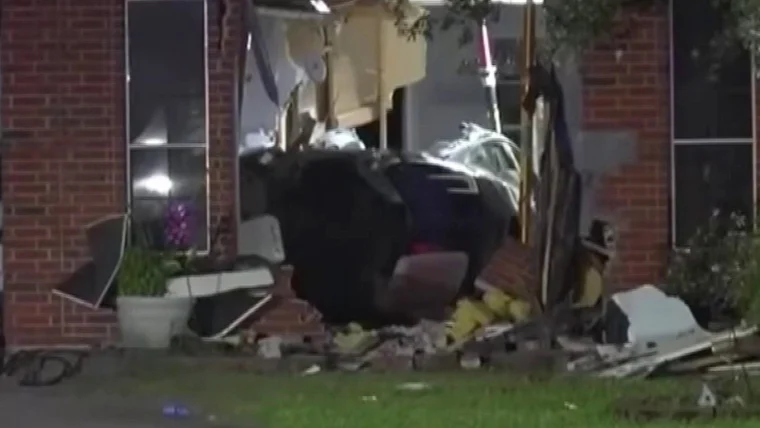
When a Tesla slammed into a Houston‑area home, killing a resident, the headlines focused on a manslaughter charge. Yet the deeper story is how the incident throws a spotlight on the regulatory blind spot surrounding Tesla’s Full Self‑Driving (FSD) software, especially as gig‑economy workers increasingly rely on it for deliveries. The case raises urgent questions about who is responsible when an advanced driver‑assistance system fails to prevent a tragedy.
Deep Dive
According to Teslarati, Michael Butler was arrested and charged with manslaughter after his Tesla collided with a house, killing a woman inside. The charging documents reveal that Butler was operating the vehicle in Full Self‑Driving mode while completing DoorDash deliveries that evening. As the car approached a left turn, Butler allegedly pressed the accelerator pedal, overriding the system’s speed control, and kept the pedal depressed until it reached 100 percent. The brake pedal was never applied, and no data indicated that Butler attempted to steer away from the curb before impact. The same documents note that “no mechanical error was detected or recorded by the vehicle before BUTLER and the Tesla struck the curb.”
I noted that the brake pedal was never pressed in the final minute before the crash. I also did not see any data to indicate that the driver attempted to turn away from the curb that he eventually struck. Further, I observed that no mechanical error was detected or recorded by the vehicle before BUTLER and the Tesla struck the curb.
Forensic analysis of Butler’s phone, also detailed by Teslarati, uncovered a series of Google searches in May 2026 that expressed frustration with FSD’s perceived timidity. Searches included phrases such as “Tesla fsd not aggressive enough 2026 model,” “FSD is not aggressive enough for city driving,” and “tesla fsd too timid.” These queries suggest that Butler may have been seeking a more assertive driving experience from the software, a sentiment echoed in broader driver forums where users debate the balance between safety conservatism and traffic flow efficiency.
The victim’s family, identified as the Avila family, has filed a wrongful‑death lawsuit against both Tesla and Butler, seeking at least $1 million in damages, according to the same source. While the lawsuit is still pending, it underscores a growing legal strategy: holding manufacturers accountable for software‑related accidents, even when a human driver is technically in control.
From a policy perspective, the case arrives at a time when U.S. regulators have yet to define clear standards for Level 2‑plus driver‑assistance systems like FSD. The National Highway Traffic Safety Administration (NHTSA) has issued guidance urging manufacturers to ensure that drivers remain engaged, but enforcement mechanisms remain vague. Tesla’s own statements, as reported, emphasize that the driver manually overrode acceleration, positioning the company as a passive data provider rather than an active safety guarantor.
Industry observers note that the gig‑economy’s reliance on autonomous‑assistance features could amplify risk. Drivers seeking to maximize deliveries may be tempted to push the software’s limits, especially if they perceive it as “too timid.” The combination of high‑pressure delivery schedules and a system that defaults to conservative behavior creates a friction point that could lead to more frequent manual overrides, as the Butler case suggests.
Audit & Contradictions
The core fact that Butler was arrested and charged with manslaughter is corroborated by multiple outlets, including ABC News and Houston Public Media. However, all other details – the use of FSD during DoorDash deliveries, the manual accelerator override, the specific phone‑search queries, and the wrongful‑death lawsuit amount – appear only in the Teslarati report. As the fact‑check audit notes, these are single‑source claims and should be presented with appropriate hedging. For example, the article states that “the charging documents indicate” the accelerator was fully depressed, and that “forensic analysis … revealed” the search terms. No contradictions have been identified; the audit rates the overall contradiction level as low.
Future Outlook
Regulators are likely to scrutinize this incident as a test case for how autonomous‑assistance software is marketed and used in commercial contexts. Potential outcomes include stricter labeling of FSD capabilities, mandatory driver‑attention monitoring, or even limitations on using such systems for paid deliveries. Competitors such as GM’s Cruise and Waymo, which are pursuing higher levels of autonomy with more controlled testing environments, may leverage Tesla’s challenges to argue for clearer safety standards.
For investors and analysts, the case adds another layer of risk to Tesla’s ambitious rollout of FSD. While the company touts rapid adoption, each high‑profile accident can erode public trust and invite litigation that impacts the bottom line. Moreover, the incident could accelerate legislative efforts at the state level to require explicit driver disengagement protocols when operating advanced driver‑assistance features.
Ultimately, the Butler case serves as a reminder that technology alone cannot guarantee safety; the human‑machine interface, regulatory clarity, and the economic pressures on drivers all intersect to shape outcomes on the road. How policymakers and the industry respond will determine whether autonomous features become a net safety benefit or a new liability frontier.