Lead Hook
Ferrari’s latest flagship, the 12Cilindri Manuale, is being billed as a return to the pure‑pleasure of a manual gearbox – but the reality is an entirely electronic interface that mimics a clutch and shift lever. While the headline sells nostalgia, the underlying technology raises questions about safety certification, supply‑chain complexity, and whether the high‑performance market is ready to accept a “manual” that never physically connects the driver’s inputs to the transmission.
Deep Dive
At the heart of the car is what the company calls “Manuale By‑Wire.” According to Motor1, the system translates the driver’s gear‑lever and clutch‑pedal movements into electronic signals that command the same eight‑speed dual‑clutch transmission (DCT) used in the standard 12Cilindri. The powertrain itself remains unchanged – a naturally aspirated 6.5‑liter V12 that produces 819 horsepower and revs to 9,500 rpm – but the mechanical link between driver and gearbox has been replaced by software and sensors.
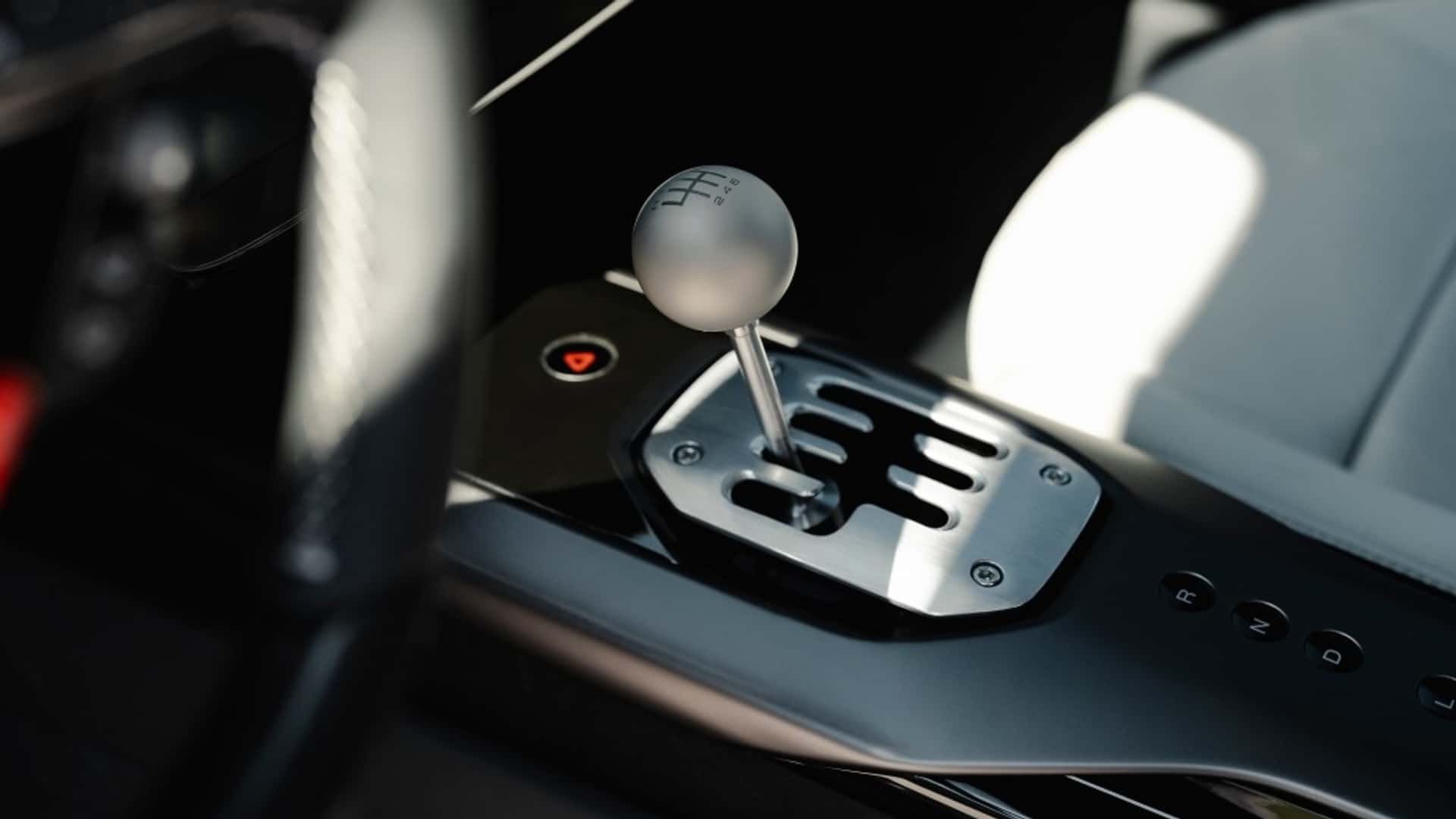
The shift lever, which the source describes as weighing less than 7.7 lb, is machined from a solid billet of high‑strength steel and incorporates Hall‑effect sensors to monitor its position on two axes. An electromagnetic solenoid acts as a lockout, physically preventing a shift if the transmission cannot accommodate it. The lever’s movement is further refined by a specially profiled rotating drum that builds resistance before releasing a “click” that mimics the tactile feel of a traditional manual.
The clutch pedal is also fully by‑wire. The source explains that an angular position sensor measures pedal travel, while a passive mechanical system of spring, cam, and roller recreates the resistance curve of a conventional clutch. Because the resistance is generated mechanically rather than electronically, the pedal is said to respond instantly, synchronising with the engine and transmission via the sensors.
In operation, manual mode controls the first six forward gears plus reverse, and the system deliberately omits paddle‑shifter controls – a first for Ferrari in many years. Reverse is engaged by pushing the lever down and selecting the upper‑left position of the shift gate, mirroring the classic Ferrari gated‑shifter layout. The digital instrument cluster even previews the effect of a pre‑selected gear change before the shift occurs, blending the analog feel of a manual with the predictive assistance of a modern DCT.
“Manuale By‑Wire,”
That phrase encapsulates the paradox: a manual that never physically moves the gearbox. It also signals a broader trend in high‑performance engineering where electronic actuation replaces mechanical linkages, a shift that carries regulatory implications. By‑wire systems must meet the same safety standards as traditional mechanical controls, but the certification process for a luxury sports car with a fully electronic clutch is still evolving. In Europe, the type‑approval framework for by‑wire steering and braking has already required extensive functional‑safety testing; a by‑wire clutch adds a new dimension that regulators will need to address.
Beyond compliance, the reliance on precision‑machined components – such as the solid‑billet lever and the custom‑profiled drum – introduces supply‑chain considerations. High‑strength steel billets and Hall‑effect sensor modules are not standard automotive parts; they demand tighter tolerances and potentially higher costs. If Ferrari’s approach proves successful, other manufacturers may be forced to secure similar specialty suppliers, reshaping the high‑end component market.
Audit & Contradictions
The announcement leaves several technical details unverified by independent outlets. While the core concept of a by‑wire manual, the V12 powerplant, and the gated shifter are corroborated by multiple publications, specifics such as the development being "entirely in Maranello," the exact lever weight of "less than 7.7 lb," and the precise clutch‑by‑wire architecture are only reported by the primary source. According to the fact‑check audit, these are single‑source claims and should be treated with caution.
Because the fact‑check found no contradictions, the overall consistency of the story is rated as low‑risk. Nonetheless, the lack of external verification for the granular engineering figures means that readers should view those details as the company’s narrative rather than independently proven facts.
Future Outlook
If Ferrari’s Manuale By‑Wire system gains acceptance, it could set a benchmark for how luxury performance brands approach driver engagement in an era of electrification and autonomous assistance. Competitors such as Porsche and Lamborghini are already experimenting with electronic clutch‑by‑wire concepts for future hybrid supercars; a successful rollout by Ferrari would accelerate that development race.
Regulators, meanwhile, will likely tighten scrutiny on by‑wire clutch systems, demanding rigorous functional‑safety assessments comparable to those already required for steering and braking. The need for new testing protocols could lengthen certification timelines, influencing how quickly manufacturers can bring similar technologies to market.
From a market perspective, the 12Cilindri Manuale may appeal to a niche segment of enthusiasts who crave the ritual of a manual shift without sacrificing the performance of a dual‑clutch gearbox. Should demand prove strong, Ferrari could justify the added engineering expense and potentially expand the technology to lower‑priced models, democratizing a premium driving experience.
In short, Ferrari’s by‑wire manual is more than a clever marketing hook; it is a litmus test for the viability of fully electronic driver interfaces in high‑performance cars. The outcome will shape supply chains, regulatory frameworks, and the future definition of what a "manual" transmission can be.