Lead Hook
India’s push for cleaner fuel is colliding with the reality of older vehicles on its roads. The government and automakers are promoting E20 fuel—a blend of 20% ethanol and 80% gasoline—as a key step toward reducing emissions and cutting oil imports. But while ET Auto reports that industry experts at a government briefing declared E20 fuel safe for vehicles built before 2023, other outlets are documenting a rise in repairs and accelerated wear-and-tear in older cars running on the blend. The contradiction raises critical questions: Is E20 truly compatible with the existing fleet, or is the government’s narrative overlooking mechanical realities?
Deep Dive
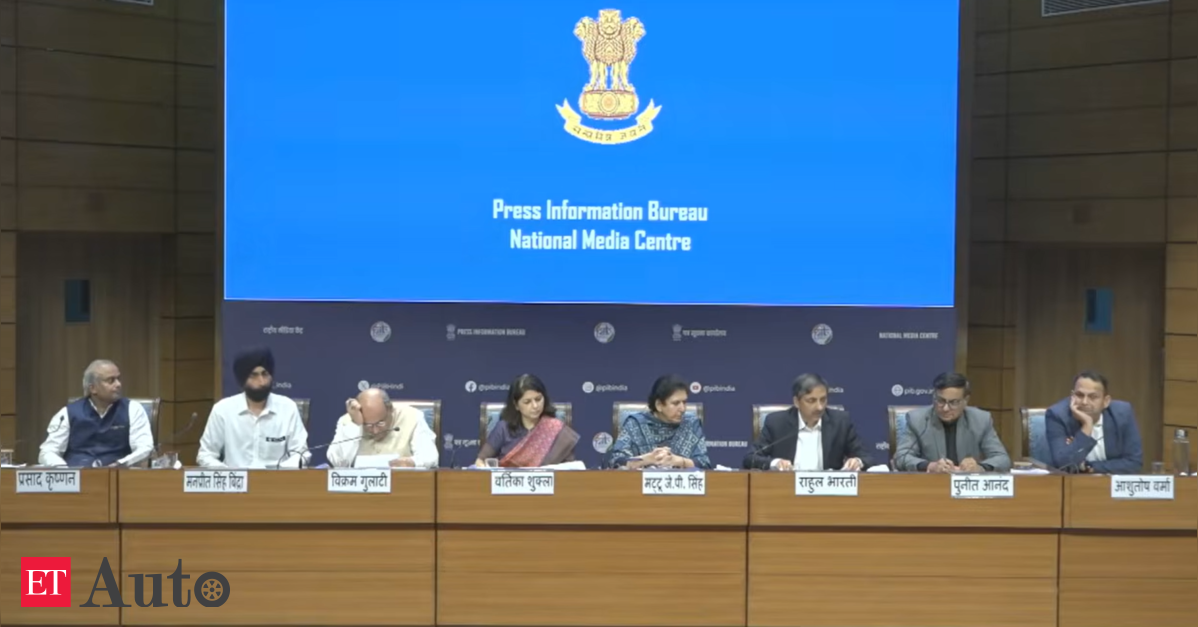
E20 fuel has been positioned as a bridge solution for India’s transition to cleaner energy. The Indian government, under its National Biofuel Policy, has mandated the rollout of E20 fuel across the country, with a target of 20% ethanol blending by 2025. The fuel is touted for its potential to reduce greenhouse gas emissions and decrease reliance on imported crude oil. According to ET Auto, industry experts at a recent government briefing affirmed that E20 fuel does not damage vehicles manufactured before 2023. The briefing, which has not been independently verified by other outlets, appears to be a coordinated effort to reassure consumers and automakers alike.
However, the technical compatibility of E20 fuel with older vehicles is far from settled. Ethanol, the key component of E20, has a lower energy density than gasoline, which ET Auto notes can lead to a drop in fuel efficiency. More critically, ethanol is hygroscopic—it absorbs water—which can lead to corrosion in fuel tanks, lines, and injectors, particularly in older vehicles not designed to handle higher ethanol concentrations. While newer vehicles are equipped with materials and engine calibrations to accommodate E20, pre-2023 models may lack these adaptations.
The economic implications of widespread E20 adoption are also significant. For consumers, the lower energy density of E20 translates to reduced mileage, effectively increasing the cost of driving. For automakers, the push for E20 compatibility has required investments in engine redesigns and materials upgrades. CNBC TV18 reports that automakers have affirmed the safety, performance, and compatibility of E20 fuel, but this assertion is contradicted by real-world data emerging from independent surveys.
Audit & Contradictions
The ET Auto report presents a clear narrative: E20 fuel is safe for pre-2023 vehicles, as stated by industry experts at a government briefing. However, this claim is a single-source assertion—no other outlet corroborates the occurrence of the briefing or the experts’ statements. The fact-check audit flags this as a critical gap, as the claim lacks independent verification.
More troubling is the contradiction between the ET Auto report and findings from other outlets. According to MSN and Indiablooms, surveys have linked E20 fuel to rising repairs and accelerated wear-and-tear in older vehicles. Indiablooms reports that a new survey found E20 fuel is quietly accelerating mechanical degradation in pre-2023 cars, particularly in components like fuel pumps, injectors, and seals. MSN highlights a survey that associates E20 with increased repair rates, suggesting that the fuel’s corrosive properties may be taking a toll on older engines not designed to handle higher ethanol concentrations.
The contradiction between the government-backed narrative and real-world data is stark. While the ET Auto report downplays these concerns, the surveys cited by MSN and Indiablooms paint a different picture—one of unintended consequences for consumers and mechanics alike. The fact-check audit classifies this as a "Medium" contradiction, indicating that the competing claims warrant closer scrutiny.
Future Outlook
The rollout of E20 fuel in India is a high-stakes experiment with implications for the country’s automotive industry, energy security, and environmental goals. If the government’s assurances hold true, E20 could become a seamless transition fuel, reducing emissions without disrupting the existing fleet. However, if the surveys linking E20 to accelerated wear-and-tear are accurate, the policy could backfire, leading to higher repair costs for consumers and potential reputational damage for automakers.
For regulators, the contradiction underscores the need for transparent, independent testing of E20’s long-term effects on older vehicles. The government may need to revisit its messaging and consider targeted incentives for owners of pre-2023 vehicles to upgrade or retrofit their cars. For automakers, the stakes are equally high. While CNBC TV18 reports that manufacturers have affirmed E20’s compatibility, the rise in repairs could erode consumer trust and lead to costly warranty claims.
As India moves toward its 2025 E20 mandate, the coming months will be critical. If the surveys are correct, the country may face a growing wave of vehicle breakdowns, straining an already overburdened repair industry. If the government’s experts are right, India could emerge as a global model for biofuel adoption. The truth likely lies somewhere in between—and the resolution of this contradiction will shape the future of India’s automotive and energy sectors.