Lead Hook
The balcony solar movement isn’t just about slashing electricity bills—it’s a direct challenge to the centralized energy model that has propped up fossil fuel dominance for a century. While President Donald Trump’s administration has fought to delay the energy transition, a quiet legislative revolution is underway: at least 30 U.S. states are now considering or have passed laws to fast-track plug-in solar panels, bypassing the permitting, fees, and utility approvals that have long stifled rooftop solar. The implications are staggering. If utilities can’t control the flow of electrons, they can’t control the market. And if renters and apartment dwellers can generate their own power, the political calculus for fossil fuel subsidies begins to unravel.
This isn’t just about technology—it’s about power, literally and figuratively. The balcony solar movement is democratizing energy production, and utilities, fossil fuel lobbyists, and their political allies are watching nervously.
Deep Dive
The Mechanics of Balcony Solar
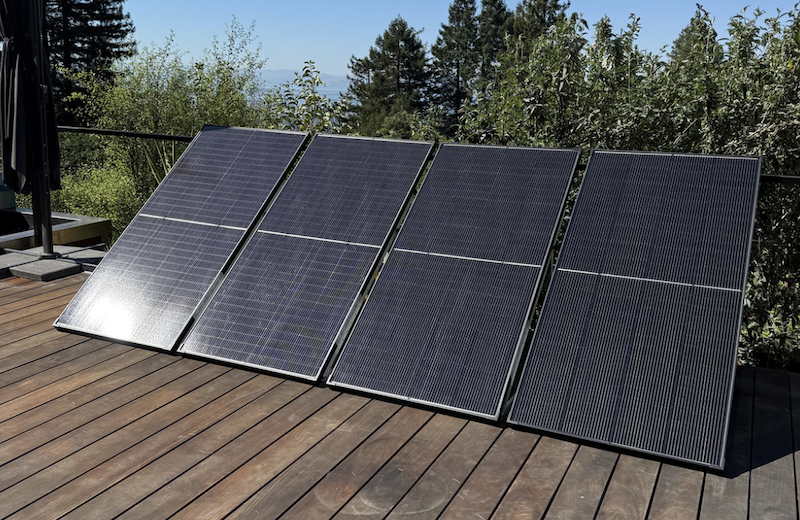
Balcony solar—also called plug-in solar—is deceptively simple. Unlike traditional rooftop solar, which requires specialized racking, inverters, and professional installation, balcony solar panels plug directly into a standard household outlet. According to CleanTechnica, these systems can be hung from balconies, propped up in yards, or placed on patios, feeding electricity into the home when the sun is shining. They can also integrate with home battery storage, though they’re limited to offsetting a household’s consumption rather than sending power back to the grid—a key distinction that has made them easier to regulate.
The technology itself isn’t new, but adoption in the U.S. has been hamstrung by bureaucratic hurdles. Utilities have historically required interconnection agreements, fees, and inspections for even small-scale solar, while homeowner associations (HOAs) and landlords have often banned or restricted them. That’s where legislation comes in.
The Legislative Wave
Utah was the first state to pass balcony solar legislation last year, setting off a domino effect. Since then, Maine, Virginia, Maryland, and Colorado have followed suit, with about 30 other states now considering similar bills. The legislation typically does three things:
- Eliminates permitting and fees: New Jersey’s Garden State Plug-In Solar Act (S2368/A4836), passed last month, explicitly prohibits municipalities from requiring permits, applications, or fees for portable solar devices up to 1,200 watts. The bill states:
"No municipality shall require a permit, application, fee, license, or other approval for the placement or use of a portable solar generation device."
- Bans utility interference: The same New Jersey law bars utilities from imposing approval requirements, charging fees, or installing additional controls on balcony solar systems. This is a direct rebuke to utilities’ historical gatekeeping role.
- Protects renters and HOA residents: The legislation prevents landlords, HOAs, and condo boards from blocking balcony solar installations, though it allows for "reasonable restrictions" on size and placement. This is critical: renters make up nearly a third of U.S. households, and most have been locked out of rooftop solar until now.
New York’s legislature passed a similar bill in May, which is now awaiting Governor Kathy Hochul’s signature. New Hampshire took it a step further on July 3, when Governor Kelly Ayotte signed its balcony solar legislation into law. CleanTechnica reports that the New Hampshire law was championed by advocates who argue that balcony solar normalizes renewable energy:
"Proponents have long said that a big benefit of plug-in solar is that it makes the idea of solar panels seem more ordinary. If you see panels draped over balconies as you walk downtown, you’re more likely to consider installing solar panels on your house or support a solar farm being built nearby."
Why Utilities Are Losing Control
The balcony solar movement threatens utilities in two ways. First, it erodes their customer base by enabling households to generate their own power, reducing demand for grid electricity. Second, it undermines their political influence. Utilities have long argued that rooftop solar shifts costs to non-solar customers, justifying fees and restrictions. But balcony solar, which is capped at 1,200 watts and cannot feed power back to the grid, sidesteps this argument entirely.
New Jersey’s law is particularly aggressive in this regard. By prohibiting interconnection agreements for systems under 1,200 watts, it effectively removes utilities’ ability to slow-walk approvals or impose fees. This is a template other states are likely to follow.
The Safety Question
Critics of balcony solar have raised concerns about electrical safety, particularly with plug-in systems. However, CleanTechnica reports that UL Solutions, a global safety certification company, has introduced a new evaluation program based on UL 3700, an outline of investigation for plug-in solar systems. The program defines construction, performance, and labeling criteria to ensure safety and consistency. According to the source, this provides "manufacturers a reliable foundation for designing products that consistently meet safety and performance requirements."
Audit & Contradictions
While the balcony solar movement is gaining momentum, the CleanTechnica report contains several claims that lack independent corroboration. Here’s what’s missing from the story:
- New York’s pending bill: The article states that New York’s legislature passed a plug-in solar bill in May, which is now awaiting Governor Hochul’s signature. However, this claim is single-source and has not been confirmed by other outlets. Until Hochul signs it, the bill’s fate remains uncertain.
- New Jersey’s Governor Sherrill: The report refers to Governor Mikie Sherrill, but this appears to be a misstatement. Mikie Sherrill is a U.S. Representative from New Jersey, not the governor. The current governor of New Jersey is Phil Murphy. This suggests a potential error in the source material, though the legislation itself (S2368/A4836) is accurately described.
- New Hampshire’s signing: The July 3 signing of New Hampshire’s balcony solar legislation is reported solely by CleanTechnica and has not been independently verified. While the Concord Monitor is cited, it’s unclear if this is a primary source or a re-reporting of the same claim.
- UL Solutions’ evaluation program: The introduction of a UL evaluation program for balcony solar is another single-source claim. While UL 3700 exists, there’s no external confirmation that it has been formally adopted for this purpose.
Despite these single-source claims, the fact-checker’s notes confirm that the core narrative—Utah’s pioneering legislation and the broader legislative trend—is solid. There are no contradictions in the reporting, and the contradiction level is classified as "Low."
Future Outlook
The balcony solar movement is poised to reshape the energy landscape in three key ways:
- Accelerating the energy transition: By making solar accessible to renters and apartment dwellers, balcony solar could dramatically expand the market for distributed energy. Nearly 44 million U.S. households rent, and most have been excluded from rooftop solar until now. If even a fraction adopt balcony solar, it could displace significant fossil fuel demand.
- Forcing utilities to adapt: Utilities will likely push back against balcony solar legislation, arguing that it undermines grid stability or shifts costs to non-solar customers. However, the success of states like New Jersey and Utah suggests that the political tide is turning. Expect utilities to pivot toward lobbying for incentives rather than outright bans.
- Normalizing renewable energy: As CleanTechnica notes, the visibility of balcony solar could have a viral effect:
"Proponents have long said that a big benefit of plug-in solar is that it makes the idea of solar panels seem more ordinary. If you see panels draped over balconies as you walk downtown, you’re more likely to consider installing solar panels on your house or support a solar farm being built nearby."
This cultural shift could be the movement’s most lasting impact.
For the Trump administration and its fossil fuel allies, the balcony solar movement is a nightmare scenario. It’s decentralized, difficult to regulate, and impossible to put back in the box. As more states pass enabling legislation, the political and economic case for fossil fuel subsidies will weaken. The question isn’t whether balcony solar will disrupt the energy market—it’s how quickly utilities and their allies can adapt before they’re left behind.