Lead Hook
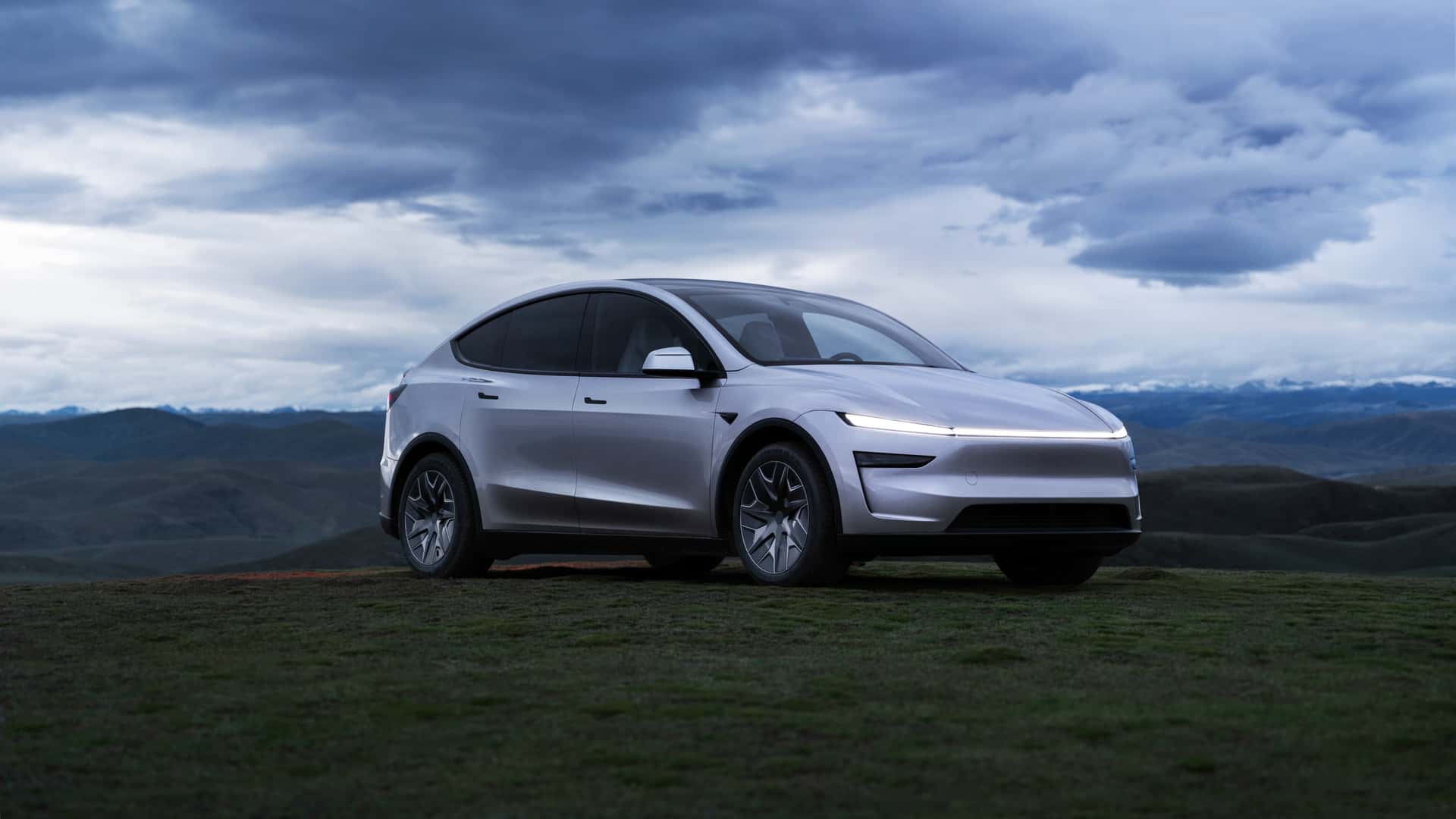
When Tesla rolled out the Model Y L in the United States on Thursday, the headline was simple: a longer‑bodied Model Y that can seat six. Yet the timing and the details of the launch hint at a deeper strategic pivot. With no brand‑new platform on the horizon, Tesla appears to be mining additional revenue from the Model Y’s existing architecture, a tactic that could have lasting consequences for its cash flow, supply chain, and ability to meet future regulatory expectations.
Deep Dive
According to InsideEVs, the Model Y L (Long Wheelbase) is an evolution of the version that debuted in China last year. The U.S. version adds a modestly stretched wheelbase, translating into more interior volume and a six‑seat configuration. Inside, the second‑row seats are captain’s chairs, with two additional seats tucked behind them, and all three rows receive heated elements—ventilated seats up front and heated seats in the second row, while the third row gets butt warmers.
The launch is anchored by an all‑wheel‑drive "Launch" edition priced at $61,990, which the source says is $16,000 higher than the standard Model Y Premium with all‑wheel drive. The same announcement lists an EPA‑rated range of 325 miles and a 0‑60 mph sprint of 4.4 seconds. In addition to the price premium, the Launch edition bundles 12 months of complimentary Full Self‑Driving (Supervised) and 12 months of free Supercharging, along with special badging inside and out.
From a product‑development standpoint, the Model Y L is not a new vehicle; it is a modest stretch of an existing platform. The source describes it as “Tesla’s latest attempt to juice sales without releasing a brand‑new model and while still leaning on the basic design of its cash cow, the Model Y.” This phrasing underscores a deliberate choice to avoid the capital‑intensive process of designing, tooling, and certifying a completely new model. Instead, Tesla is leveraging the economies of scale already built around the Model Y’s battery packs, powertrain, and manufacturing line.
Financially, the $61,990 price tag—while higher than the regular Model Y Premium—still sits well below the $70,000‑plus price point of the Model X, the company’s former three‑row offering. The source notes that the Model Y L could help Tesla recapture sales it will lose by discontinuing the three‑row Model X. By offering a more affordable, six‑seat alternative, Tesla may be aiming to retain customers who need extra passenger capacity but are unwilling to pay a premium for the Model X’s luxury positioning.
Strategically, this incremental approach aligns with Tesla’s broader product cadence over the past year. The source recalls that last year Tesla rolled out cheaper, more basic versions of the Model Y and Model 3—trading premium lighting for simpler headlights and even omitting an FM radio—to push the Model Y’s sticker price below $40,000 and to compensate for the loss of the federal EV tax credit. The Model Y L, therefore, is another piece in a pattern of “design‑once, sell‑twice” moves that keep the cash‑cow model in the spotlight while sidestepping the costs associated with a brand‑new platform.
From a supply‑chain perspective, extending the wheelbase does not require new battery chemistry or powertrain redesigns, meaning the existing gigafactory output can support the new variant without major retooling. This is especially relevant given recent reports of bottlenecks in battery material sourcing and the need for Tesla to meet its production targets for the current fiscal quarter.
Regulatory implications also surface. The U.S. EV tax credit of up to $7,500 currently applies only to vehicles with a final assembly location in North America and a battery pack under a certain cost threshold. The Model Y L’s price and range keep it comfortably within those limits, preserving eligibility for buyers who rely on the credit—a factor that could become a decisive selling point as other manufacturers scramble to meet the same criteria.
Audit & Contradictions
The announcement leaves several key details either unverified or in conflict with other reporting. The launch‑edition price of $61,990 is presented as a $16,000 premium over the regular Model Y Premium. However, Edmunds reports a price of $63,380 for the Model Y L, indicating a discrepancy that the primary source does not address. This price conflict is the only notable contradiction identified in the fact‑check audit.
Other claims appear only in the primary source and therefore require hedging:
- EPA‑rated range of 325 miles – single‑source.
- 0‑60 mph acceleration in 4.4 seconds – single‑source.
- 12 months of free Full Self‑Driving (Supervised) and 12 months of free Supercharging – single‑source.
- The suggestion that the Model Y L could recapture sales lost from the discontinued three‑row Model X – single‑source.
All of these points should be treated as statements from Tesla’s own messaging rather than independently verified facts.
Future Outlook
If Tesla’s incremental‑revenue strategy proves successful, competitors may follow suit, especially those with mature platforms that can be stretched or repackaged. Companies like Ford and Hyundai have already introduced longer‑wheelbase variants of existing SUVs to capture niche markets without large R&D outlays. However, the approach also carries risk: relying on a single platform to sustain growth could limit Tesla’s ability to diversify its product lineup and respond to shifting consumer preferences for distinct vehicle types, such as a true compact three‑row SUV or a dedicated electric pickup.
Regulators and policymakers will likely watch how Tesla balances price, range, and passenger capacity against the backdrop of evolving EV incentives. Should the Model Y L’s pricing push it out of the $40,000‑plus tax‑credit sweet spot, the vehicle could become less attractive to cost‑sensitive buyers, potentially dampening the very sales boost Tesla hopes to achieve.
In the short term, the Model Y L offers a tangible answer to U.S. consumers seeking a six‑seat EV without the premium of the Model X. In the longer term, its existence may signal a broader shift within Tesla: a focus on extracting maximum value from existing tooling and supply chains, rather than investing in entirely new models. Whether that strategy sustains Tesla’s market leadership as the EV landscape matures remains an open question.