Lead Hook
When a Tesla Semi collided with stopped cars on U.S. Highway 50 near Reno, the tragedy did more than claim two lives; it thrust the nascent electric‑truck market into the spotlight of safety regulators, insurers and fleet operators. The incident—Tesla’s first known fatal crash involving its Class 8 electric truck—forces a hard look at how quickly the industry is moving toward electrified freight without a proven safety framework.
Deep Dive
According to Teslarati, the collision occurred on June 28, 2026 at roughly 7:20 a.m. at the intersection of U.S. Highway 50 and Traditions Parkway, about 40 miles east of Reno. A Tesla Semi struck two passenger vehicles that were stopped at a traffic signal, hitting them from behind. Two occupants were pronounced dead at the scene, while a third suffered life‑threatening injuries and was air‑lifted to a hospital.
Law‑enforcement responders—including deputies from the Lyon County Sheriff’s Office, Nevada Highway Patrol personnel, the Central Lyon County Fire Department and the Nevada Department of Transportation—secured the crash site and temporarily closed U.S. 50 in both directions. The semi was seized for evidence as part of an ongoing investigation.
Preliminary statements gathered by the Lyon County Sheriff’s Office suggested the truck driver may have fallen asleep at the wheel, a classic fatigue scenario for long‑haul trucking. However, the Nevada Highway Patrol, which is leading the probe, has emphasized that an official cause has not yet been determined, and further details are expected in the coming week.
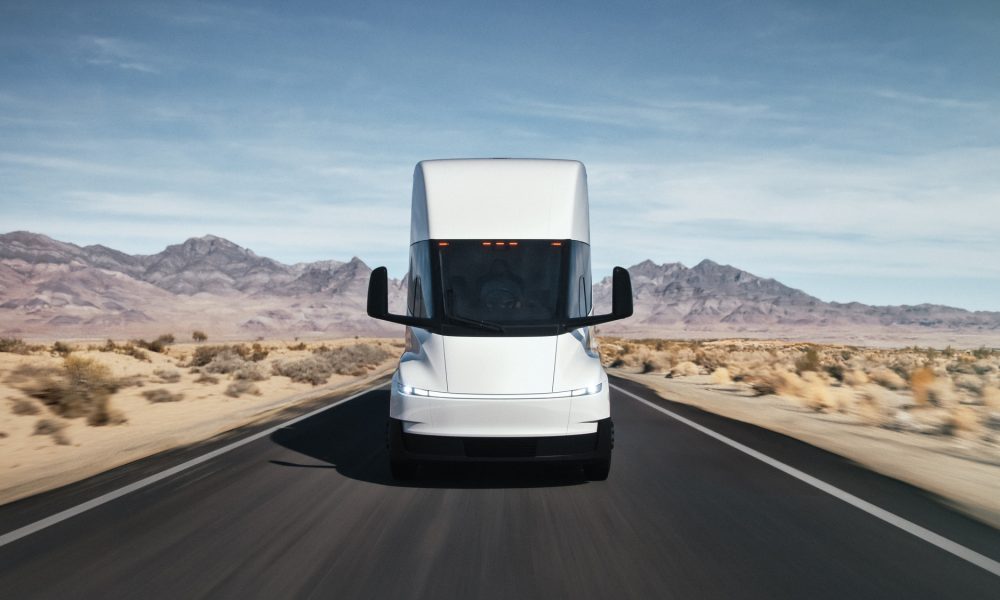
The Tesla Semi, produced at the nearby Gigafactory Nevada, is not yet publicly available. Its limited deployment means that most observers have only seen prototype units on test routes or at the factory’s perimeter. The crash therefore represents the first real‑world fatality involving a battery‑electric Class 8 vehicle, a milestone that has already been noted by multiple outlets such as the Los Angeles Times, Forbes and the San Francisco Chronicle.
From a regulatory standpoint, the incident raises several questions. Heavy‑duty trucks in the United States are subject to Federal Motor Carrier Safety Administration (FMCSA) standards that encompass driver hours‑of‑service, vehicle crashworthiness and electronic stability controls. Electric trucks introduce new variables—high‑voltage battery systems, regenerative braking algorithms and advanced driver‑assist features—that have not been fully integrated into existing safety regulations. The fact that the Semi’s driver may have been fatigued, despite Tesla’s suite of driver‑monitoring technologies, underscores a potential gap between promised automation and real‑world driver behavior.
Insurers are also watching closely. Commercial auto insurance rates are traditionally based on historical loss data for diesel trucks. With electric trucks entering the market, actuaries lack a robust dataset, and a high‑profile fatality could prompt higher premiums or demand for additional safety certifications before fleets adopt the technology at scale.
Beyond regulation, the crash touches on supply‑chain considerations. The Semi’s battery pack, assembled at the Nevada Gigafactory, represents a substantial capital investment for Tesla. A fatal incident could delay production ramp‑up if additional testing or redesign is required, potentially affecting Tesla’s projected delivery timeline and its ability to meet pre‑orders from logistics companies that have pledged to shift freight to electric power.
Audit & Contradictions
The core facts—date, location, casualty count and involvement of a Tesla Semi—are corroborated by independent reporting from several major outlets. However, several details appear only in the Teslarati article and thus constitute single‑source statements. These include the precise time of the crash (around 7:20 a.m.), the exact intersection (Traditions Parkway), the early speculation that the driver may have fallen asleep, the temporary two‑way closure of U.S. 50, and the note that the Semi is produced at the nearby Gigafactory Nevada and is not yet publicly available. Because these points come from a single source, they should be presented with appropriate hedging language (e.g., “According to Teslarati, …”).
The fact‑check audit notes a low level of contradiction; no conflicting accounts have emerged, and the single‑source claims have not been directly disputed by other outlets. Nonetheless, the lack of official determination on cause means that any narrative about driver fatigue remains provisional.
Future Outlook
Regulators are likely to accelerate reviews of electric heavy‑duty vehicle safety standards. The FMCSA may issue guidance on battery‑related crashworthiness, while state DOTs could impose additional driver‑monitoring requirements for prototypes operating on public roads. Competitors such as Nikola, BYD and traditional manufacturers like Volvo and Daimler, which are also developing electric trucks, will be watching how quickly Tesla addresses any safety concerns, as any perceived lag could shift fleet purchase decisions toward alternatives with clearer compliance pathways.
For Tesla, the incident could delay the Semi’s commercial rollout. Investors have been eager for the Semi to contribute to revenue growth, but a heightened regulatory environment and potential redesigns could stretch the timeline. Fleet operators that have pledged to replace diesel rigs with electric models may reconsider rollout schedules, opting for a phased approach that includes additional driver‑training programs and contingency planning.
Insurance firms may begin to price electric‑truck coverage more conservatively, factoring in the unknowns around battery fires, high‑voltage systems and the interaction of autonomous driver‑assist features with human fatigue. This could raise the cost of ownership in the short term, influencing the total cost of ownership calculations that many logistics companies use to justify electrification.
Overall, the Nevada crash serves as a sobering reminder that the transition to electric freight is not just a matter of battery chemistry or range; it hinges on an ecosystem of safety standards, regulatory clarity and risk management that is still being built. How quickly the industry can fill those gaps will determine whether the Tesla Semi becomes a flagship of clean freight or a cautionary tale of premature deployment.