Lead Hook
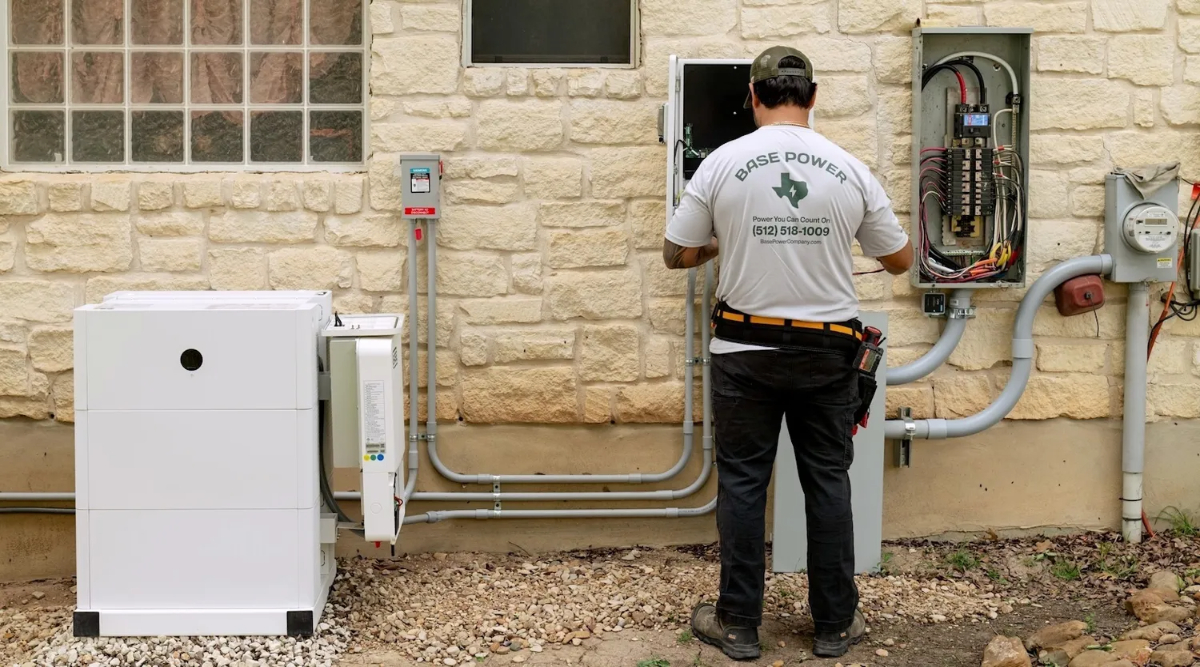
Across the United States, rooftop batteries that were once marketed as a way for homeowners to shave their electric bills are now being stitched together into massive virtual power plants (VPPs). The shift promises cheaper, cleaner peak‑shaving for utilities, but the rapid scale‑up—153 % growth in 2025 alone—has outpaced the regulatory frameworks that traditionally safeguard grid reliability. As utilities lean on thousands of private batteries to replace gas peaker plants, the question that the headlines don’t ask is who will police the new, decentralized grid and whether consumers will foot the bill if those virtual assets falter.
Deep Dive
According to Yale e360, U.S. home‑battery capacity covered by virtual power plants surged by 153 % in 2025. The organization highlighted a July 2025 demonstration in which 100,000 residential batteries collectively supplied more power than a large gas‑fired peaker plant, proving that distributed storage can, in principle, replace conventional fossil‑fuel back‑ups. The same report noted that aggregators can now “coordinate the energy storage and discharge of thousands of home batteries while compensating homeowners for the electricity provided.”
Building on that proof‑of‑concept, a June 24 agreement between Sunrun, Renew Home and Tesla aims to combine “hundreds of thousands of home battery systems operated by Sunrun and Tesla” into “the largest distributed power plant in the country.” The partnership claims it will be able to deliver more than 16 GW of power to both data centers and utility companies, a capacity comparable to a regional transmission network. If realized, the arrangement would give AI data centers—already notorious for their voracious electricity appetite—a flexible, on‑demand supply that sidesteps the need for new gas‑fired generation.
At the state level, California and Hawaii are leading the adoption curve. CleanTechnica reports that these two states accounted for the majority of new residential battery storage in the first quarter of 2026. California offers homeowners with solar panels better export prices after sunset, while Hawaii provides a one‑time payment of $400 for every kilowatt of battery storage installed. Those incentives have helped push new home‑battery installations to a record 673 MW in Q1 2026, according to the U.S. Energy Information Administration.
From an economic perspective, the rise of VPPs is being framed as a cost‑effective alternative to building new gas peaker plants. A May report from Ember describes large battery projects as “increasingly cost competitive and faster to build than new gas power plants,” noting an 87 % smaller carbon footprint compared with an average‑size gas peaker. The implication is that utilities can defer costly transmission upgrades and instead pay homeowners for the right to dispatch stored energy during peak demand.
However, the aggregation model hinges on sophisticated software platforms that must accurately predict battery state‑of‑charge, grid conditions, and market prices. Errors or cyber‑attacks could cause simultaneous discharges, creating sudden spikes that stress the grid. Moreover, the contracts that compensate homeowners are typically private, with little public oversight. As the International Energy Agency warned, the value of these assets “can provide valuable services to the grid when supported with appropriate technologies, policies, and regulations.” The “appropriate” part remains under‑defined in most state statutes.
“We’re moving toward a world where homes don’t just consume energy — they store it, optimize it, and contribute back to the grid,” a spokesperson for Renon Power told Yale e360. This vision underscores a fundamental shift: storage is no longer a backup but an active grid asset. Yet the rapid rollout raises three practical concerns. First, the concentration of dispatch authority in a handful of aggregators could create a single point of failure. Second, the reliance on homeowner participation means that any widespread opt‑out—perhaps driven by tariff changes—could erode the VPP’s capacity overnight. Third, the current lack of standardized performance metrics makes it difficult for regulators to assess whether VPPs truly deliver the promised reliability benefits.
Audit & Contradictions
The CleanTechnica piece provides the bulk of the data on recent installation trends, including the 673 MW Q1 2026 figure and the specific California and Hawaii incentive structures. Those details appear only in that article and have not been independently corroborated, so they should be treated as single‑source claims. The report also notes a 7 % increase in average residential electricity costs in April 2026 versus April 2025, another single‑source statistic.
Independent outlets—Yale e360 and NextBigFuture—confirm the core VPP growth numbers, the July 2025 battery demonstration, and the June 24 Sunrun‑Renew‑Tesla partnership. The fact‑check audit indicates no contradictions; the overall contradiction level is “Low.”
In short, the announcement leaves out any discussion of how regulators will certify the performance of aggregated home batteries, what consumer protections exist if an aggregator defaults, and how the promised cost savings compare to the hidden costs of software licensing and data management.
Future Outlook
If the VPP model proves reliable, utilities may accelerate the de‑investment in traditional peaker plants, reshaping the generation mix across the United States. Competing aggregators will likely vie for control over the same residential battery fleets, prompting a race to offer the most attractive compensation packages. This competition could drive down rates for homeowners but also increase the financial pressure on aggregators, potentially leading to consolidation.
Policymakers will face pressure to craft rules that ensure transparency, cybersecurity, and fair compensation. Some states may introduce mandatory reporting of VPP dispatch data, while others could require third‑party audits of aggregator algorithms. The outcome will determine whether residential batteries become a resilient, decentralized resource or a fragile, opaque component of the grid.
For the broader energy market, the success of VPPs could unlock new revenue streams for battery manufacturers and software firms, spurring further investment in advanced storage chemistry and AI‑driven optimization. Conversely, if regulatory gaps lead to reliability incidents, the backlash could stall the momentum of residential storage and reinforce the case for traditional, utility‑scale solutions.
As the industry navigates these uncharted waters, the promise of a cleaner, more flexible grid must be weighed against the need for robust oversight. The next chapter of America’s energy transition will hinge not just on how many megawatts of home batteries are installed, but on the rules that govern their collective operation.