Lead Hook
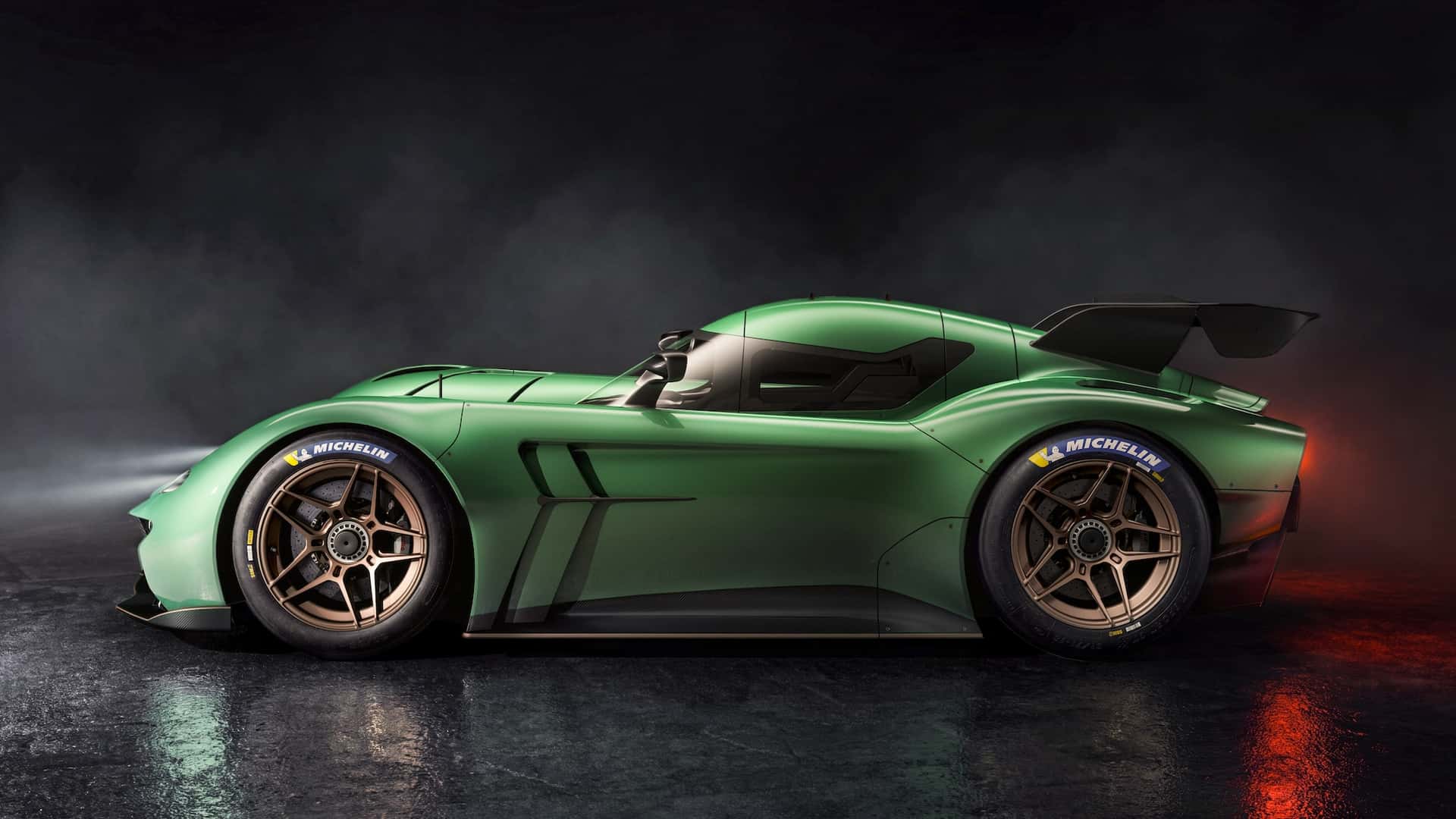
When McMurtry Automotive unveiled the production‑ready Spéirling Pure, the headline numbers—nearly 1,000 horsepower, a 0‑60 mph sprint in 1.55 seconds, and more than 4,400 lb of downforce generated by a pair of high‑speed fans—were jaw‑dropping. Yet the real story lies beyond the specs: the car’s reliance on an active‑aero fan system forces racing series and regulators to confront a rulebook that was written for a world without on‑demand downforce at zero speed. As the hypercar prepares to roll onto the tracks at Goodwood and later Monterey Car Week, the industry must decide whether to codify such technology or risk sidelining a new wave of electric performance engineering.
Deep Dive
According to Motor1.com, the Spéirling Pure will be produced in a run of just 100 units, each starting at a base price of $1.3 million. The powertrain consists of two rear‑wheel‑driven electric motors delivering a combined 986 hp, propelling the car from 0‑60 mph in a claimed 1.55 seconds. Those figures place the Pure squarely among the fastest road‑legal hypercars, but the true differentiator is its fan‑based aerodynamic system.
The vehicle’s “dual‑fan system” sits beneath the chassis and works with a skirt to push air downwards, creating over 4,400 lb of downforce even when the car is stationary.
“With nearly 1,000 hp on tap, the track‑only Spéirling Pure produces over 4,400 pounds of downforce.”The same source notes that when the fans operate at full tilt the car can sustain 3 g of lateral and braking force, a level of grip that few conventional hypercars can achieve without massive fixed wings.
From an engineering standpoint, the fan system offers two strategic advantages. First, it decouples downforce from speed, allowing the car to corner and brake with extreme grip from a standstill—a clear benefit on tight, technical circuits. Second, the dual‑fan architecture provides redundancy; if one fan fails, the other can maintain “a massive amount of downforce,” according to the company’s description. This safety net is particularly relevant for track‑only cars where a sudden loss of downforce could end a run in a dangerous spin.
However, the technology also introduces new variables. The Pure’s battery has been enlarged from a 60 kWh pack in the prototype to a 100 kWh unit, a change the primary source claims enables a race‑distance range of 25‑31 miles at full LMP2 pace. Charge times are quoted as 20‑60 minutes, depending on ambient temperature and charger capacity. Both the extended range and the ambiguous charging window appear only in the Motor1.com article and have not been independently verified.
Beyond the powertrain, McMurtry says the carbon‑fiber monocoque now meets global motorsport standards while offering more elbow and legroom for the driver. The vehicle will be eligible for GT1 Sports Club and Global Time Attack events in the United States, as well as the European Time Attack Masters series. Again, these series‑eligibility claims are present solely in the primary announcement.
The fan‑generated downforce raises a regulatory question that the announcement skirts entirely: most existing GT and time‑attack rulebooks limit or outright ban active aerodynamic devices that can produce downforce independent of vehicle speed. The International Automobile Federation (FIA) currently permits movable aerodynamic elements like DRS on certain classes, but a fan system that creates downforce at zero speed sits in a gray area. If series organizers accept the Spéirling Pure, they will need to draft new homologation criteria, potentially opening the door for other manufacturers to develop similar systems.
Audit & Contradictions
The core specifications—limited 100‑unit production run, $1.3 million price tag, 986 hp output, 1.55‑second 0‑60 mph sprint, and >4,400 lb of fan‑generated downforce capable of 3 g cornering—are corroborated by independent coverage from Road & Track and a second Motor1.com story. These facts are therefore solidly verified.
Conversely, several claims appear only in the primary Motor1.com piece and lack external confirmation. The 100 kWh battery capacity, the 25‑31 mile race‑distance range at full LMP2 pace, and the 20‑60 minute charging window are all single‑source statements and should be treated as the company’s estimates rather than independently proven data. Likewise, the announced eligibility for GT1 Sports Club, Global Time Attack, and the European Time Attack Masters series has not been confirmed by the sanctioning bodies.
The fact‑check audit notes a low contradiction level; no direct conflicts were identified between the primary source and secondary reports. Nonetheless, the absence of independent verification for the single‑source items leaves a gap that potential buyers and regulators must consider.
Future Outlook
If racing authorities formally recognize fan‑based downforce, the Spéirling Pure could spark a new design paradigm for electric track cars. Competitors might invest in similar active‑aero solutions, leveraging the instantaneous grip to offset the torque‑heavy but range‑limited nature of high‑performance EVs. That shift could accelerate the development of lightweight, high‑flow fan units, driving demand for specialized motor and bearing technologies.
On the flip side, regulators may clamp down on such systems to preserve parity with traditional combustion‑engine classes. The FIA could introduce limits on fan power or require a minimum speed before downforce is permitted, effectively neutralizing the Pure’s most distinctive advantage. Such rule changes would force McMurtry and any followers to redesign or re‑classify their vehicles, potentially increasing costs and limiting the commercial viability of ultra‑low‑run hypercars.
From a market perspective, the Pure’s $1.3 million price point and 100‑unit cap place it in a niche segment that serves more as a technology demonstrator than a volume seller. The high cost of developing and certifying an active‑aero system may limit its trickle‑down effect to more affordable EVs, at least in the short term. However, if the fan technology proves its worth on the track and gains regulatory acceptance, it could eventually inform aerodynamic solutions for lower‑tier sports cars, improving efficiency and handling without the drag penalties of larger fixed wings.
In the meantime, the Spéirling Pure will debut at the Goodwood Festival of Speed before heading to Monterey Car Week. Whether it will dominate the time‑attack circuits or become a regulatory outlier remains to be seen, but its arrival forces the industry to confront a fundamental question: should active, fan‑generated downforce become a standard tool in the electric hypercar toolbox, or will rulebooks evolve to keep it in the lab?