Lead Hook
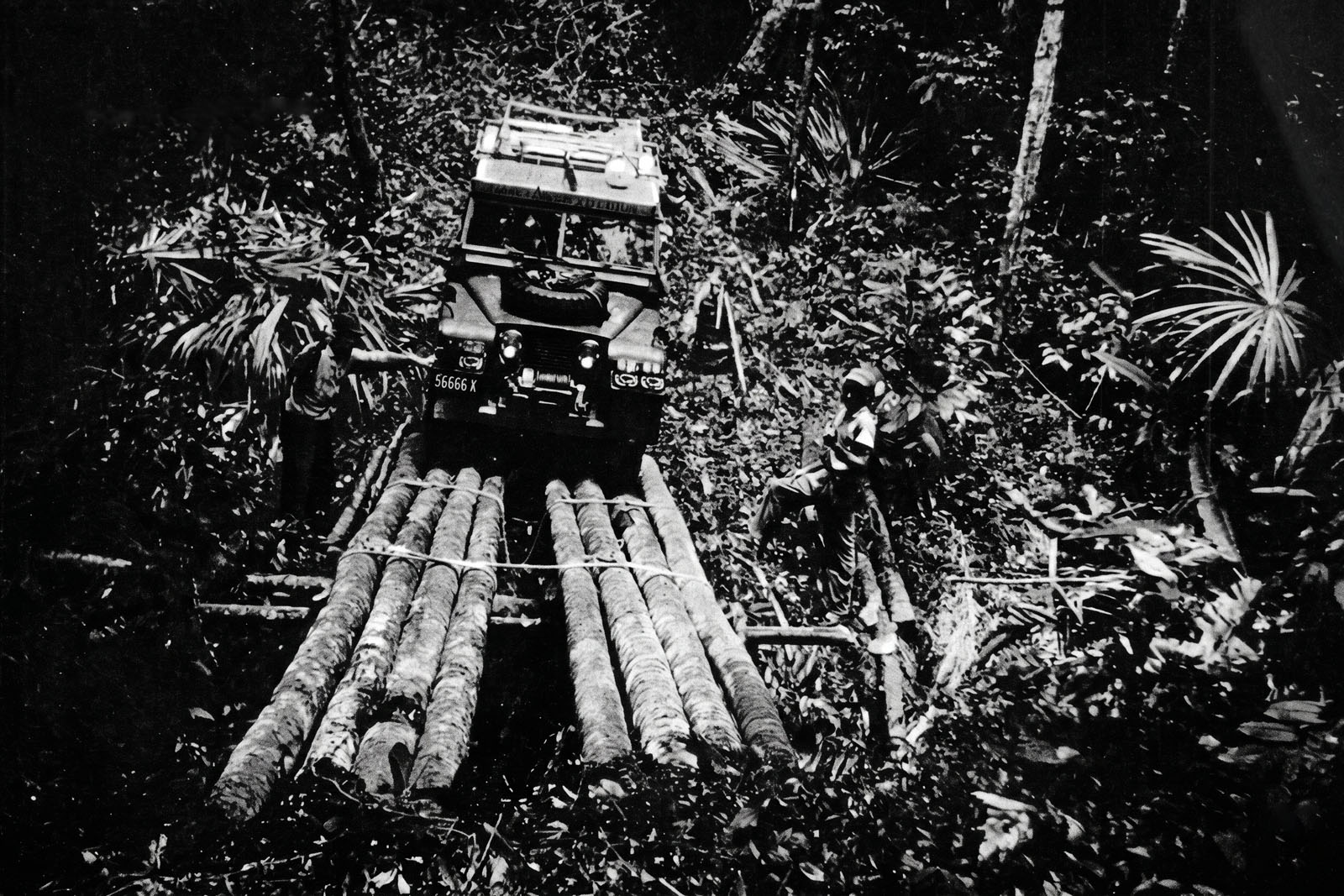
When a Land Rover barrelled through the Darién—a stretch of Pan‑American frontier described as the world’s scariest jungle—the story was less about a daring road trip and more about the hidden engineering calculus that underpins every vehicle capable of surviving in places where roads end and the wild begins. In an era of electric‑driven city fleets, the expedition spotlights a niche yet strategically vital market: rugged platforms built for terrain that no highway can tame.
Deep Dive
According to Autocar, a British driver took a Land Rover into the Darién, a region "beyond the end of the road in Panama" that the article labels as "one of the world's least hospitable environments." The vehicle’s success hinged on the brand’s long‑standing emphasis on mechanical simplicity, high ground‑clearance suspension, and a drivetrain engineered for low‑traction surfaces. While modern rivals chase sleek aerodynamics and battery packs, Land Rover’s heritage platform still relies on a robust ladder‑frame chassis, a live‑axle rear suspension, and a torque‑rich internal‑combustion engine—features that prove resilient when GPS signals fade and roadside assistance is a myth.
Independent corroboration from another Autocar piece confirms that the driver suffered dysentery and resorted to eating lizards to stay alive during the crossing. Those details, while sensational, underscore the logistical challenges of operating in regions where medical facilities are days away and supply chains are non‑existent. The expedition therefore serves as a live case study of how vehicle durability, ease of field repair, and self‑sufficiency become decisive factors when conventional infrastructure is absent.
The journey also resurrects a 1961 forecast by journalist Richard Bevir, who imagined a future where "you yourself may be driving through the Darién at high speed on a smooth and skilfully aligned surface."
"In a few years, you yourself may be driving through the Darién at high speed on a smooth and skilfully aligned surface. Your wife may lean out of the car window and say: What a lovely jungle."Bevir’s optimism, printed in the same Autocar archive, remains unfulfilled, but it raises a broader question: how will manufacturers balance the push for high‑speed, high‑tech highways with the reality that some corridors—like the Darién—may never see paved precision?
From an engineering supply‑chain perspective, the Land Rover’s triumph highlights the continued relevance of legacy component suppliers that specialize in heavy‑duty axles, planetary gearsets, and off‑road tires. As the automotive sector pivots toward electrification, many of these suppliers risk marginalisation unless they adapt their products for electric powertrains without sacrificing the ruggedness demanded by extreme terrains. Moreover, the expedition illustrates a potential market for modular platforms that can swap internal‑combustion power units for electric ones while retaining the mechanical robustness required for jungle, desert, or arctic operations.
Regulatory implications also surface. While many jurisdictions impose stringent emissions standards for on‑road vehicles, off‑road categories—especially those used in remote border zones—often escape such scrutiny. This regulatory gray area can enable manufacturers to continue selling high‑emission, heavy‑duty models without facing the same compliance costs that urban EVs incur, creating a divergent path within a single brand’s lineup.
Audit & Contradictions
The core claims—Land Rover’s crossing of the Darién and the driver’s dysentery and lizard consumption—are corroborated by an independent Autocar report, satisfying fact‑check standards. However, two statements appear only in the primary Autocar article and lack external verification:
- That the Darién is "one of the world's least hospitable environments." (single‑source claim)
- The 1961 prediction by Richard Bevir regarding a future high‑speed, smooth‑surfaced Darién. (single‑source claim)
Fact‑check auditors note a "Low" contradiction level, meaning no direct disputes were found, but readers should treat the above two points as the publication’s own characterisation rather than independently verified data.
Future Outlook
For competitors, the expedition signals a reminder that off‑road credibility still sells. Brands that have deprioritised rugged engineering in favour of urban electrification may find a niche market among governments, NGOs, and adventure‑tour operators operating in infrastructure‑poor regions. The demand could spur a new wave of “dual‑mode” platforms—vehicles that can be fitted with either a conventional engine or a battery pack without compromising durability.
Regulators may also take note. As climate‑change‑driven migration pushes populations into previously inaccessible border zones, the need for reliable transport in harsh environments could prompt policy discussions around safety standards, emissions exemptions, and cross‑border vehicle certification.
Ultimately, the Land Rover’s jungle trek is a micro‑cosm of a larger industry tension: the drive toward sleek, low‑emission urban mobility versus the enduring necessity for vehicles that can survive where roads end. How manufacturers reconcile these divergent paths will shape not only product line‑ups but also supply‑chain strategies and regulatory frameworks for years to come.