Lead Hook
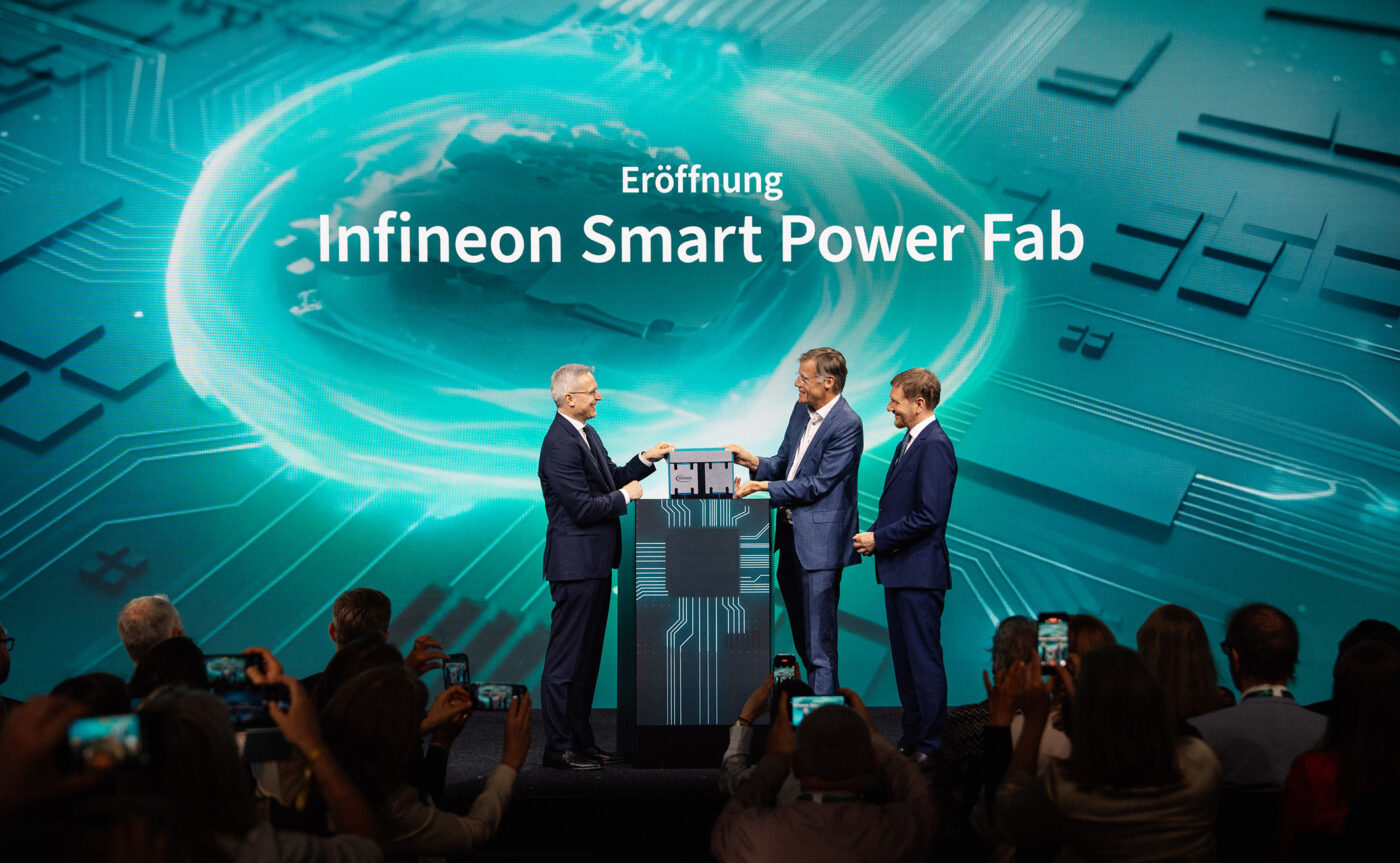
When Infineon Technologies AG cut the ribbon on its Smart Power Fab in Dresden, the headline was a €5 billion investment – the biggest single outlay in the company’s history. Yet the real story runs deeper: the plant is a linchpin in Europe’s broader strategy to secure its own supply of power semiconductors, a component that powers everything from electric‑vehicle drivetrains to AI data‑centre servers. In a continent still reeling from recent chip shortages, the timing and scale of the Dresden fab could reshape the competitive dynamics between European chipmakers, Asian giants, and the policy architects who are writing the next chapter of the European Chips Act.
Deep Dive
According to electrive.com, the new Dresden facility will produce power semiconductors and analog‑mixed‑signal chips for a suite of high‑growth applications: battery‑electric vehicles, software‑defined vehicles, wind and solar power systems, and the power supplies that keep AI data centres humming. Power semiconductors are the “glue” that converts and controls electrical energy, making them indispensable for the energy transition and for electromobility.
What sets the Dresden fab apart is the way it was designed and is intended to be operated. The plant was largely planned with digital twins, while AI algorithms assist in approving equipment and manufacturing processes. Infineon also links the site to its Villach, Austria plant through a “One Virtual Fab” network, promising faster cross‑site qualification of new products. The company claims that, depending on demand, production ramp‑up can be achieved roughly twice as fast as before.
From a sustainability standpoint, the fab is billed as “exceptionally efficient.” The source says chip production will be entirely independent of natural gas, about 90 % of the water used will be recycled back into the production cycle, and up to 45 % of the energy consumed will be recovered. These figures, while impressive, appear only in the company’s own release and have not yet been verified by external analysts.
The financial scaffolding behind the project is equally noteworthy. The EU Commission approved state aid of up to €920 million from the German government for the Dresden facility, positioning the fab as a flagship under the European Chips Act. The act aims to expand Europe’s semiconductor manufacturing capacity and to reduce reliance on non‑European sites. By securing public funding, Infineon aligns its commercial ambitions with policy goals, creating a model that other European chip firms may seek to replicate.
In addition to the €5 billion private investment, the source reports that the plant will create around 1,000 new jobs and double the site’s production capacity for power semiconductors and analogue/mixed‑signal technologies. The company’s CEO, Jochen Hanebeck, summed up the strategic intent:
“We’re opening our new plant at just the right time. Our Smart Power Fab is creating urgently needed capacities for the key technologies of the future, for everything from energy supply for AI data centers to software‑defined vehicles and renewable energies,”underscoring the belief that Europe must act now to capture emerging demand.
From a market perspective, the fab’s output could alleviate the chronic supply constraints that have plagued European automakers and renewable‑energy developers. Battery‑electric vehicle manufacturers have repeatedly warned that a shortage of power semiconductors can throttle production volumes, while AI‑driven data centres are scaling power‑intensive workloads faster than the supply chain can keep up. By localising a significant portion of this critical component, Infineon hopes to shorten lead times and reduce the geopolitical risk associated with dependence on Asian foundries.
Audit & Contradictions
Independent outlets such as Silicon Republic, Data Centre Magazine and Manufacturing Digital have corroborated the core facts: the €5 billion investment, the fab’s focus on power and analog‑mixed‑signal chips, and the €920 million EU state‑aid approval. However, the announcement’s finer details – the creation of roughly 1,000 jobs, the claim that the site will double its production capacity, and the water‑recycling (≈90 %) and energy‑recovery (up to 45 %) metrics – appear solely in the primary source. According to the fact‑check audit, these are “single‑source” claims and therefore should be treated with caution.
The audit found no direct contradictions between the primary source and external reports, resulting in a “Low” contradiction level. Nonetheless, the lack of independent verification for the sustainability percentages and capacity‑doubling claim means readers should regard those figures as the company’s own projections rather than independently validated data.
Future Outlook
If the Dresden fab delivers on its promised speed of ramp‑up, it could set a new benchmark for how quickly European semiconductor capacity can be expanded. Competitors such as STMicroelectronics, NXP and global foundries will be watching closely, potentially prompting further public‑private partnerships under the Chips Act. Moreover, the plant’s flexible 300‑mm production line – capable of handling different semiconductor technologies without extensive retooling – could become a template for future fabs seeking to hedge against rapid shifts in demand.
Regulators may also use the Dresden example to calibrate future state‑aid thresholds. The €920 million subsidy demonstrates a willingness to inject substantial public money, but the reliance on single‑source claims raises questions about how performance will be measured and reported. Transparent, third‑party audits of the fab’s environmental metrics could become a prerequisite for subsequent aid packages.
For the broader ecosystem, the fab’s success could tighten Europe’s supply chain for power semiconductors, offering automakers and renewable‑energy firms a more reliable source of chips. Conversely, if the capacity‑doubling or sustainability targets fall short, the project could become a cautionary tale about over‑optimistic public‑private bets in a capital‑intensive industry.
In any case, Infineon’s Dresden Smart Power Fab is more than a new manufacturing site; it is a barometer for Europe’s ability to translate policy ambition into tangible, competitive semiconductor output. The next few years will reveal whether the plant can truly become the “urgently needed capacity” its CEO envisions, or whether the promise will outpace the reality of building chips at scale in the European Union.