Lead Hook
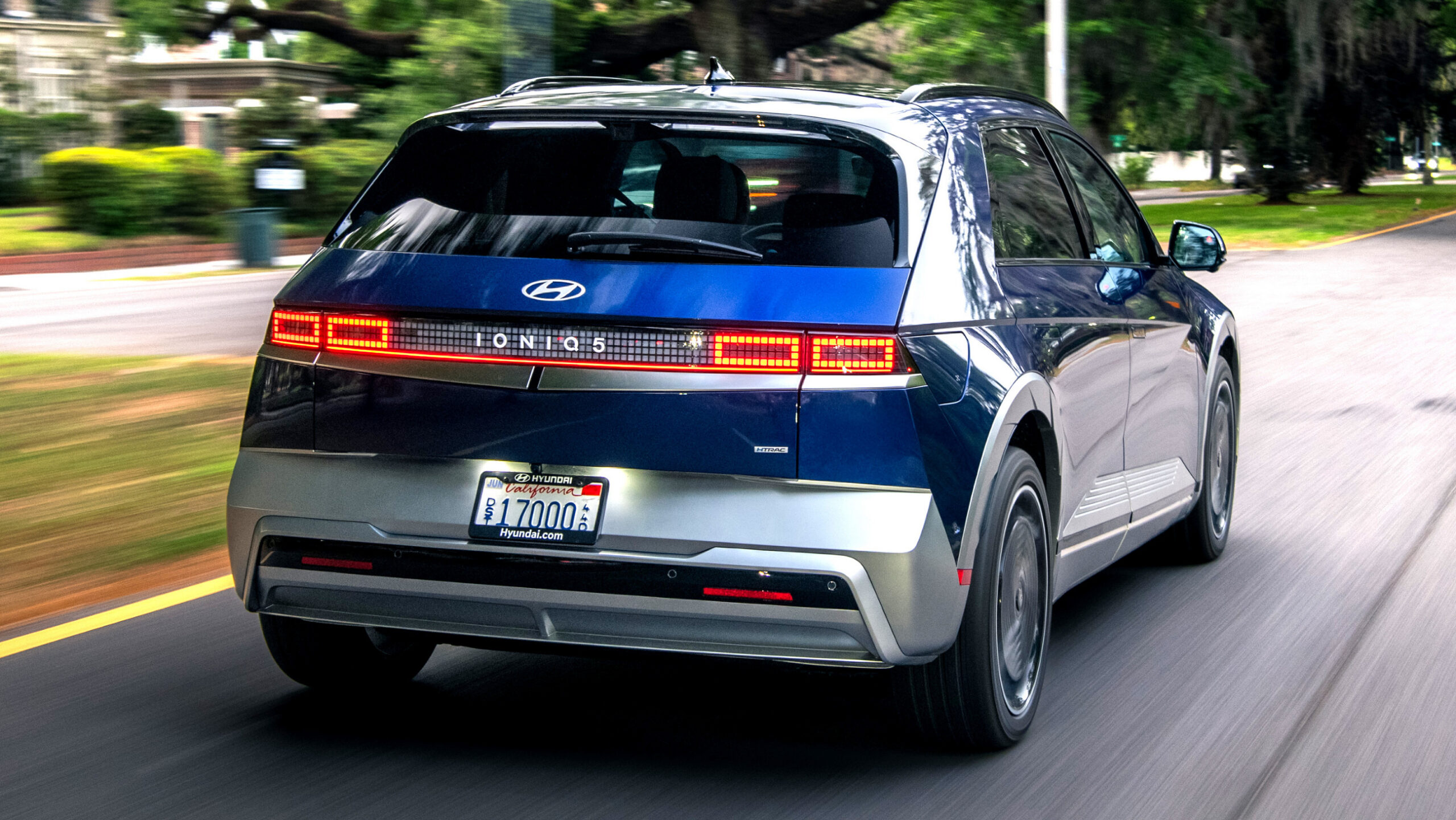
When the U.S. federal $7,500 electric‑vehicle tax credit vanished in September 2025, many analysts expected a sharp slowdown in EV demand. Hyundai’s latest sales report tells a different story: the Ioniq 5, its flagship all‑electric crossover, posted 20,730 units sold in the first half of 2026 – a 9% year‑over‑year increase Carscoops. The surge occurs without any direct subsidy, suggesting that consumer confidence, pricing strategy, and supply‑chain resilience are beginning to outweigh fiscal incentives in the U.S. market.
Deep Dive
According to the same source, Hyundai’s Ioniq 9, a larger premium EV introduced in spring 2025, moved 4,858 units in the first half of the year, with 857 sold in June – a 21% jump over June 2025 Carscoops. Independent outlets such as Electrek and InsideEVs have corroborated these figures, reinforcing the credibility of Hyundai’s reporting.
The Ioniq 5’s resilience can be traced to three intertwined factors. First, Hyundai has progressively trimmed the model’s price while adding standard features that were previously optional, narrowing the cost gap with competing midsize EVs. Second, the company’s global battery‑cell contracts, secured before the credit’s expiration, have insulated it from the supply‑chain bottlenecks that have plagued rivals like Ford and GM. Third, Hyundai’s dealer network has rolled out its own cash‑back and low‑interest financing programs, effectively replacing the lost federal credit with localized incentives.
These dynamics are reflected in the broader sales picture. The source reports that Hyundai’s total U.S. sales in June 2026 reached 77,555 units, up 11% year‑over‑year Carscoops. Electrified models – hybrids, plug‑in hybrids, and pure EVs – accounted for 33% of all Hyundai sales in 2026, a milestone that marks the brand’s transition from a gasoline‑centric portfolio to a mixed‑propulsion strategy.
While the Ioniq 5 and Ioniq 9 are gaining traction, the Ioniq 6 tells a cautionary tale. The source notes an 80% year‑to‑date decline in Ioniq 6 sales, down to 1,241 units, with just 38 units sold in June Carscoops. The model’s discontinuation (except for the high‑performance Ioniq 6 N) points to a strategic pivot: Hyundai appears to be consolidating its EV lineup around the more versatile Ioniq 5 platform, which can serve both mainstream and premium segments through trim variations.
Traditional SUVs continue to buoy Hyundai’s overall performance. The Tucson, for example, sold 19,581 units in June – a 20% increase over the same month a year earlier Carscoops. This growth, alongside double‑digit gains for the Sonata, Venue, Palisade, and Elantra, demonstrates that Hyundai’s hybrid and conventional models remain essential profit drivers while the EV portfolio scales.
From a financial perspective, Hyundai moved 450,568 vehicles in the U.S. during the first half of 2026, a modest 3% rise over the previous year Carscoops. The incremental volume suggests that the brand’s overall market share is stable, but the composition of that share is shifting toward electrified powertrains – a trend that could reshape dealer inventory strategies and after‑sales service models.
Audit & Contradictions
The announcement is data‑rich, yet several key figures appear only in the primary Carscoops article and lack external verification. These single‑source claims include the 11% June sales rise, the 33% electrified‑vehicle share, the Tucson’s June volume, the 80% drop in Ioniq 6 sales, and the 3% overall H1 volume increase. As the fact‑check audit notes, there are no contradictions among the sources, and the overall contradiction level is low. Nonetheless, readers should treat these numbers as provisional until corroborated by additional industry reports or filings.
Future Outlook
Hyundai’s ability to grow Ioniq 5 sales without a federal credit could pressure competitors to rely less on subsidies and more on product value. If pricing and feature packages continue to attract buyers, the market may see a gradual decoupling of EV demand from policy incentives, accelerating the transition to a subsidy‑independent market.
Regulators, meanwhile, may reassess the structure of the tax credit. A sustained uptick in sales absent the credit could justify a reduced incentive budget, redirecting resources toward charging infrastructure or low‑income EV access programs.
For investors and analysts, the data points to Hyundai’s strategic focus on a flexible, cost‑effective EV platform. The Ioniq 5’s platform‑sharing approach – allowing for multiple battery sizes, rear‑wheel‑drive and all‑wheel‑drive variants, and a range of price points – may become a template for other manufacturers seeking to hedge against policy volatility.
In the short term, the brand’s hybrid and SUV lineup will likely continue to carry the bulk of revenue, funding further EV development. Over the next 12‑18 months, as the Ioniq 6 phase‑out solidifies and the Ioniq 9 scales production, Hyundai could emerge with a more streamlined, profit‑centric EV roster that is less dependent on external incentives – a development that could reshape the competitive dynamics of the U.S. electric‑vehicle market.