Lead Hook
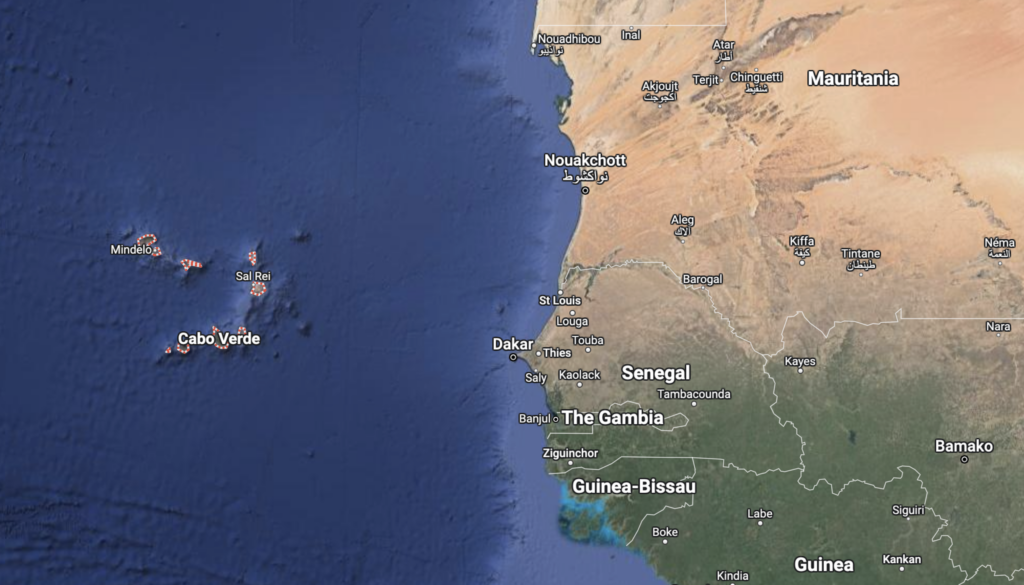
When a tiny archipelago of just over half‑million people steps onto the world stage against a football powerhouse, the headline is the match. Yet a quieter, potentially more consequential story is unfolding on its streets: the government’s claim that every official vehicle has been replaced with BYD battery‑electric models. For island economies that wrestle with costly imported fuel, such a fleet could become a blueprint for energy independence, but the announcement raises unanswered questions about supply‑chain reliance and geopolitical leverage.
Deep Dive
According to the CleanTechnica article, Cape Verde – an island nation off Africa’s coast with a population just over 500,000 – has converted all of its government‑official vehicles to BYD battery‑electric vehicles (BEVs). The piece notes that the nation’s tourism‑driven economy could benefit from the reduced noise and pollution that electric cars bring, especially in compact urban areas where range anxiety is less of a concern.
The article also points out that island nations typically face "inflated petroleum prices" because fuel must be shipped in, while they enjoy abundant sun and wind resources. By swapping diesel and gasoline fleets for electric ones, Cape Verde could lower operating costs, free up budget for public services, and strengthen resilience against fuel‑price volatility. The report adds that BYD’s vehicles are priced lower than comparable internal‑combustion‑engine (ICE) cars in the local market, a factor that bolsters the economic case for the switch.Beyond everyday driving, the source highlights BYD’s vehicle‑to‑load (V2L) capability, which can supply power during emergencies. In a region prone to extreme weather and occasional grid disruptions, the ability for a government vehicle to act as a mobile power source could be a strategic asset. The article frames the move as a demonstration of how electric mobility can support broader national resilience, especially for small islands that are vulnerable to both climate change and supply‑chain shocks.
While the narrative is optimistic, the underlying mechanics deserve scrutiny. First, the cost advantage claimed for BYD EVs over ICE vehicles is presented without comparative pricing data, leaving the exact magnitude of savings unclear. Second, the V2L feature, while technically feasible, depends on the vehicle’s battery capacity and the infrastructure needed to safely connect to external loads – details that are not disclosed. Third, the logistical chain for maintaining a fleet of Chinese‑manufactured BEVs on a remote island raises questions about spare‑part availability, technician training, and long‑term service contracts. If the fleet’s upkeep relies on a single foreign supplier, the nation could face vulnerabilities should diplomatic or trade conditions shift.
Finally, the policy lever of converting an entire government fleet is powerful but also politically charged. By committing public procurement to a single automaker, Cape Verde signals strong alignment with China’s Belt and Road Initiative (BRI), as noted in the source’s reference to the country’s broader BRI partnership on infrastructure and health projects. This alignment may open doors to financing and technology transfer, yet it also embeds the island’s transport sector within a larger geopolitical framework that could influence future investment decisions.
Audit & Contradictions
The CleanTechnica piece is the sole source for several key claims. The fact‑check audit flags the following statements as single‑source and therefore requires hedging:
- "Cape Verde will face Argentina in the World Cup on July 3, 2026." – reported only by the CleanTechnica article.
- "All Cape Verde government official vehicles have been switched to BYD battery‑electric vehicles." – uncorroborated by any other outlet.
- "BYD electric vehicles have purchase prices often lower than internal‑combustion‑engine vehicles in Cape Verde." – presented without independent verification.
- "BYD vehicles’ V2L (vehicle‑to‑load) capability can provide power in emergencies." – also sole‑source.
No contradictions were identified in the fact‑check data, and the contradiction level is marked as low. However, the absence of independent confirmation means readers should treat these points as the publisher’s reported claims rather than established facts.
Future Outlook
If Cape Verde’s all‑BYD fleet proves operationally reliable, the model could inspire other island nations to pursue similar government‑led electrification strategies. The economic allure of lower purchase prices and reduced fuel imports may outweigh the perceived risk of dependence on a single supplier, especially if regional cooperation develops standards for parts sharing and technician training.
Conversely, the move may prompt scrutiny from regulators and trade observers concerned about market concentration. Should supply‑chain disruptions arise – for example, due to geopolitical tensions or battery material shortages – the island could face costly downtime, underscoring the need for diversified sourcing and local capacity building.
In the broader context, Cape Verde’s decision reflects a growing trend where emerging economies leverage government procurement to accelerate EV adoption, often aligning with Chinese automotive firms that offer competitive pricing and flexible financing. As more nations watch the outcome, the intersection of clean‑energy policy, supply‑chain security, and geopolitical partnership will become a decisive factor in shaping the next wave of electric mobility for small, resource‑rich islands.
For now, the world’s attention remains on the football pitch, but the real test of Cape Verde’s EV ambition will be measured in kilometers driven, batteries cycled, and the resilience of its power grid during the next storm.