Lead Hook
BMW’s quiet press‑release confirming a twin‑turbo 4.4‑liter V8 for the next‑generation X5 is more than a headline‑grabber. It signals the German automaker’s willingness to preserve a high‑displacement engine line while Europe tightens emissions standards and rivals double‑down on electrification. The decision could reshape the luxury SUV market, influencing how manufacturers allocate engineering resources, manage supply chains, and price performance variants in a climate where “green” mandates clash with enthusiast demand.
Deep Dive
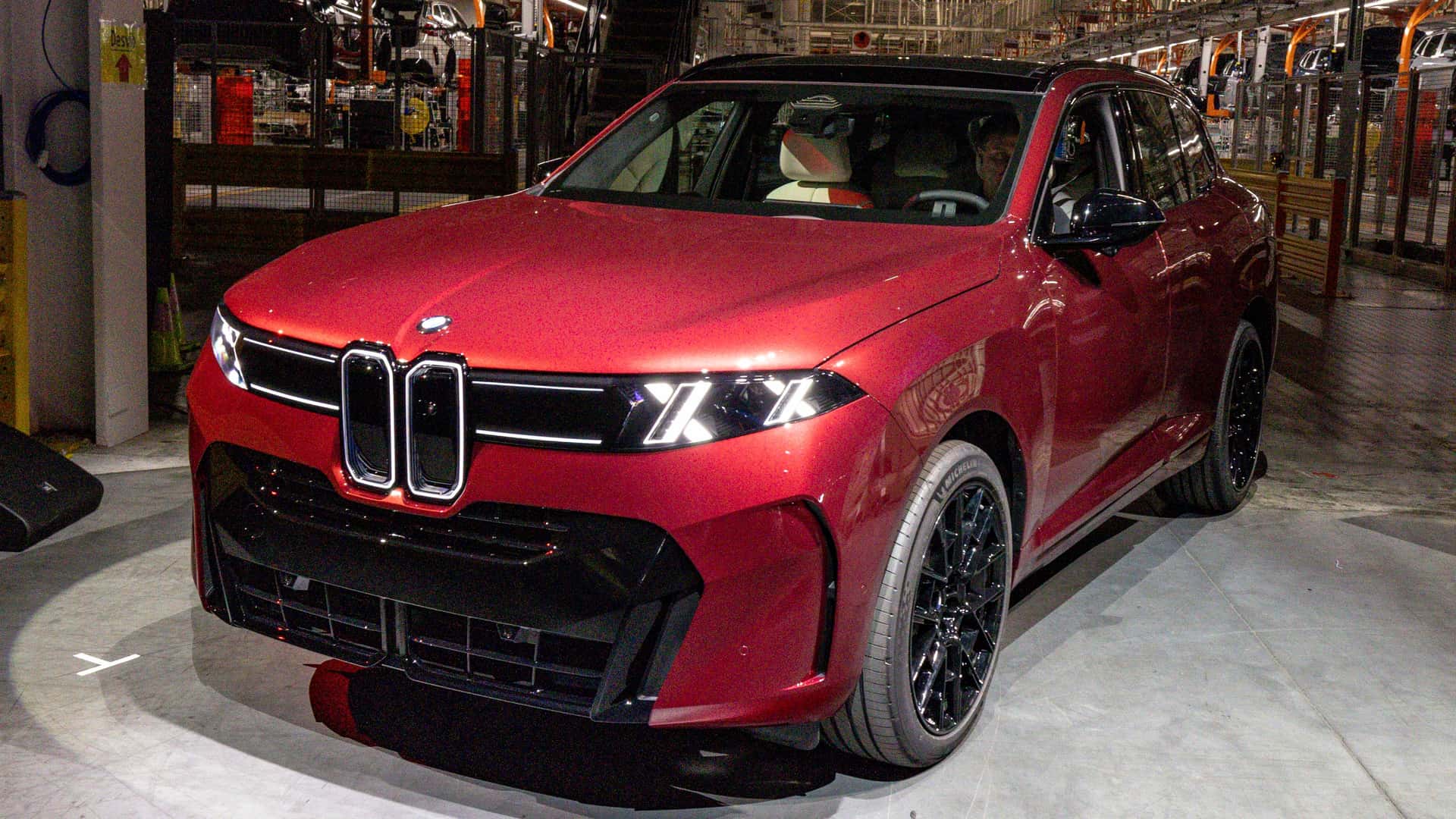
According to Motor1, the upcoming fifth‑generation X5 will be the first BMW model to offer five distinct power‑train options – gasoline, diesel, plug‑in hybrid, fully electric and hydrogen – but the V8 will arrive only as an M‑Performance variant, tentatively named the X5 M60, slated for a 2027 launch. The engine is described as a twin‑turbo 4.4‑liter V8, a configuration that BMW has traditionally paired with its high‑output M models.
The article notes that the V8‑powered X5 will not debut alongside the base model; instead, it will follow the initial launch, which includes an M‑Performance plug‑in hybrid (the X5 M60e) that will be unavailable in the United States. The V8 variant is expected to persist well into the 2030s, suggesting BMW intends to keep the architecture alive across multiple model cycles, potentially sharing it with the upcoming X7 and a refreshed 7 Series, both of which are also slated to receive V8 options.
From a regulatory perspective, the timing is critical. Europe is moving toward Euro 7 emissions standards, which demand lower CO₂ outputs and stricter pollutant limits for internal‑combustion engines. BMW has already detuned its flagship M5 and XM V8s to meet these rules, a fact highlighted by the source’s commentary on “output” concerns. By opting for a mild‑hybrid 48‑volt system rather than a heavier plug‑in hybrid setup, BMW could mitigate the weight and efficiency penalties that larger battery packs impose, preserving the V8’s performance character while staying within the emissions envelope.
Engineering-wise, retaining a V8 platform into the 2030s presents supply‑chain challenges. The engine is produced at BMW’s Spartanburg plant in the United States, a facility that has historically handled V8 production for the X5, X6 and X7. Continuing that line will require a stable supply of high‑strength forged components, advanced turbochargers and a calibrated after‑treatment system capable of meeting future standards. Any disruption—such as semiconductor shortages that have plagued the industry—could force BMW to prioritize lower‑cost powertrains, potentially delaying the V8’s rollout.
Financially, offering a V8 alongside a suite of electrified options spreads development costs across a broader platform. The source suggests that the V8 will likely be offered without a plug‑in hybrid system, hinting at a “pure V8 experience” with only a minimal 48‑volt hybrid assist. This approach reduces the battery weight and cost, but it also limits the model’s ability to claim zero‑emission credits in markets where such incentives affect pricing and consumer adoption.
Market positioning is another hidden layer. Mercedes‑AMG has publicly recommitted to V8 engines, and BMW’s move can be read as a direct response to that signal, aiming to retain performance‑oriented buyers who value traditional engine sound and linear power delivery. By delaying the V8’s arrival until 2027, BMW can monitor how Euro 7 enforcement evolves and adjust tuning accordingly, ensuring the X5 M60 remains competitive without breaching regulatory limits.
Audit & Contradictions
The Motor1 article is the sole source for the key assertions about the V8‑powered X5. As such, the following claims are single‑source and must be presented with appropriate hedging:
- BMW will add a V8 engine to the X5 in 2027.
- The V8 will be a twin‑turbo 4.4‑liter unit likely offered as an M‑Performance X5 M60.
- The V8‑powered X5 is expected to stay in production into the 2030s.
- The new X5 will be BMW’s first production model with gasoline, diesel, plug‑in hybrid, electric and hydrogen power‑train options.
- The V8 variant will be an M‑Performance model rather than a full‑fat X5 M.
Fact‑check data indicates no independent corroboration of these points, and no contradictory reports have been identified. Consequently, the contradiction level is low, but the lack of multiple sources means readers should treat the details as provisional until BMW releases further official documentation.
"at the end, because BMW is dropping the letter from gasoline-powered models. It has already happened to many models, including the new X5 for the 40 versions. In the future, the"
— excerpt from the source, illustrating BMW’s branding shift that removes the “i” suffix from gasoline variants.
Future Outlook
If BMW proceeds with the V8 X5 M60, the move will likely pressure competitors to balance their own performance line‑ups against tightening emissions rules. Mercedes‑AMG’s V8 resurgence may spur a short‑term arms race in power output, but both brands will need to navigate Euro 7 compliance, potentially leading to more widespread adoption of mild‑hybrid assistance rather than full plug‑in hybrids for high‑performance SUVs.
For regulators, the announcement underscores the difficulty of enforcing stricter emissions without stifling a segment that still commands premium pricing. Should BMW’s V8 meet Euro 7 limits through modest detuning and a 48‑volt system, it could set a precedent for other manufacturers seeking to keep large‑displacement engines viable.
From a supply‑chain perspective, continued V8 production will keep specialized tooling and component suppliers active, preserving jobs at the Spartanburg plant and in the broader engine‑manufacturing ecosystem. However, the need to meet future emissions standards may drive incremental investments in after‑treatment technology, which could raise production costs and, ultimately, the vehicle’s price.
Finally, the five‑power‑train strategy signals BMW’s hedging bet: while electrification accelerates, the automaker is unwilling to abandon the V8 niche entirely. This dual‑track approach may appeal to markets where fuel‑economy regulations are less stringent (e.g., North America) while still offering fully electric or hydrogen variants for regions with aggressive decarbonization targets. The success of this strategy will hinge on how quickly BMW can fine‑tune the V8 for Euro 7 compliance without sacrificing the performance characteristics that define its M‑Performance badge.