Lead Hook
India’s electric‑vehicle (EV) ambition is being sold as a three‑part formula – localisation of components, supportive policy and an easy business climate – that will catapult the nation into a global EV hub. On the surface, that narrative feels compelling, especially as the country battles air‑quality crises and seeks to reduce oil imports. Yet the promise rests on a handful of unverified assertions, and the practical hurdles of financing, supply‑chain depth and grid capacity remain largely invisible. If those gaps are not addressed, the industry’s optimism could outpace the country’s actual ability to deliver on the EV dream.
Deep Dive
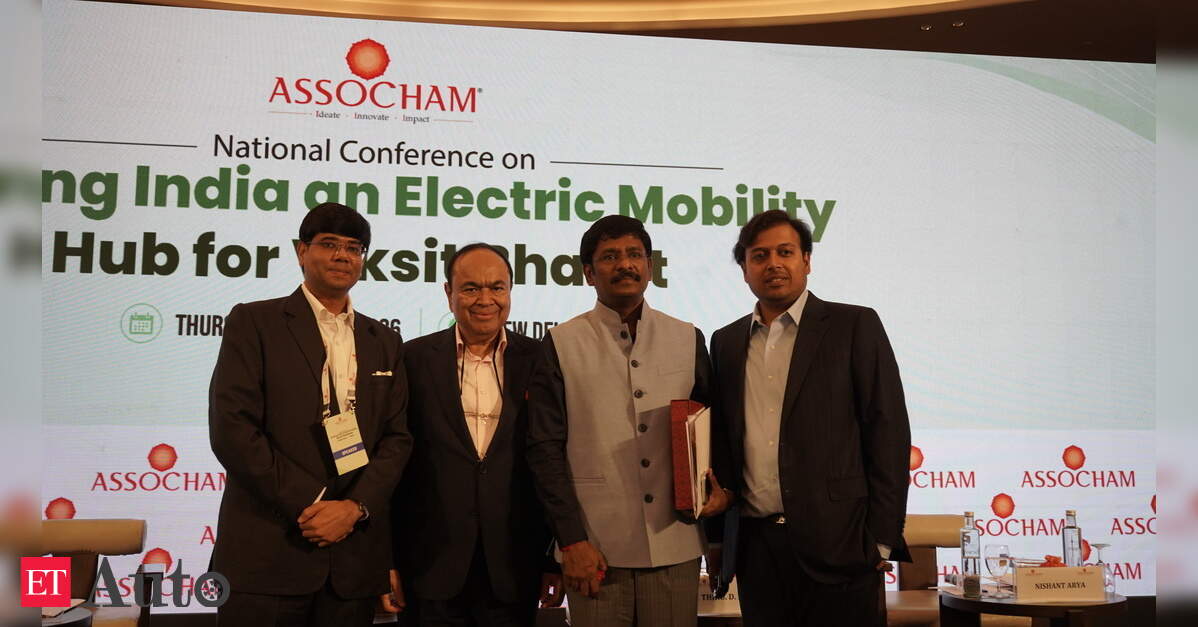
According to the article published on July 2, 2026 at 10:15 PM IST, industry leaders argue that “localisation, policy support and ease of doing business” are essential for India to become a global EV hub. The piece further claims that micro, small and medium enterprises (MSMEs) sit at the centre of the EV supply chain, that new financing and investment models are critical, and that public‑transport integration and grid readiness will dictate adoption rates.
While these points outline a strategic roadmap, each element carries hidden complexities. First, localisation beyond vehicle assembly implies that India must develop domestic capacity for batteries, power electronics, and software – sectors where it currently lags behind China, South Korea and Europe. Scaling up such capabilities demands not just policy pronouncements but concrete incentives, technology transfer agreements, and a skilled workforce. Without clear mechanisms, localisation risks becoming a slogan rather than a measurable outcome.
Second, the emphasis on MSMEs as the backbone of the supply chain assumes that thousands of small manufacturers can quickly upscale to meet the stringent quality and volume requirements of modern EVs. In practice, many MSMEs lack access to advanced manufacturing equipment and capital. The article’s reference to “financing and investment models” acknowledges this need, but offers no detail on how funds will flow, what risk‑mitigation tools will be used, or whether public‑private partnership frameworks are in place. The absence of such specifics leaves a financing gap that could stall the very firms the industry hopes to empower.
Third, public‑transport electrification and grid readiness are interlinked challenges. Electrifying buses and last‑mile shuttles will increase peak demand, requiring upgrades to distribution networks, smart‑grid controls, and renewable‑energy integration. The article’s brief mention of “grid readiness” does not address the scale of investment needed, nor does it discuss regulatory reforms that would enable utilities to manage higher loads without compromising reliability.
Finally, the claim that an “ease of doing business” will unlock the hub ambition glosses over bureaucratic hurdles that already affect foreign direct investment in India’s automotive sector. While the government has introduced several reforms, the practical experience of firms – especially smaller ones – often involves navigating complex land‑allocation processes, tax structures and compliance requirements. Without transparent, streamlined procedures, the promised business climate may fall short of expectations.
Audit & Contradictions
The source article makes four thematic assertions that are not corroborated by any of the listed independent outlets. According to the fact‑check audit, these statements are single‑source claims:
- Industry leaders say localisation, policy support and ease of doing business are key to making India a global EV hub.
- MSMEs are central to the EV supply chain.
- Financing and investment models are important for the EV sector.
- Public transport and grid readiness are critical for EV adoption.
The audit notes a “Low” contradiction level, meaning no direct contradictions were found, but the lack of independent verification means readers should treat these points as the industry’s perspective rather than established fact.
What the announcement does not say includes:
- The specific policy instruments (tax credits, subsidies, import duties) that will drive localisation.
- Quantitative targets for MSME participation or the capital volumes required to support them.
- Concrete grid‑upgrade timelines, cost estimates or the role of renewable‑energy integration.
- Any assessment of how existing regulatory bottlenecks might impede the promised ease of doing business.
By omitting these details, the narrative leaves a critical information gap that could mislead investors, policymakers and smaller manufacturers about the feasibility of the hub vision.
Future Outlook
If India’s EV ecosystem can bridge the financing and supply‑chain gaps, the country stands to capture a sizable share of the projected global EV market. Competitors such as China and Europe are already deepening their domestic component ecosystems, meaning India must accelerate its localisation agenda or risk becoming a downstream assembler dependent on imported batteries and chips.
For MSMEs, the path forward may involve clustering around larger OEMs, leveraging government‑backed credit lines, or forming cooperative purchasing consortia to achieve economies of scale. Successful models could inspire similar approaches in other emerging markets, reshaping the global supply‑chain geography.
Grid operators and public‑transport agencies will likely need to coordinate closely with utilities and renewable‑energy developers. Pilot projects that integrate smart‑charging and vehicle‑to‑grid (V2G) capabilities could provide data to inform larger roll‑outs, while policy frameworks that reward demand‑response participation may make grid upgrades more financially attractive.
Regulators, meanwhile, will be under pressure to translate the broad “ease of doing business” mantra into actionable reforms: streamlined land‑allocation for charging infrastructure, clearer import‑duty structures for critical components, and a transparent roadmap for EV‑related incentives. The speed and clarity of these measures will determine whether India’s EV hub ambition remains a headline or becomes a measurable reality.
In short, the industry’s optimism is palpable, but without independent verification of its core assumptions, the roadmap remains speculative. Stakeholders should watch for concrete policy roll‑outs, financing mechanisms and grid‑readiness metrics in the months ahead – the true test of India’s EV hub potential will be in the data, not just the declarations.
Source: Economic Times Auto