Lead Hook
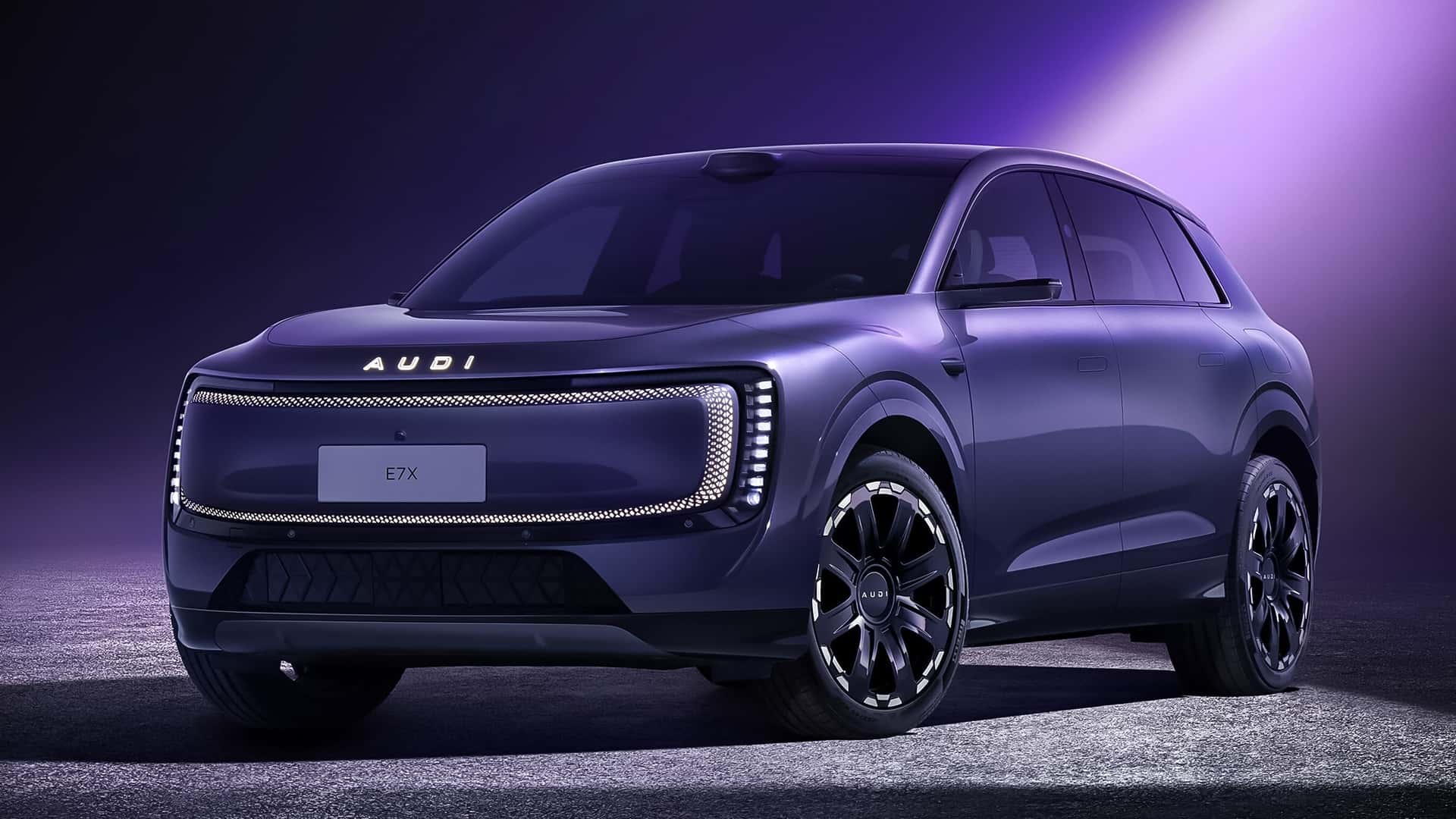
When Audi announced that its global‑car formula is “dead,” the headline grabbed attention. What matters more than the slogan, however, is the concrete move to spin off a stand‑alone brand—spelled AUDI, without the iconic Four Rings—exclusively for the Chinese market. The brand debuts with two models that cannot be bought anywhere else: the wagon‑styled E5 Sportback and the E7X SUV, with a sedan promised for the near future. This split is not just a marketing gimmick; it signals a fundamental re‑engineering of how a legacy premium automaker designs, builds, and sells cars in the world’s largest auto market. The decision reverberates through supply‑chain planning, joint‑venture regulations, and the economics of platform sharing across continents.
Deep Dive
According to Motor1, Audi’s chief technical officer Rouven Mohr told Australia’s GoAuto magazine that the notion of a single vehicle fitting every market “is gone, to be honest, because it’s not fitting anymore in the US (and) in China.” The statement reflects a shift from the traditional Volkswagen Group practice of developing a universal platform and then tweaking wheelbases for local markets. In China, that approach has already evolved: all three German luxury marques—Audi, BMW, and Mercedes—stretch wheelbases for locally built models. Audi’s new brand pushes the adaptation further by creating a wholly distinct product line that will be engineered from the ground up for Chinese consumers.
The strategic rationale is rooted in several intertwined factors:
- Regulatory environment. China’s foreign‑auto joint‑venture rules require a significant local ownership stake and encourage technology transfer. By launching a brand that carries no Four Rings, Audi can present the line‑up as a “local” offering, potentially easing approval processes for new powertrains and autonomous‑driving features that are subject to separate domestic standards.
- Supply‑chain localisation. A dedicated China‑only brand allows Audi to source components from domestic suppliers without the constraints of a global parts pool. This reduces exposure to tariffs, shortens lead times, and aligns with China’s Made‑in‑China push for high‑tech components such as AI‑driven infotainment systems.
- Capital efficiency. Developing a unique platform for a single market is costly, but the scale of the Chinese premium segment—already home to the E5 Sportback and E7X SUV—offers enough volume to amortise engineering spend. The brand’s name‑plate also signals to investors that Audi is willing to double‑down on the market rather than merely adapting existing models.
- Consumer preference divergence. Ralf Brandstätter, head of Volkswagen’s Chinese operations, is quoted saying European buyers value “tactile controls, long‑term durability, and driving dynamics,” while Chinese buyers want “AI‑first, connected vehicles, with seamless voice control and smart cockpits.”
"AI‑first, connected vehicles, with seamless voice control and smart cockpits." – Ralf Brandstätter
The new AUDI line is poised to embed these digital expectations at the hardware level, from larger touch‑screen clusters to over‑the‑air software ecosystems that differ from the legacy Audi architecture. - Brand differentiation. Keeping the Four‑Ring badge for traditional models while using a plain‑text AUDI logo creates a visual cue for buyers that the two lines serve distinct purposes. The legacy models will continue in China, preserving the heritage appeal for customers who still value the German badge, while the new line can experiment with bolder styling and interior layouts without diluting the core brand.
Beyond the immediate product rollout, Audi is also signalling a broader design shift. The company plans to launch an electric A4 in 2028 that will adopt a new design language dubbed “Strive for Clarity,” already previewed on the Concept C and Nuvolari concepts. This language promises cleaner surfaces and a return to more physical switchgear, suggesting that even as digital interfaces dominate, Audi sees value in tactile controls for certain markets—a nuance that aligns with Brandstätter’s observation of European preferences.
From an engineering standpoint, the separation allows Audi to diverge platform codes. The E5 Sportback and E7X SUV are likely to be built on a China‑centric architecture that can accommodate larger wheelbases, extended rear legroom, and the AI‑centric cockpit. Meanwhile, the global platform continues to underpin models destined for Europe and the United States, where different safety regulations, emissions standards, and consumer expectations prevail.
Audit & Contradictions
The announcement, as reported by Motor1, does not disclose any details about pricing, production volumes, or the exact timeline for the upcoming sedan. It also omits discussion of how the new brand will affect existing joint‑venture agreements with SAIC, nor does it address potential intellectual‑property concerns that arise when a global marque creates a parallel local identity.
Fact‑check data confirms that the core claims—existence of the AUDI brand, the models it will sell, the CTO’s quote about the global car, Brandstätter’s preference comparison, the continuation of Four‑Ring models, and the 2028 electric A4 plan—are corroborated by an independent Motor1.com story covering the same story. The audit notes a “None” contradiction level, meaning no conflicting information has been identified. Because the primary source is the Motor1 article itself, no single‑source claims require hedging.
Future Outlook
If Audi’s China‑only brand proves profitable, other global premium manufacturers may consider similar splits. BMW and Mercedes already offer China‑exclusive long‑wheelbase variants, but neither has created a separate brand identity. A successful AUDI rollout could accelerate that trend, especially as Chinese domestic players such as BYD and Nio continue to raise the bar with AI‑driven cabins and aggressive pricing.
Regulators may also respond. By allowing a foreign automaker to market a “local” brand, Chinese authorities could tighten the definition of domestic versus foreign content, potentially revising joint‑venture equity requirements. Conversely, the move could be seen as a win for the government’s goal of fostering high‑tech local manufacturing, prompting incentives for other overseas suppliers.
For investors, the split offers a clearer metric to assess Audi’s exposure to China’s premium market. Revenue from the AUDI brand can be tracked separately, providing insight into whether the localized strategy yields higher margins than the traditional global‑platform approach.
In the longer term, the “global car” concept may become a relic not just for Audi but for the entire industry. As vehicle software becomes more region‑specific—different data‑privacy laws, varying AI standards, and distinct consumer expectations—the economics of a single platform serving every market could erode. Audi’s bold step in China may be an early indicator of a fragmented future where brands maintain multiple, region‑tailored identities to stay competitive.