Lead Hook
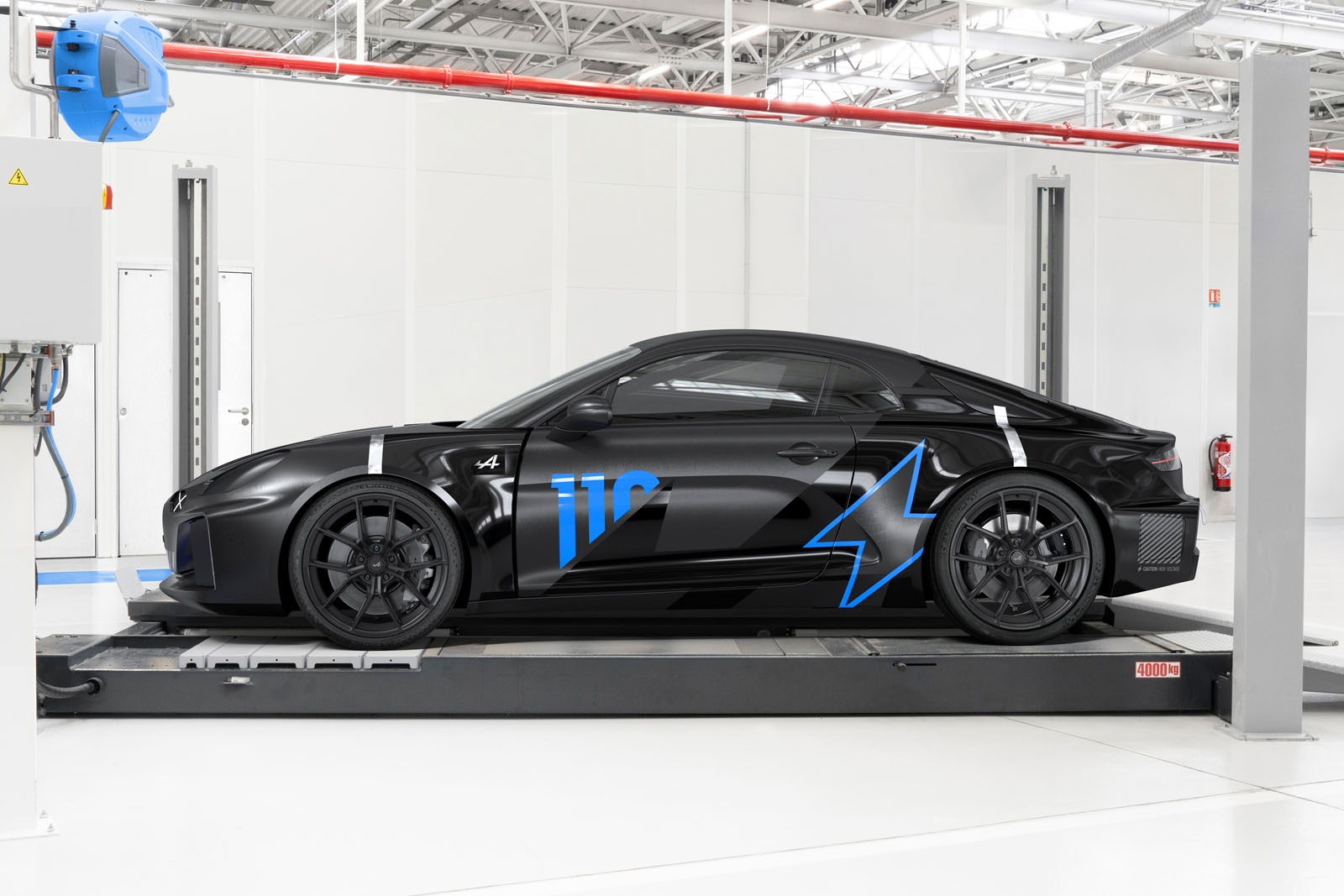
When Alpine rolls its A110 Future prototype onto the Goodwood hillclimb next month, the French brand isn’t just teasing an electric sports car—it’s betting the soul of its lightweight ethos on a radical battery architecture. The decision to split its 800V powertrain into two smaller packs, straddling the axles, defies the EV orthodoxy of single, centralized units. According to Autocar, this layout promises a low ride height and 340+ miles of range while allowing three uninterrupted laps of the Nürburgring. But with a projected kerb weight of ~1500kg—nearly 40% heavier than the outgoing petrol A110—the gambit risks trading agility for endurance. For a brand synonymous with the 1100kg, mid-engined A110, that’s a philosophical pivot disguised as a technical tweak.
Deep Dive
The Dual-Battery Conundrum
Alpine’s Alpine Performance Platform (APP), underpinning the A110 Future, swaps the current model’s single battery for two units—one over each axle. Per Autocar, this yields a 40:60 weight distribution, slightly more rear-biased than the petrol A110’s 44:56 split. The company claims the design keeps the EV’s center of gravity as low as its ICE predecessor, but the trade-offs are stark: the prototype’s wider arches and ~1500kg kerb weight (up from ~1100kg) suggest a heftier, potentially less nimble machine.
The engineering rationale is twofold. First, Alpine CEO Philippe Krief told Autocar the split-pack layout enables three laps of the Nürburgring Nordschleife without battery derating—a thermal endurance test that could silence critics of EV performance fade. Second, Krief hinted at a “opportunity” to revert to combustion power if market demand shifts, though he insisted this wasn’t achieved at the expense of EV performance:
“If the answer would have been that, it would make the electric car worse. There’s no way we’d have done it.”
Powertrain and Performance Paradox
The A110 Future’s drivetrain diverges from Alpine’s own Renault 5 Turbo 3E concept, which uses UK firm Protean’s in-wheel motors. Instead, Autocar reports the A110 will feature two rear-mounted motors with silicon-carbide inverters, a setup optimized for torque vectoring. While specifics on output and acceleration remain unconfirmed, the focus on agility over raw power aligns with Alpine’s heritage—even if the added weight complicates that mission.
The silicon-carbide inverters hint at efficiency gains, but the dual-motor layout’s real advantage may lie in packaging. By positioning the rear battery where the petrol A110’s engine sits, Alpine retains a mid-rear weight bias, a hallmark of the brand’s handling dynamics. Yet, the ~400kg weight penalty compared to the ICE model raises questions about how effectively torque vectoring can compensate for the added mass.
Production and Market Context
The A110 Future’s Goodwood debut arrives a week after Alpine produced the final 28,701 petrol A110s at its Dieppe factory, per Autocar. This symbolic handover underscores the brand’s pivot to electrification, but the production numbers reveal a niche play: 28,701 units over seven years is a rounding error for mass-market rivals like Porsche’s 718 Cayman, which sold over 20,000 units in 2023 alone. Alpine’s challenge isn’t just building an EV—it’s justifying a premium price for a low-volume sports car in an era of cost-conscious electrification.
Audit & Contradictions
The announcement leaves critical questions unanswered, and several claims are single-source, per the fact-check audit:
- Weight vs. Agility: Autocar reports the A110 Future’s kerb weight will be ~1500kg, but Alpine has not released official figures. The company’s assertion that torque vectoring can make the EV feel as agile as the petrol model remains unproven in real-world testing.
- Battery Specs: The dual-pack layout’s capacity, chemistry, and cooling strategy are undisclosed. While Krief’s claim of 340+ miles of range is ambitious, it lacks independent verification.
- Nürburgring Benchmark: Alpine’s promise of three laps without derating is a bold claim, but no third-party data supports it. Competitors like Porsche and Audi have struggled with thermal management on the Nordschleife.
- Combustion Backup: Krief’s suggestion that the APP could accommodate a combustion powertrain is intriguing, but Alpine has not confirmed whether this capability is actively being developed or is merely a hypothetical.
- Corroboration: Multiple outlets confirm the Goodwood debut and wider arches, but all other technical details—including the dual-battery layout, weight distribution, and powertrain specs—are exclusive to Autocar. The fact-check audit flags these as single-source claims requiring skepticism until verified by additional reporting.
The contradiction level is classified as low, as no competing reports dispute the core claims. However, the lack of independent validation for performance and weight targets leaves room for revision.
Future Outlook
Alpine’s dual-battery gamble could reverberate across the EV sports car segment. If successful, the A110 Future’s layout—balancing range, ride height, and weight distribution—might influence rivals like Porsche, which has struggled to reconcile the 718’s lightweight ethos with EV battery mass. Conversely, if the ~1500kg kerb weight proves detrimental to handling, Alpine may face a reckoning: either accept a heavier, less agile car or invest in costly lightweight materials to claw back lost performance.
The Nürburgring claim, if validated, could set a new benchmark for EV thermal endurance, pressuring competitors to match Alpine’s battery management systems. However, the real test will come in the market. With the petrol A110’s production run capped at 28,701 units, Alpine must convince buyers that its electric successor is worth a premium—especially as Porsche’s electric 718, due in 2025, looms as a direct rival.
The A110 Future’s Goodwood appearance isn’t just a prototype unveiling; it’s a statement of intent. Alpine is betting that its dual-battery architecture can preserve the brand’s lightweight DNA while meeting the demands of electrification. If it fails, the brand risks ceding ground to Porsche, Audi, and even Tesla in the high-performance EV space. If it succeeds, it could redefine what a sports car EV can be—weight penalty be damned.